Hygrothermal Aging Effects on the Interlaminar Shear Strength of Kevlar-Reinforced Textile Matrices
Introduction to Hygrothermal Aging in Aramid Composites The deployment of Kevlar-reinforced textile matrices in aerospace, marine, and advanced ballistic applications exposes these high-performance composites to severe environmental conditions throughout their operational lifecycles. Among the most detrimental of these environmental factors is hygrothermal aging, a synergistic degradation process driven by the simultaneous exposure to elevated temperatures … Read more
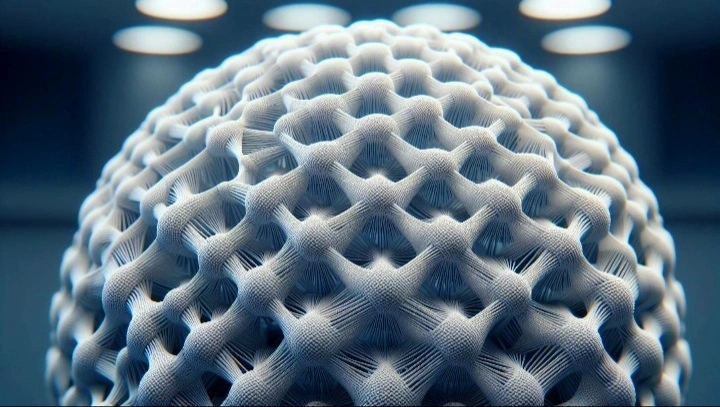
Geometric Frustration and Defect Propagation in Kagome-Lattice Crocheted Metamaterials

Introduction to Kagome-Lattice Metamaterials The architectural translation of the Kagome lattice—a trihexagonal tiling traditionally studied in the context of condensed matter physics and quantum spin liquids—into macroscopic crocheted metamaterials represents a frontier in advanced structural engineering. A Kagome lattice is composed of interlaced triangles and hexagons, creating a highly coordinated network that is inherently predisposed … Read more

Anisotropic Thermal Conductivity in Biaxial Braided Carbon Fiber Composites Under Compressive Loading

Introduction to Anisotropic Thermal Dynamics Carbon fiber reinforced polymers are renowned for their exceptional specific strength and stiffness, but their thermal properties are equally critical in high-performance aerospace and automotive applications. The inherent structure of a carbon fiber, characterized by highly aligned graphitic basal planes along the longitudinal axis, results in extreme thermal anisotropy. Thermal … Read more

Viscoelastic Creep and Stress Relaxation Dynamics in Electrospun Polyacrylonitrile (PAN) Nanofiber Yarns

Introduction to Electrospun PAN Nanofiber Yarns The continuous advancement of tensile polymer science has positioned electrospun Polyacrylonitrile (PAN) nanofiber yarns as a critical material in the development of next-generation structural composites, filtration media, and precursor materials for ultra-high-strength carbon fibers. Electrospinning, a versatile electrohydrodynamic process, enables the fabrication of continuous polymer filaments with diameters ranging … Read more

Kinematic Modeling of Jamming Phase Transitions in Densely Packed Crocheted Metamaterials

Introduction to Crocheted Metamaterials and Topological Interlocking The field of mechanical metamaterials has witnessed a paradigm shift with the introduction of topologically interlocked fibrous networks. Unlike conventional composite materials, where macroscopic mechanical properties are dictated by the intrinsic chemical composition and the adhesive bonding of the constituent phases, mechanical metamaterials derive their anomalous behaviors from … Read more

Cryogenic Resilience of Carbon-Nanotube Coated Polyamide Threads in Aerospace Load-Bearing Configurations

The deployment of flexible, high-strength fibrous materials in aerospace engineering is increasingly constrained by the extreme thermodynamic environments encountered in low Earth orbit and deep space exploration. Polyamide threads, traditionally valued for their exceptional tensile strength, high elasticity, and favorable strength-to-weight ratios under ambient conditions, undergo severe mechanical degradation when exposed to cryogenic temperatures. As … Read more

Rheological Behavior of Non-Newtonian Shear-Thickening Fluids in Capillary Fiber Networks

Introduction to Shear-Thickening Fluid Dynamics The integration of non-Newtonian shear-thickening fluids (STFs) into high-performance capillary fiber networks represents a transformative approach in the engineering of advanced energy-dissipating composites. Traditional ballistic and impact-resistant textiles, such as those woven from para-aramid or ultra-high molecular weight polyethylene (UHMWPE) yarns, rely entirely on the dry frictional interactions and the … Read more

Thermodynamic Dissipation and Load-Bearing Efficacy of Aramid-Infused Textile Composites Under Cyclic Fatigue

Introduction to Aramid-Infused Composites Aramid fibers, characterized by their highly oriented rigid polymer chains and aromatic polyamide molecular structure, exhibit exceptional specific strength, high tensile modulus, and remarkable thermal stability. When infused into polymeric matrices to form advanced textile composites, these fibers create a structural architecture capable of withstanding extreme mechanical and thermal stresses. However, … Read more

Microstructural Deformation Mechanisms in Ultra-High Molecular Weight Polyethylene (UHMWPE) Crocheted Lattices

Introduction to UHMWPE and Topological Interlocking The intersection of advanced polymer science and complex textile engineering has yielded a new class of high-performance materials capable of unprecedented energy dissipation and structural resilience. At the forefront of this intersection is Ultra-High Molecular Weight Polyethylene (UHMWPE), a thermoplastic polymer characterized by extremely long molecular chains, typically possessing … Read more

Convective Heat Loss in Open-Mesh Cellulosic Architectures: Empirical Wind-Tunnel Analysis

Laboratory Equipment and Sensor Calibration Absolute precision of aerodynamic and thermodynamic data outputs required institutional-grade metrology equipment. The primary testing environment utilized a closed-loop, subsonic wind tunnel generating laminar airflow with a turbulence intensity below 0.5 percent. Prior to testing sequence initiation, all sensor arrays underwent strict calibration protocols against National Institute of Standards and … Read more