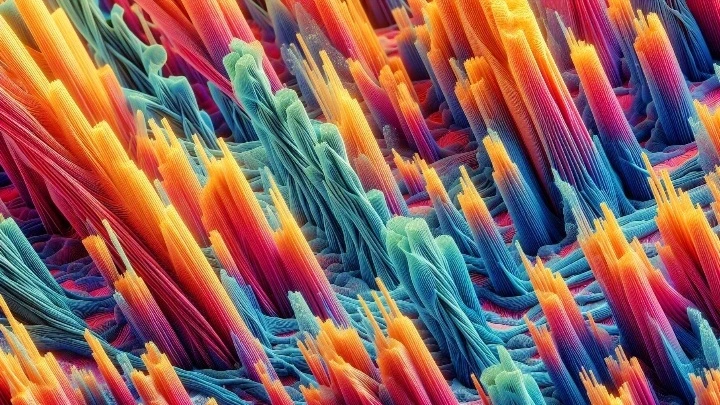
Micro-Mechanical Characterization of Shape-Memory Polyurethane (SMPU) Yarns Under Cyclic Tensile Loading
Introduction to Shape-Memory Polyurethanes (SMPUs) The advent of smart materials has fundamentally transformed the landscape of advanced textile engineering, shifting the paradigm from passive structural reinforcement to active, stimuli-responsive fibrous networks. At the vanguard of this technological evolution are Shape-Memory Polyurethanes (SMPUs). These advanced elastomeric polymers possess the extraordinary ability to be deformed into a … Read more


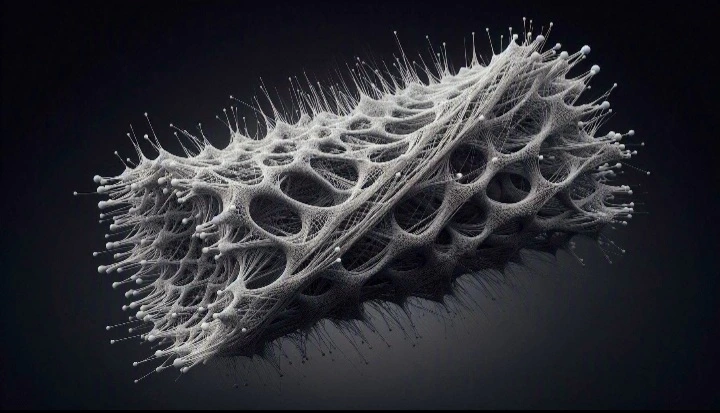
Topological Invariants and Knot Theory Applications in Multi-Axial Crocheted Tensegrity Structures

Introduction to Crocheted Tensegrity Systems The architectural paradigm of tensegrity—a portmanteau of tensional integrity—has traditionally been defined by a system of isolated, rigid compressive elements (struts) suspended within a continuous network of flexible tensile elements (cables). This structural principle yields highly resilient, lightweight frameworks capable of distributing localized stresses globally across the entire geometric matrix. … Read more

Ablative Performance and Heat Shielding Efficacy of Phenolic-Impregnated Silica Textiles in Hypersonic Environments

Introduction to Hypersonic Thermal Protection Systems The advent of hypersonic flight vehicles, operating at velocities exceeding Mach 5, has precipitated a critical demand for advanced Thermal Protection Systems (TPS). During atmospheric reentry or sustained hypersonic cruise, vehicles are subjected to extreme aerodynamic heating generated by shock wave compression and intense boundary layer skin friction. To … Read more

Influence of Draw Ratio on the Macromolecular Orientation and Tensile Modulus of Liquid Crystal Polymer (LCP) Fibers

Introduction to Liquid Crystal Polymer Fibers Liquid Crystal Polymers (LCPs) represent a pinnacle in high-performance fiber engineering, distinguished by their unique ability to exhibit highly ordered, crystalline-like molecular arrangements while still in a fluid or melt state. Unlike conventional flexible-chain polymers, such as polyethylene or nylon, which exist as randomly coiled entanglements in their molten … Read more

Strain-Rate Dependency of Crystalline Morphology in Melt-Spun Polypropylene Fibers

Introduction to Melt-Spun Polypropylene Polypropylene (PP) is a ubiquitous thermoplastic polymer utilized extensively in the advanced textile industry due to its low density, excellent chemical resistance, and highly tunable mechanical properties. The melt-spinning process, the primary method for producing continuous PP filaments, involves the extrusion of molten polymer through a spinneret, followed by rapid cooling … Read more

Topology Optimization of 3D-Woven Preforms for Enhanced Out-of-Plane Impact Resistance

Introduction to 3D-Woven Preforms The engineering of advanced composite materials for aerospace, ballistic, and high-performance automotive applications has historically relied on two-dimensional laminated structures. While these materials offer exceptional in-plane specific strength and stiffness, their susceptibility to out-of-plane impact and subsequent delamination remains a critical structural vulnerability. To address this, the field of textile engineering … Read more

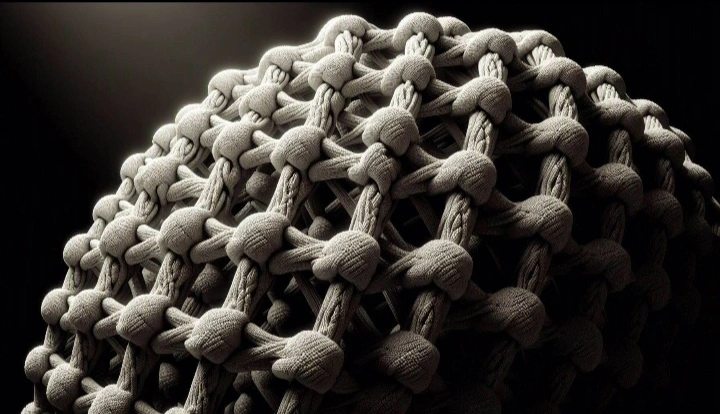
Bifurcation Analysis of Auxetic Instabilities in Chiral Crocheted Lattices Subjected to Biaxial Tension

Introduction to Chiral Crocheted Metamaterials The engineering of mechanical metamaterials has increasingly focused on the exploitation of complex geometric architectures to achieve non-conventional macroscopic properties. Among these, topologically interlocked fibrous networks, specifically those fabricated via advanced crocheting techniques, offer a unique platform for developing highly compliant, energy-dissipating structures. Unlike traditional woven or braided composites, where … Read more

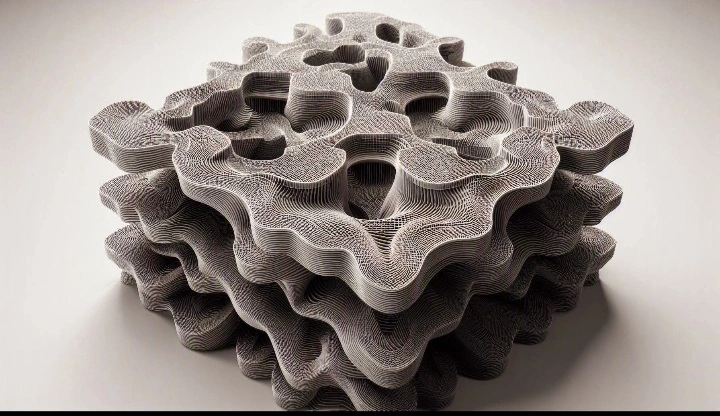
Non-Linear Mechanics of Helical Yarn Entanglement in Triply Periodic Minimal Surface (TPMS) Architectures

Introduction to TPMS Architectures in Fibrous Networks The conceptualization of Triply Periodic Minimal Surfaces (TPMS) has historically been confined to the realms of differential geometry, crystallography, and the study of lipid bilayers in biological systems. A minimal surface is defined mathematically as a surface that locally minimizes its area for a given boundary, possessing a … Read more

Fracture Toughness and Crack Propagation in Graphene-Oxide Doped Polyethylene Terephthalate (PET) Monofilaments

Introduction to Graphene-Oxide Doped Polyethylene Terephthalate Polyethylene terephthalate, commonly abbreviated as PET, is a highly versatile, semi-crystalline thermoplastic polymer that dominates the global synthetic fiber industry. Its widespread utilization in textile engineering, industrial rigging, and advanced composite matrices is primarily attributed to its exceptional tensile strength, high dimensional stability, and robust chemical resistance. However, despite … Read more

Thermomechanical Degradation Kinetics in Basalt Fiber Reinforced Polymer (BFRP) Matrices Under Sustained Tensile Loads

Introduction to BFRP Thermomechanical Dynamics Basalt Fiber Reinforced Polymer (BFRP) composites have emerged as a highly sustainable and cost-effective alternative to traditional carbon and glass fiber composites. Extracted from naturally occurring volcanic rock, basalt fibers possess excellent tensile strength, high chemical resistance, and a significantly broader operational temperature range than standard E-glass fibers. The unique … Read more