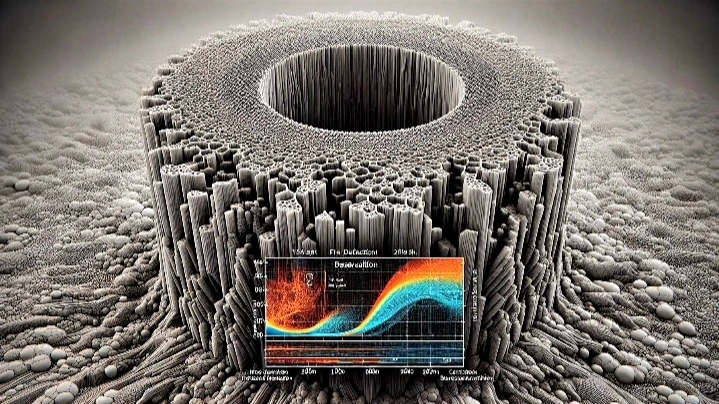
Introduction to BFRP Thermomechanical Dynamics
Basalt Fiber Reinforced Polymer (BFRP) composites have emerged as a highly sustainable and cost-effective alternative to traditional carbon and glass fiber composites. Extracted from naturally occurring volcanic rock, basalt fibers possess excellent tensile strength, high chemical resistance, and a significantly broader operational temperature range than standard E-glass fibers. The unique mineralogical composition of basalt, rich in plagioclase and pyroxene, grants these fibers an inherent resistance to alkaline environments, making them particularly attractive for concrete reinforcement and civil infrastructure. However, when these fibers are embedded within a polymeric matrix and subjected to sustained tensile loads at elevated temperatures, the composite undergoes a complex, time-dependent degradation process known as thermomechanical creep and fatigue. The kinetics of this degradation are governed by the synergistic interaction between the applied mechanical stress and the thermal activation energy of the polymer matrix. Unlike static loading at ambient temperatures, where failure is typically dictated by the ultimate tensile strength of the reinforcing fibers, sustained thermomechanical loading accelerates the viscoelastic flow of the polymer matrix. This flow redistributes the internal stress, often concentrating it at the fiber-matrix interface. Consequently, understanding the precise thermomechanical degradation kinetics is paramount for predicting the long-term structural integrity and operational lifespan of BFRP composites deployed in demanding environments, such as civil infrastructure, aerospace components, and high-temperature industrial piping systems.
Kinetics of Matrix Degradation and Fiber-Matrix Debonding
The degradation kinetics of BFRP matrices under sustained tensile loads are primarily driven by the viscoelastic nature of the polymer resin and the differential coefficients of thermal expansion between the basalt fibers and the matrix. The disparity in thermal expansion induces severe residual shear stresses at the boundary layer, compounding the mechanical stress applied externally. As the ambient temperature approaches the glass transition temperature of the polymer, the macromolecular chains gain sufficient thermal energy to overcome secondary intermolecular bonds, resulting in a dramatic increase in chain mobility. Under a continuous tensile load, this enhanced mobility manifests as macroscopic creep. The polymer matrix begins to yield and flow, transferring a disproportionate amount of the applied stress to the much stiffer basalt fibers. This stress redistribution is not uniform; it concentrates heavily at the fiber-matrix interface.

The localized stress concentrations, combined with the thermal degradation of the sizing agent applied to the basalt fibers, initiate microscopic debonding. Once the interfacial bond is compromised, the composite loses its primary mechanism for efficient load transfer. The degradation kinetics can be mathematically modeled using the Arrhenius equation, where the rate of degradation is exponentially dependent on the absolute temperature and the activation energy of the specific failure mechanism. As the matrix continues to degrade, micro-cracks nucleate and propagate through the resin, further exposing the basalt fibers to potential oxidative or hydrolytic attack if environmental moisture is present. This cascading failure mechanism ultimately leads to fiber pull-out, localized fiber rupture, and the catastrophic macroscopic failure of the composite structure long before the theoretical yield strength of the pristine material is reached.
Methodological Framework for Thermomechanical Testing
To accurately quantify the thermomechanical degradation kinetics of BFRP composites, researchers must employ highly controlled, accelerated testing methodologies. These protocols are designed to simulate decades of operational stress within a compressed timeframe by elevating the thermal and mechanical parameters. The following procedural framework outlines the rigorous step-by-step methodology utilized to empirically characterize the creep-rupture behavior and degradation kinetics of these advanced composites:
- Specimen Preparation: Fabricate the BFRP composite panels using a vacuum-assisted resin infusion process to ensure a uniform fiber volume fraction, followed by precision machining into standard dog-bone tensile coupons.
- Thermal Conditioning: Place the specimens in an environmental chamber and elevate the temperature to specific isothermal setpoints, typically ranging from ambient up to just below the matrix glass transition temperature, allowing for complete thermal equilibrium.
- Sustained Load Application: Mount the conditioned specimens in a dead-weight creep testing frame and apply a constant tensile load, typically calculated as a specific percentage of the composite’s ultimate tensile strength.
- Continuous Strain Monitoring: Utilize high-resolution linear variable differential transformers (LVDTs) or digital image correlation (DIC) to continuously record the axial strain as a function of time, capturing the primary, secondary, and tertiary creep phases.
- Post-Failure Fractographic Analysis: Upon rupture, extract the fracture surfaces and subject them to scanning electron microscopy (SEM) to identify the dominant failure modes, such as matrix micro-cracking, interfacial debonding, or fiber fibrillation.
Implications for Structural Engineering and Lifespan Prediction
The empirical data derived from these rigorous thermomechanical testing protocols is essential for the development of accurate lifespan prediction models. In structural engineering, the deployment of BFRP composites in load-bearing applications requires absolute confidence in their long-term durability.
def calculate_time_to_failure(A, Ea, R, T, stress_level):
    """
    Calculates the predicted time-to-failure (tf) for BFRP matrices
    under sustained tensile load using the modified Arrhenius equation.
    """
    import math

    # Stress-dependent activation energy modification
    Ea_modified = Ea - (alpha_coefficient * stress_level)

    # Kinetic degradation rate
    k_rate = A * math.exp(-Ea_modified / (R * T))

    # Time to failure (inverse of degradation rate)
    t_f = 1 / k_rate
    return t_f
By understanding the specific degradation kinetics, engineers can calculate the time-to-failure for a given stress and temperature profile, allowing for the implementation of appropriate safety factors and predictive maintenance schedules. Furthermore, this kinetic data drives the continuous optimization of the composite materials themselves. By modifying the polymer matrix with high-temperature nano-fillers or enhancing the chemical sizing applied to the basalt fibers, materials scientists can significantly increase the activation energy required for interfacial debonding. These advancements effectively retard the viscoelastic creep of the matrix and suppress the nucleation of micro-cracks, thereby extending the operational lifespan of the composite. Ultimately, the mastery of thermomechanical degradation kinetics ensures that BFRP composites can safely and reliably fulfill their potential as a sustainable, high-performance alternative in the next generation of advanced structural applications.