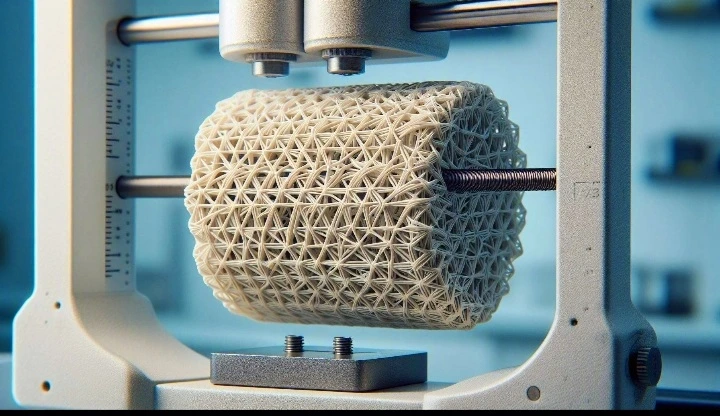
Rheological and Morphological Evolution of Shear-Thickening Fluid Impregnated Kevlar Fabrics Under High-

Introduction to Active Nanocomposite Textiles The engineering of advanced ballistic protection systems has historically relied on the passive mechanical properties of high-performance polymeric fibers. Poly-paraphenylene terephthalamide, commercially known as Kevlar, has long been the gold standard in this domain due to its exceptional specific tensile strength, high elastic modulus, and remarkable thermal stability. These properties … Read more
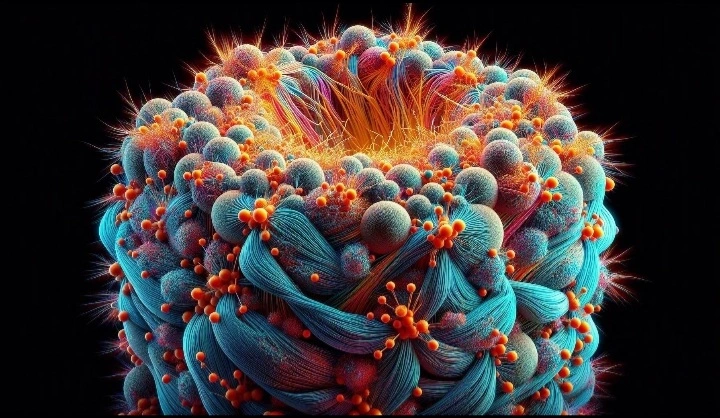
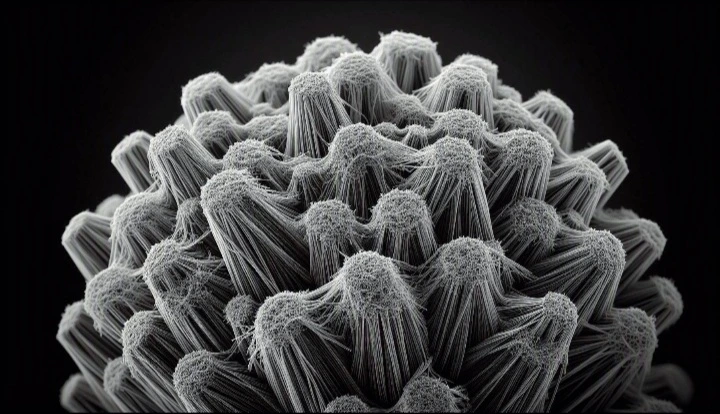
Interfacial Shear Strength and Matrix Adhesion Dynamics in Silane-Treated Glass Fiber Rovings

Introduction to Glass Fiber Rovings and Interfacial Adhesion The structural efficacy of glass fiber reinforced polymers (GFRP) is fundamentally contingent upon the efficiency of stress transfer between the high-modulus inorganic reinforcing fibers and the relatively compliant organic polymer matrix. Glass fiber rovings, which consist of thousands of continuous, parallel filaments bundled together without twist, offer … Read more

Effect of Electrospinning Voltage Gradients on the Tensile Modulus and Alignment of Polycaprolactone (PCL) Nanofibers

Introduction to Polycaprolactone Electrospinning Polycaprolactone (PCL) is a biodegradable, semi-crystalline aliphatic polyester that has garnered immense attention in the fields of tissue engineering, targeted drug delivery, and advanced filtration media. The fabrication of PCL into continuous, nanoscale fibrous networks is predominantly achieved through electrospinning, a highly versatile electrohydrodynamic process. During electrospinning, a viscous polymer solution … Read more

Micro-Mechanical Characterization of Shape-Memory Polyurethane (SMPU) Yarns Under Cyclic Tensile Loading

Introduction to Shape-Memory Polyurethanes (SMPUs) The advent of smart materials has fundamentally transformed the landscape of advanced textile engineering, shifting the paradigm from passive structural reinforcement to active, stimuli-responsive fibrous networks. At the vanguard of this technological evolution are Shape-Memory Polyurethanes (SMPUs). These advanced elastomeric polymers possess the extraordinary ability to be deformed into a … Read more

Influence of Draw Ratio on the Macromolecular Orientation and Tensile Modulus of Liquid Crystal Polymer (LCP) Fibers

Introduction to Liquid Crystal Polymer Fibers Liquid Crystal Polymers (LCPs) represent a pinnacle in high-performance fiber engineering, distinguished by their unique ability to exhibit highly ordered, crystalline-like molecular arrangements while still in a fluid or melt state. Unlike conventional flexible-chain polymers, such as polyethylene or nylon, which exist as randomly coiled entanglements in their molten … Read more

Strain-Rate Dependency of Crystalline Morphology in Melt-Spun Polypropylene Fibers

Introduction to Melt-Spun Polypropylene Polypropylene (PP) is a ubiquitous thermoplastic polymer utilized extensively in the advanced textile industry due to its low density, excellent chemical resistance, and highly tunable mechanical properties. The melt-spinning process, the primary method for producing continuous PP filaments, involves the extrusion of molten polymer through a spinneret, followed by rapid cooling … Read more

Fracture Toughness and Crack Propagation in Graphene-Oxide Doped Polyethylene Terephthalate (PET) Monofilaments

Introduction to Graphene-Oxide Doped Polyethylene Terephthalate Polyethylene terephthalate, commonly abbreviated as PET, is a highly versatile, semi-crystalline thermoplastic polymer that dominates the global synthetic fiber industry. Its widespread utilization in textile engineering, industrial rigging, and advanced composite matrices is primarily attributed to its exceptional tensile strength, high dimensional stability, and robust chemical resistance. However, despite … Read more

Viscoelastic Creep and Stress Relaxation Dynamics in Electrospun Polyacrylonitrile (PAN) Nanofiber Yarns

Introduction to Electrospun PAN Nanofiber Yarns The continuous advancement of tensile polymer science has positioned electrospun Polyacrylonitrile (PAN) nanofiber yarns as a critical material in the development of next-generation structural composites, filtration media, and precursor materials for ultra-high-strength carbon fibers. Electrospinning, a versatile electrohydrodynamic process, enables the fabrication of continuous polymer filaments with diameters ranging … Read more

Rheological Behavior of Non-Newtonian Shear-Thickening Fluids in Capillary Fiber Networks

Introduction to Shear-Thickening Fluid Dynamics The integration of non-Newtonian shear-thickening fluids (STFs) into high-performance capillary fiber networks represents a transformative approach in the engineering of advanced energy-dissipating composites. Traditional ballistic and impact-resistant textiles, such as those woven from para-aramid or ultra-high molecular weight polyethylene (UHMWPE) yarns, rely entirely on the dry frictional interactions and the … Read more

Microstructural Deformation Mechanisms in Ultra-High Molecular Weight Polyethylene (UHMWPE) Crocheted Lattices

Introduction to UHMWPE and Topological Interlocking The intersection of advanced polymer science and complex textile engineering has yielded a new class of high-performance materials capable of unprecedented energy dissipation and structural resilience. At the forefront of this intersection is Ultra-High Molecular Weight Polyethylene (UHMWPE), a thermoplastic polymer characterized by extremely long molecular chains, typically possessing … Read more