Cryogenic Delamination Resistance and Fracture Toughness of Z-Pinned Aramid-Epoxy Laminates
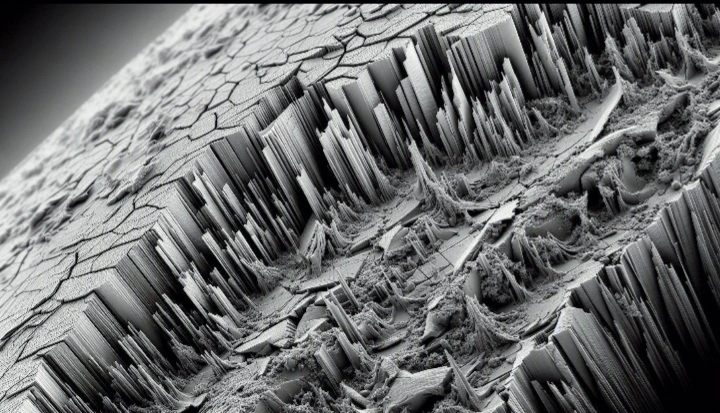
Introduction to Cryogenic Composite Degradation The deployment of advanced fiber-reinforced polymer composites in deep-space exploration, superconducting magnetic energy storage, and cryogenic propellant containment systems necessitates materials capable of sustaining complex multi-axial loads at temperatures approaching absolute zero. Aramid-epoxy laminates are frequently selected for these extreme environments due to the exceptional specific tensile strength and impact … Read more
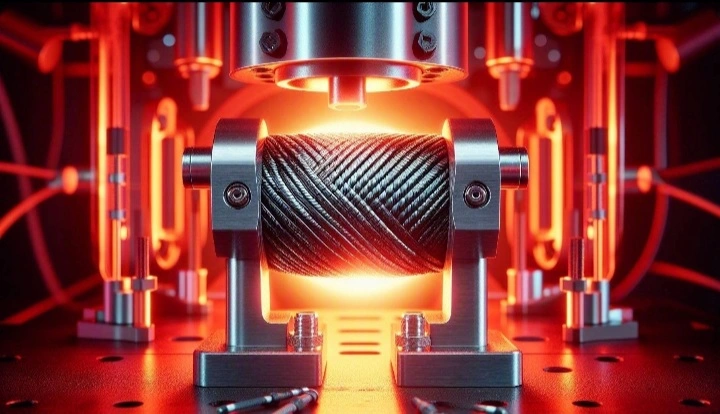
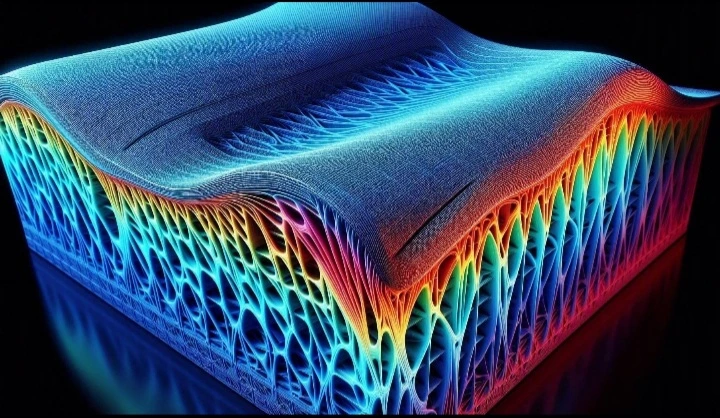
Thermo-Mechanical Fatigue and Creep Rupture Kinetics in Pitch-Based Carbon Fiber Braids

Introduction to Pitch-Based Carbon Fibers and Braided Architectures The relentless pursuit of high-performance materials for extreme aerospace, hypersonic, and advanced industrial applications has catalyzed the development of complex composite architectures capable of withstanding simultaneous thermal and mechanical extremes. At the forefront of this materials revolution are pitch-based carbon fibers. Unlike their polyacrylonitrile (PAN)-based counterparts, which … Read more

Coefficient of Thermal Expansion (CTE) Mismatch and Interfacial Shear Stress in Carbon-Glass Hybrid Textile Composites

Introduction to Hybrid Textile Composites The continuous evolution of advanced structural materials in the aerospace, marine, and renewable energy sectors has driven a paradigm shift toward the hybridization of fiber-reinforced polymers. While monolithic carbon fiber composites offer unparalleled specific stiffness and tensile strength, their inherent brittleness and high material costs often limit their application in … Read more

Compressive Yield Behavior and Thermal Insulation Efficacy of Alumina-Silicate Ceramic Fiber Mats

Introduction to Alumina-Silicate Ceramic Fibers In the demanding arenas of aerospace engineering, industrial metallurgy, and advanced power generation, the necessity for materials capable of withstanding extreme thermal gradients while simultaneously bearing significant mechanical loads is absolute. Alumina-silicate ceramic fiber mats have emerged as a critical solution to this dual-requirement challenge. Composed primarily of aluminum oxide … Read more

Ablative Performance and Heat Shielding Efficacy of Phenolic-Impregnated Silica Textiles in Hypersonic Environments

Introduction to Hypersonic Thermal Protection Systems The advent of hypersonic flight vehicles, operating at velocities exceeding Mach 5, has precipitated a critical demand for advanced Thermal Protection Systems (TPS). During atmospheric reentry or sustained hypersonic cruise, vehicles are subjected to extreme aerodynamic heating generated by shock wave compression and intense boundary layer skin friction. To … Read more

Thermomechanical Degradation Kinetics in Basalt Fiber Reinforced Polymer (BFRP) Matrices Under Sustained Tensile Loads

Introduction to BFRP Thermomechanical Dynamics Basalt Fiber Reinforced Polymer (BFRP) composites have emerged as a highly sustainable and cost-effective alternative to traditional carbon and glass fiber composites. Extracted from naturally occurring volcanic rock, basalt fibers possess excellent tensile strength, high chemical resistance, and a significantly broader operational temperature range than standard E-glass fibers. The unique … Read more

Hygrothermal Aging Effects on the Interlaminar Shear Strength of Kevlar-Reinforced Textile Matrices

Introduction to Hygrothermal Aging in Aramid Composites The deployment of Kevlar-reinforced textile matrices in aerospace, marine, and advanced ballistic applications exposes these high-performance composites to severe environmental conditions throughout their operational lifecycles. Among the most detrimental of these environmental factors is hygrothermal aging, a synergistic degradation process driven by the simultaneous exposure to elevated temperatures … Read more

Anisotropic Thermal Conductivity in Biaxial Braided Carbon Fiber Composites Under Compressive Loading

Introduction to Anisotropic Thermal Dynamics Carbon fiber reinforced polymers are renowned for their exceptional specific strength and stiffness, but their thermal properties are equally critical in high-performance aerospace and automotive applications. The inherent structure of a carbon fiber, characterized by highly aligned graphitic basal planes along the longitudinal axis, results in extreme thermal anisotropy. Thermal … Read more

Cryogenic Resilience of Carbon-Nanotube Coated Polyamide Threads in Aerospace Load-Bearing Configurations

The deployment of flexible, high-strength fibrous materials in aerospace engineering is increasingly constrained by the extreme thermodynamic environments encountered in low Earth orbit and deep space exploration. Polyamide threads, traditionally valued for their exceptional tensile strength, high elasticity, and favorable strength-to-weight ratios under ambient conditions, undergo severe mechanical degradation when exposed to cryogenic temperatures. As … Read more

Thermodynamic Dissipation and Load-Bearing Efficacy of Aramid-Infused Textile Composites Under Cyclic Fatigue

Introduction to Aramid-Infused Composites Aramid fibers, characterized by their highly oriented rigid polymer chains and aromatic polyamide molecular structure, exhibit exceptional specific strength, high tensile modulus, and remarkable thermal stability. When infused into polymeric matrices to form advanced textile composites, these fibers create a structural architecture capable of withstanding extreme mechanical and thermal stresses. However, … Read more