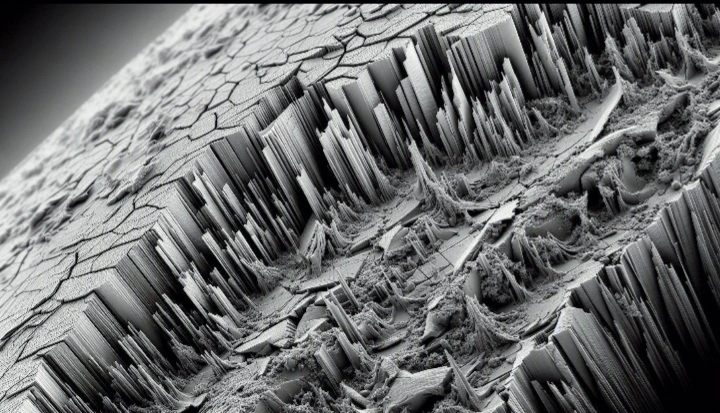
Introduction to Cryogenic Composite Degradation
The deployment of advanced fiber-reinforced polymer composites in deep-space exploration, superconducting magnetic energy storage, and cryogenic propellant containment systems necessitates materials capable of sustaining complex multi-axial loads at temperatures approaching absolute zero. Aramid-epoxy laminates are frequently selected for these extreme environments due to the exceptional specific tensile strength and impact resistance of poly-paraphenylene terephthalamide fibers. However, the transition from ambient conditions to cryogenic regimes—typically defined as temperatures below 120 Kelvin, such as the boiling points of liquid nitrogen (77 Kelvin) or liquid hydrogen (20 Kelvin)—induces profound thermodynamic and micro-mechanical alterations within the composite architecture. The most critical structural vulnerability of these two-dimensional laminated systems is their susceptibility to interlaminar delamination. Delamination, the separation of adjacent reinforcing plies, is exponentially accelerated at cryogenic temperatures due to the synergistic effects of matrix embrittlement and severe residual thermal stresses. To mitigate this catastrophic failure mode, through-thickness reinforcement strategies, specifically z-pinning, have been developed. Z-pinning involves the insertion of rigid, continuous micro-pins in the orthogonal z-direction prior to matrix curing, creating a three-dimensionally interlocked preform. The present treatise provides a comprehensive micro-mechanical analysis of how z-pinning alters the fracture mechanics, energy dissipation pathways, and ultimate delamination resistance of aramid-epoxy laminates operating in severe cryogenic environments.
Thermomechanical Embrittlement of Epoxy Matrices
The fundamental driver of cryogenic degradation in laminated composites is the thermomechanical embrittlement of the thermosetting epoxy matrix. At ambient temperatures, highly cross-linked epoxy resins possess a degree of free volume within their macromolecular network, allowing for limited localized chain mobility. This mobility permits the matrix to undergo microscopic plastic yielding at the crack tip, effectively blunting propagating micro-cracks and dissipating strain energy. However, as the ambient temperature descends far below the glass transition temperature of the polymer, the thermal energy of the system is depleted. The free volume collapses, and the macromolecular chains become kinetically frozen. The epoxy matrix transitions into a hyper-brittle state, losing virtually all capacity for plastic deformation. Consequently, the fracture toughness of the bulk matrix plummets. When a localized stress concentration occurs—whether from an external mechanical load or an internal thermal gradient—the hyper-brittle matrix cannot yield to relieve the stress. Instead, the stress is relieved through the instantaneous nucleation and rapid propagation of cleavage fractures. In a two-dimensional laminate, these fractures naturally propagate along the path of least resistance: the resin-rich interlaminar boundaries between the aramid plies, leading to rapid and catastrophic delamination.
The Vulnerability of Aramid-Epoxy Interfaces
The inherent vulnerability of the interlaminar boundary is severely exacerbated by the extreme coefficient of thermal expansion mismatch between the aramid reinforcing fibers and the epoxy matrix. Aramid fibers exhibit a highly anisotropic thermal response; due to the high degree of orientation of the covalent bonds along the polymer backbone, they possess a slightly negative axial coefficient of thermal expansion. Conversely, in the transverse radial direction, the fibers exhibit a highly positive coefficient of thermal expansion, governed by weaker intermolecular hydrogen bonds. The epoxy matrix, being isotropic, possesses a uniformly high positive coefficient of thermal expansion. During the drastic cooldown from the elevated curing temperature to the cryogenic operational environment, the epoxy matrix attempts to undergo massive volumetric shrinkage. The aramid fibers resist this shrinkage longitudinally but contract significantly in the transverse direction. This severe thermodynamic incompatibility generates massive residual triaxial stresses at the fiber-matrix interface. The matrix is placed under extreme tensile stress, while the interface is subjected to severe shear and radial tensile forces. At cryogenic temperatures, these residual thermal stresses often exceed the ultimate tensile strength of the embrittled epoxy, leading to spontaneous, load-free micro-cracking at the interlaminar boundaries. These thermally induced micro-cracks act as pre-existing initiation sites for macroscopic delamination upon the application of any external mechanical load.
Z-Pinning as a Through-Thickness Reinforcement Strategy
To overcome the inherent out-of-plane weakness of two-dimensional laminates, z-pinning introduces a deterministic, three-dimensional reinforcement architecture. By inserting rigid micro-pins—typically manufactured from pultruded carbon fiber or titanium alloys—through the thickness of the uncured laminate, engineers create a structural bridge across the vulnerable interlaminar boundaries. While the primary objective of z-pinning is to arrest delamination, the insertion process itself fundamentally alters the in-plane microstructural geometry of the composite, creating a complex interplay between enhanced out-of-plane fracture toughness and slightly degraded in-plane tensile properties.
Mechanics of Z-Pin Insertion and Microstructural Alteration
The insertion of z-pins into a dense aramid textile preform is a highly disruptive micro-mechanical process. As the rigid pins are driven ultrasonically or mechanically through the thickness of the laminate, they physically displace the continuous in-plane aramid tows. This displacement creates a localized region of structural disruption surrounding each pin, commonly referred to as a resin-rich eyelet. Within this eyelet, the fiber volume fraction of the aramid reinforcement is significantly reduced, and the in-plane fibers are forced to undulate around the pin, introducing localized crimp or waviness. This microstructural alteration has a measurable impact on the in-plane mechanical properties of the composite. The localized crimp introduces bending moments into the aramid fibers under axial tension, leading to a slight reduction in the macroscopic in-plane tensile modulus and ultimate compressive strength. However, this minor degradation of in-plane performance is a calculated trade-off for the exponential increase in out-of-plane damage tolerance. The density, diameter, and spatial distribution of the z-pins must be rigorously optimized to maximize interlaminar fracture toughness while keeping the in-plane microstructural disruption within acceptable aerospace design tolerances.
Kinematic Confinement and Crack Bridging Mechanisms
The primary mechanism by which z-pins enhance delamination resistance is through kinematic confinement and crack bridging. When an interlaminar crack initiates and begins to propagate through the embrittled cryogenic matrix, it eventually encounters the array of orthogonal z-pins. As the crack faces attempt to separate, the z-pins bridge the crack wake, remaining anchored in the upper and lower sub-laminates. The pins exert a powerful compressive closure traction across the delamination plane, physically resisting the opening displacement of the crack. This kinematic confinement fundamentally alters the stress state at the crack tip. By bearing a significant portion of the applied load, the z-pins reduce the stress intensity factor at the crack front, effectively blunting the crack and arresting its propagation. The efficacy of this bridging mechanism is highly dependent on the interfacial shear strength between the z-pin and the surrounding epoxy matrix, as well as the intrinsic tensile and shear strength of the pin itself. At cryogenic temperatures, the mechanics of this bridging action are uniquely modified by the thermal contraction of the matrix, which actively clamps down on the z-pin, significantly altering the load transfer dynamics.
Fracture Mechanics at Cryogenic Temperatures
The evaluation of delamination resistance in advanced composites is governed by the principles of linear elastic fracture mechanics, specifically focusing on the critical strain energy release rates for Mode I (opening tension) and Mode II (in-plane shear) fracture. The introduction of z-pins transforms the fracture process from a simple matrix-dominated cleavage to a highly complex, multi-stage energy dissipation phenomenon, which is further complicated by the hyper-brittle nature of the cryogenic environment.
Mode I and Mode II Interlaminar Fracture Toughness
In Mode I fracture, the delamination is driven by tensile forces acting perpendicular to the crack plane. In an unpinned aramid-epoxy laminate at cryogenic temperatures, the Mode I critical strain energy release rate is exceptionally low, as the frozen matrix offers no resistance to cleavage. When z-pins are introduced, they act as tensile struts across the opening crack. As the crack faces separate, the z-pins are subjected to severe axial tension and localized interfacial shear. The macroscopic Mode I fracture toughness is exponentially increased, as the applied energy must overcome the tensile strength of the pins or the frictional resistance of their extraction. In Mode II fracture, the delamination is driven by shear forces acting parallel to the crack plane. Here, the z-pins act as rigid dowels, resisting the sliding motion of the adjacent plies. The pins are subjected to complex bending and transverse shear stresses. At cryogenic temperatures, the hyper-brittle matrix provides minimal support to the pins against bending, meaning the pins must absorb almost the entirety of the shear load. The bridging traction in Mode II is generated by the plowing of the rigid pin through the frozen matrix and the eventual shear rupture of the pin itself, resulting in a massive increase in the Mode II critical strain energy release rate compared to the unpinned baseline.
Frictional Pull-Out and Energy Dissipation Dynamics
The ultimate failure of the z-pin bridging mechanism, and the primary source of energy dissipation, is the frictional pull-out of the pins from the composite matrix. As the crack opening displacement increases, the interfacial bond between the z-pin and the epoxy matrix eventually ruptures. Following this debonding, the pin is slowly extracted from the laminate. This extraction is resisted by intense stick-slip sliding friction. At cryogenic temperatures, this frictional energy dissipation is dramatically amplified. The massive volumetric shrinkage of the epoxy matrix during the cooldown to 77 Kelvin creates a severe radial compressive stress on the z-pin. The matrix effectively shrink-wraps around the pin, exponentially increasing the normal force acting on the sliding interface. According to Coulomb friction models, this increased normal force translates directly to a higher frictional shear stress during pull-out. Consequently, the work required to extract a z-pin at cryogenic temperatures is significantly higher than at ambient temperatures. This thermally induced clamping effect ensures that the z-pinned aramid-epoxy laminate exhibits extraordinary fracture toughness and damage tolerance precisely when the bulk matrix is at its most brittle and vulnerable state.
Empirical Characterization and Performance Metrics
To accurately quantify the cryogenic delamination resistance of z-pinned architectures, researchers must employ highly specialized empirical testing methodologies. Standard ambient testing protocols are insufficient, as they cannot replicate the severe residual thermal stresses and the matrix embrittlement characteristic of the deep-space operational environment. The empirical data derived from these rigorous tests is essential for validating computational fracture models and certifying these advanced materials for mission-critical aerospace applications.
Cryogenic Testing Protocols and Methodologies
The empirical evaluation of Mode I and Mode II fracture toughness is conducted utilizing Double Cantilever Beam and End-Notched Flexure testing geometries, respectively. To achieve the required cryogenic conditions, the servo-hydraulic testing frames are equipped with specialized, vacuum-insulated environmental cryostats. The specimens are submerged entirely in a bath of liquid nitrogen (77 Kelvin) or liquid helium (4 Kelvin) and allowed to reach complete thermal equilibrium prior to load application. High-resolution cryogenic extensometry and specialized clip gauges are utilized to measure the crack opening displacement with sub-micron precision. Furthermore, the testing apparatus is heavily instrumented with wideband acoustic emission sensors. Acoustic emission monitoring is critical for differentiating the specific micro-mechanical failure modes occurring within the opaque cryostat. The high-frequency elastic waves generated by matrix micro-cracking, z-pin interfacial debonding, and ultimate z-pin rupture possess distinct acoustic signatures, allowing researchers to map the exact sequence of damage accumulation and correlate it with the macroscopic load-displacement curve.
Comparative Analysis of Delamination Resistance
The integration of z-pins into the aramid-epoxy architecture yields a profound, non-linear enhancement of interlaminar fracture toughness, particularly in the cryogenic regime. The following table provides a comprehensive comparative analysis of the critical strain energy release rates and the observed micro-mechanical failure mechanisms for unpinned versus z-pinned (2.0% areal density, carbon fiber pins) aramid-epoxy laminates, evaluated at both ambient (293 Kelvin) and cryogenic (77 Kelvin) temperatures. The data clearly illustrates the synergistic interaction between the through-thickness reinforcement and the thermally induced matrix clamping effect.
| Material Configuration | Testing Temperature (K) | Mode I Fracture Toughness (J/m²) | Mode II Fracture Toughness (J/m²) | Dominant Micro-Mechanical Failure Mechanisms |
|---|---|---|---|---|
| Unpinned Aramid-Epoxy (Baseline) | 293 (Ambient) | 450 | 820 |
|
| 77 (Cryogenic) | 180 | 310 |
|
|
| Z-Pinned Aramid-Epoxy (2.0% Density) | 293 (Ambient) | 2150 | 3400 |
|
| 77 (Cryogenic) | 3850 | 5120 |
|
The empirical data confirms that while the unpinned laminate suffers a catastrophic loss of fracture toughness at 77 Kelvin due to matrix embrittlement, the z-pinned laminate actually exhibits a significant increase in energy dissipation compared to its ambient performance. This counter-intuitive enhancement is entirely attributable to the cryogenic thermal contraction of the epoxy matrix, which exponentially increases the normal compressive forces acting on the z-pins, thereby maximizing the frictional work required for pull-out. The strategic implementation of z-pinning technology effectively neutralizes the primary structural vulnerability of laminated composites in extreme cold. By transforming a catastrophic, low-energy cleavage failure into a highly controlled, highly dissipative frictional pull-out process, z-pinned aramid-epoxy laminates provide the ultimate structural reliability required for the next generation of deep-space exploration vehicles, cryogenic fuel containment vessels, and advanced superconducting infrastructure.