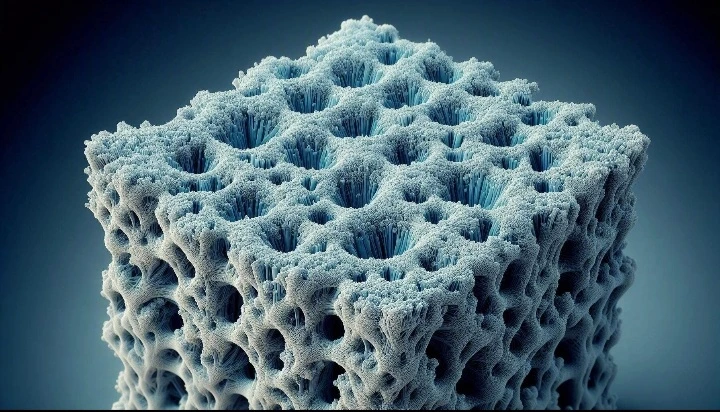
Rheological and Morphological Evolution of Shear-Thickening Fluid Impregnated Kevlar Fabrics Under High-

Introduction to Active Nanocomposite Textiles The engineering of advanced ballistic protection systems has historically relied on the passive mechanical properties of high-performance polymeric fibers. Poly-paraphenylene terephthalamide, commercially known as Kevlar, has long been the gold standard in this domain due to its exceptional specific tensile strength, high elastic modulus, and remarkable thermal stability. These properties … Read more
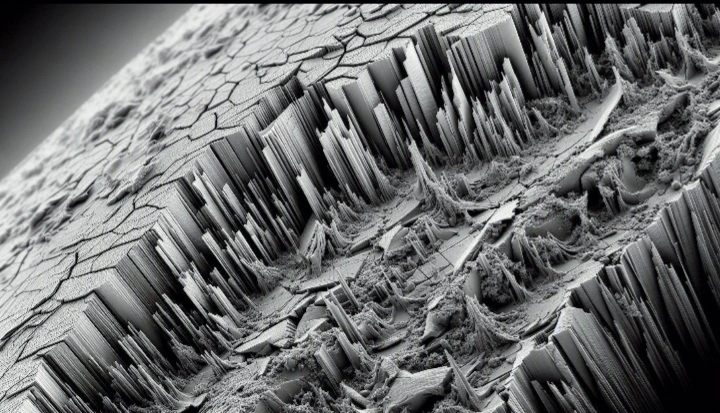

Cryogenic Delamination Resistance and Fracture Toughness of Z-Pinned Aramid-Epoxy Laminates

Introduction to Cryogenic Composite Degradation The deployment of advanced fiber-reinforced polymer composites in deep-space exploration, superconducting magnetic energy storage, and cryogenic propellant containment systems necessitates materials capable of sustaining complex multi-axial loads at temperatures approaching absolute zero. Aramid-epoxy laminates are frequently selected for these extreme environments due to the exceptional specific tensile strength and impact … Read more

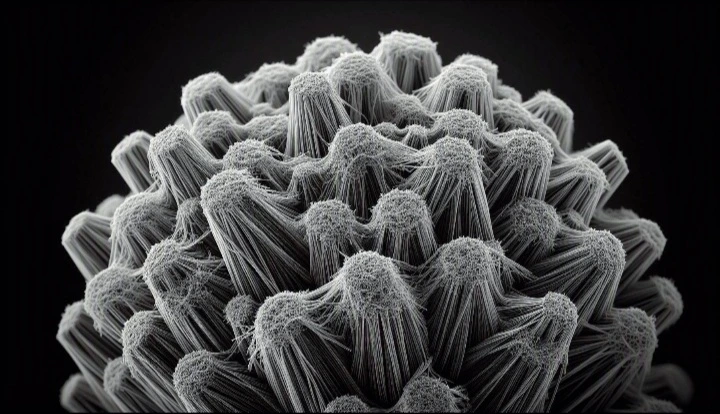
Computational Algorithms for Predicting Jamming Phase Transitions in Stochastic Fiber Networks

Introduction to Stochastic Fiber Networks Stochastic fiber networks represent a highly complex class of mechanical metamaterials where the spatial distribution, orientation, and entanglement of constituent fibers are governed by probabilistic distributions rather than deterministic geometric blueprints. Unlike woven or braided architectures, which possess repeating unit cells and predictable load paths, stochastic networks—such as non-woven felts, … Read more

Interfacial Shear Strength and Matrix Adhesion Dynamics in Silane-Treated Glass Fiber Rovings

Introduction to Glass Fiber Rovings and Interfacial Adhesion The structural efficacy of glass fiber reinforced polymers (GFRP) is fundamentally contingent upon the efficiency of stress transfer between the high-modulus inorganic reinforcing fibers and the relatively compliant organic polymer matrix. Glass fiber rovings, which consist of thousands of continuous, parallel filaments bundled together without twist, offer … Read more

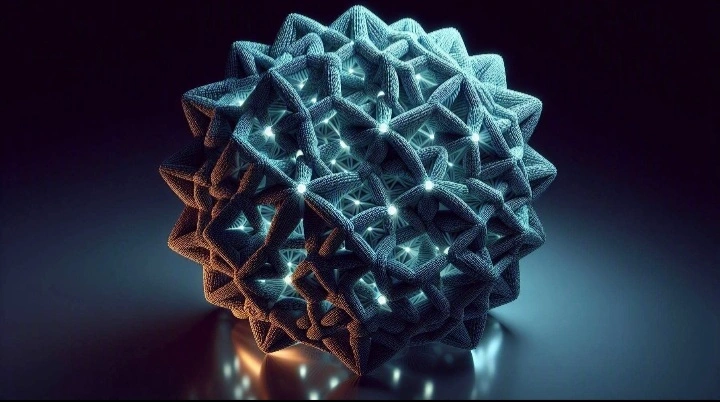
Morphological Computation and Programmable Stiffness in Origami-Inspired Crocheted Tessellations

Introduction to Origami-Inspired Tessellations in Textiles The intersection of origami mathematics and advanced textile engineering has catalyzed the development of a novel class of mechanical metamaterials: origami-inspired crocheted tessellations. Traditional origami relies on the continuous folding of a two-dimensional, inextensible manifold to create complex, deployable three-dimensional architectures. When this mathematical framework is translated into the … Read more

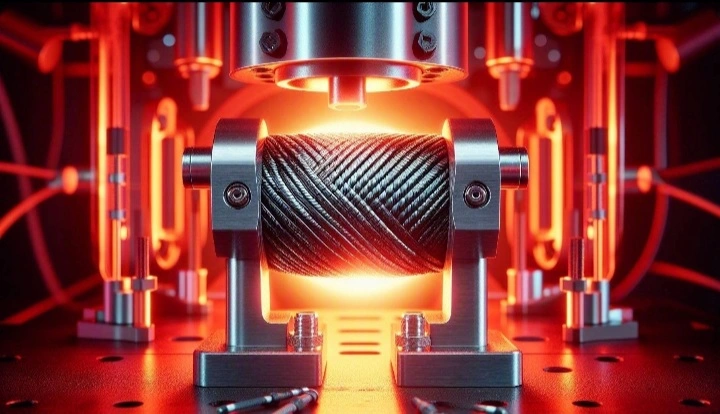
Thermo-Mechanical Fatigue and Creep Rupture Kinetics in Pitch-Based Carbon Fiber Braids

Introduction to Pitch-Based Carbon Fibers and Braided Architectures The relentless pursuit of high-performance materials for extreme aerospace, hypersonic, and advanced industrial applications has catalyzed the development of complex composite architectures capable of withstanding simultaneous thermal and mechanical extremes. At the forefront of this materials revolution are pitch-based carbon fibers. Unlike their polyacrylonitrile (PAN)-based counterparts, which … Read more

Coefficient of Thermal Expansion (CTE) Mismatch and Interfacial Shear Stress in Carbon-Glass Hybrid Textile Composites

Introduction to Hybrid Textile Composites The continuous evolution of advanced structural materials in the aerospace, marine, and renewable energy sectors has driven a paradigm shift toward the hybridization of fiber-reinforced polymers. While monolithic carbon fiber composites offer unparalleled specific stiffness and tensile strength, their inherent brittleness and high material costs often limit their application in … Read more

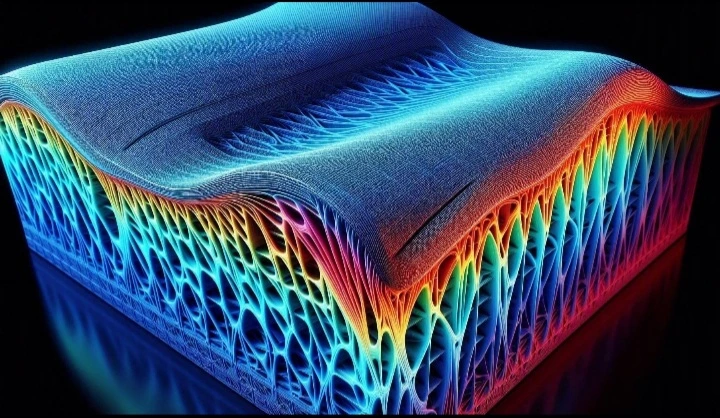
Energy Absorption and Impact Dynamics in Hierarchical Weft-Knitted Auxetic Metamaterials

Introduction to Weft-Knitted Auxetic Metamaterials The pursuit of advanced impact-resistant materials has increasingly focused on the unique mechanical properties of auxetic metamaterials. Characterized by a negative Poisson’s ratio, these structures exhibit the counter-intuitive behavior of expanding transversely when subjected to longitudinal tension, and conversely, contracting transversely under compression. When this auxetic behavior is engineered into … Read more

Effect of Electrospinning Voltage Gradients on the Tensile Modulus and Alignment of Polycaprolactone (PCL) Nanofibers

Introduction to Polycaprolactone Electrospinning Polycaprolactone (PCL) is a biodegradable, semi-crystalline aliphatic polyester that has garnered immense attention in the fields of tissue engineering, targeted drug delivery, and advanced filtration media. The fabrication of PCL into continuous, nanoscale fibrous networks is predominantly achieved through electrospinning, a highly versatile electrohydrodynamic process. During electrospinning, a viscous polymer solution … Read more

Compressive Yield Behavior and Thermal Insulation Efficacy of Alumina-Silicate Ceramic Fiber Mats

Introduction to Alumina-Silicate Ceramic Fibers In the demanding arenas of aerospace engineering, industrial metallurgy, and advanced power generation, the necessity for materials capable of withstanding extreme thermal gradients while simultaneously bearing significant mechanical loads is absolute. Alumina-silicate ceramic fiber mats have emerged as a critical solution to this dual-requirement challenge. Composed primarily of aluminum oxide … Read more