Cryogenic Delamination Resistance and Fracture Toughness of Z-Pinned Aramid-Epoxy Laminates
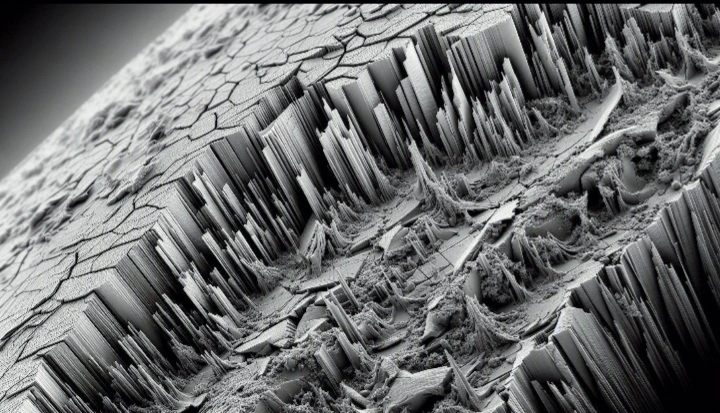
Introduction to Cryogenic Composite Degradation The deployment of advanced fiber-reinforced polymer composites in deep-space exploration, superconducting magnetic energy storage, and cryogenic propellant containment systems necessitates materials capable of sustaining complex multi-axial loads at temperatures approaching absolute zero. Aramid-epoxy laminates are frequently selected for these extreme environments due to the exceptional specific tensile strength and impact … Read more
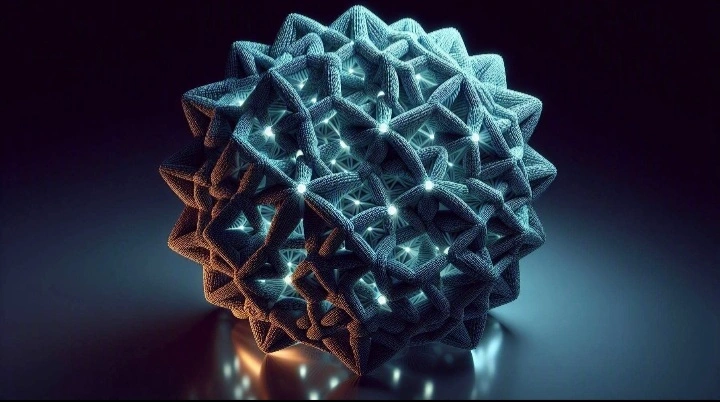
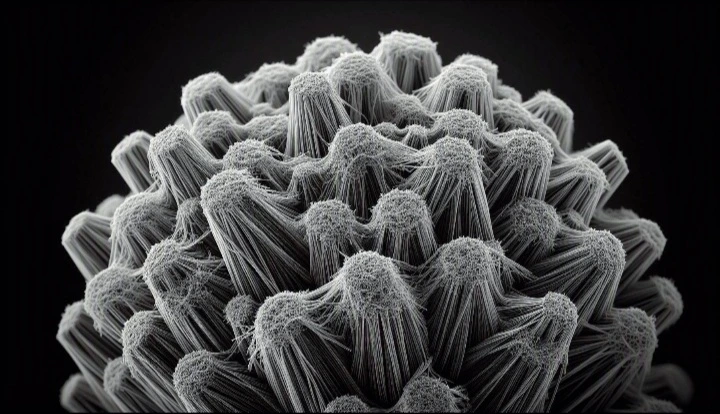
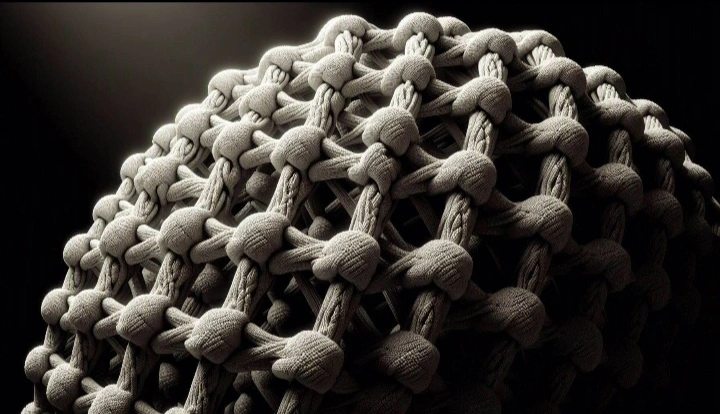
Morphological Computation and Programmable Stiffness in Origami-Inspired Crocheted Tessellations

Introduction to Origami-Inspired Tessellations in Textiles The intersection of origami mathematics and advanced textile engineering has catalyzed the development of a novel class of mechanical metamaterials: origami-inspired crocheted tessellations. Traditional origami relies on the continuous folding of a two-dimensional, inextensible manifold to create complex, deployable three-dimensional architectures. When this mathematical framework is translated into the … Read more

Effect of Electrospinning Voltage Gradients on the Tensile Modulus and Alignment of Polycaprolactone (PCL) Nanofibers

Introduction to Polycaprolactone Electrospinning Polycaprolactone (PCL) is a biodegradable, semi-crystalline aliphatic polyester that has garnered immense attention in the fields of tissue engineering, targeted drug delivery, and advanced filtration media. The fabrication of PCL into continuous, nanoscale fibrous networks is predominantly achieved through electrospinning, a highly versatile electrohydrodynamic process. During electrospinning, a viscous polymer solution … Read more

Topological Invariants and Knot Theory Applications in Multi-Axial Crocheted Tensegrity Structures

Introduction to Crocheted Tensegrity Systems The architectural paradigm of tensegrity—a portmanteau of tensional integrity—has traditionally been defined by a system of isolated, rigid compressive elements (struts) suspended within a continuous network of flexible tensile elements (cables). This structural principle yields highly resilient, lightweight frameworks capable of distributing localized stresses globally across the entire geometric matrix. … Read more

Ablative Performance and Heat Shielding Efficacy of Phenolic-Impregnated Silica Textiles in Hypersonic Environments

Introduction to Hypersonic Thermal Protection Systems The advent of hypersonic flight vehicles, operating at velocities exceeding Mach 5, has precipitated a critical demand for advanced Thermal Protection Systems (TPS). During atmospheric reentry or sustained hypersonic cruise, vehicles are subjected to extreme aerodynamic heating generated by shock wave compression and intense boundary layer skin friction. To … Read more

Bifurcation Analysis of Auxetic Instabilities in Chiral Crocheted Lattices Subjected to Biaxial Tension

Introduction to Chiral Crocheted Metamaterials The engineering of mechanical metamaterials has increasingly focused on the exploitation of complex geometric architectures to achieve non-conventional macroscopic properties. Among these, topologically interlocked fibrous networks, specifically those fabricated via advanced crocheting techniques, offer a unique platform for developing highly compliant, energy-dissipating structures. Unlike traditional woven or braided composites, where … Read more

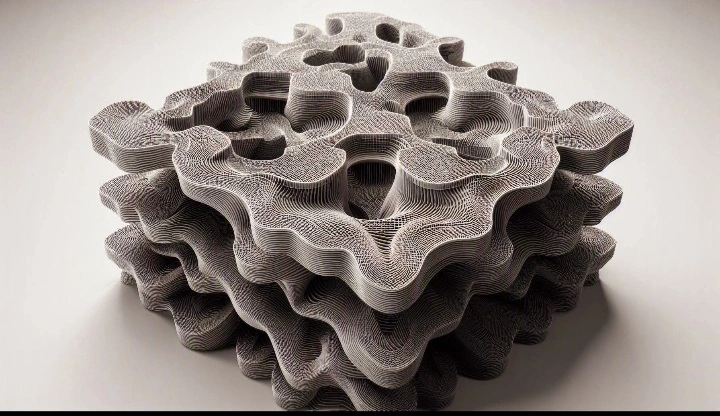
Non-Linear Mechanics of Helical Yarn Entanglement in Triply Periodic Minimal Surface (TPMS) Architectures

Introduction to TPMS Architectures in Fibrous Networks The conceptualization of Triply Periodic Minimal Surfaces (TPMS) has historically been confined to the realms of differential geometry, crystallography, and the study of lipid bilayers in biological systems. A minimal surface is defined mathematically as a surface that locally minimizes its area for a given boundary, possessing a … Read more

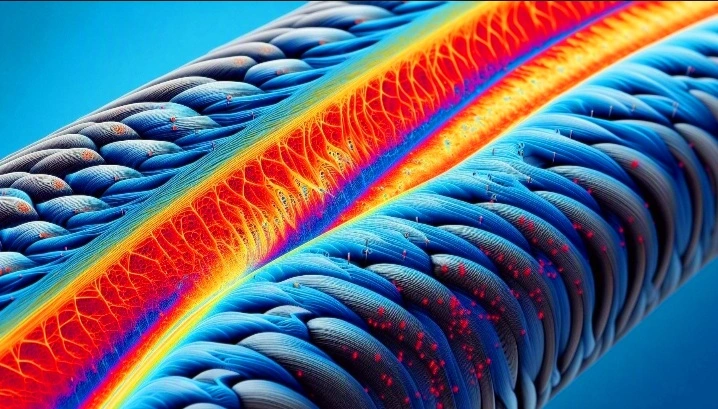
Anisotropic Thermal Conductivity in Biaxial Braided Carbon Fiber Composites Under Compressive Loading

Introduction to Anisotropic Thermal Dynamics Carbon fiber reinforced polymers are renowned for their exceptional specific strength and stiffness, but their thermal properties are equally critical in high-performance aerospace and automotive applications. The inherent structure of a carbon fiber, characterized by highly aligned graphitic basal planes along the longitudinal axis, results in extreme thermal anisotropy. Thermal … Read more

Rheological Behavior of Non-Newtonian Shear-Thickening Fluids in Capillary Fiber Networks

Introduction to Shear-Thickening Fluid Dynamics The integration of non-Newtonian shear-thickening fluids (STFs) into high-performance capillary fiber networks represents a transformative approach in the engineering of advanced energy-dissipating composites. Traditional ballistic and impact-resistant textiles, such as those woven from para-aramid or ultra-high molecular weight polyethylene (UHMWPE) yarns, rely entirely on the dry frictional interactions and the … Read more

Comparative Matrix: Thermal Conductivity in Synthetic vs. Natural Interlocked Polymers

Thermodynamic Fundamentals of Polymer Matrices Phonon Scattering and Heat Flux Mechanisms The thermal conductivity of polymer matrices is fundamentally governed by phonon transport mechanisms. Unlike metallic structures where free electrons facilitate rapid heat transfer, polymers rely on the propagation of quantized lattice vibrations, or phonons. According to Fourier’s law of heat conduction, the intrinsic thermal … Read more