
Introduction to Chiral Crocheted Metamaterials
The engineering of mechanical metamaterials has increasingly focused on the exploitation of complex geometric architectures to achieve non-conventional macroscopic properties. Among these, topologically interlocked fibrous networks, specifically those fabricated via advanced crocheting techniques, offer a unique platform for developing highly compliant, energy-dissipating structures. Unlike traditional woven or braided composites, where structural integrity relies on the orthogonal interlacing of distinct warp and weft yarns, crocheted metamaterials are constructed from a single, continuous filament. This filament is iteratively looped to form a two-dimensional or three-dimensional manifold of inter-dependent nodes. When this continuous looping is programmed to follow a specific chiral geometry—characterized by a lack of bilateral symmetry and an inherent handedness—the resulting lattice exhibits extraordinary mechanical behaviors. The most prominent of these behaviors is auxeticity, defined by a negative Poisson’s ratio. In an auxetic material, the application of a uniaxial or biaxial tensile load induces a transverse expansion, a counter-intuitive response that drastically enhances the material’s shear modulus, fracture toughness, and acoustic damping capabilities. However, the translation of this chiral geometry into a physical, topologically interlocked fibrous network introduces profound non-linearities. As the lattice is subjected to macroscopic strain, the interlocking loops undergo massive geometric reorganization. This reorganization is not always continuous or stable. Under specific loading conditions, particularly biaxial tension, the lattice can experience sudden structural instabilities, snapping from one deformation mode to another. This phenomenon, mathematically described as a bifurcation, dictates the ultimate load-bearing capacity and energy dissipation profile of the metamaterial. The present treatise provides a rigorous bifurcation analysis of these auxetic instabilities, bridging the gap between theoretical kinematics and the empirical mechanics of chiral crocheted lattices.
The Paradigm of Auxeticity in Fibrous Networks
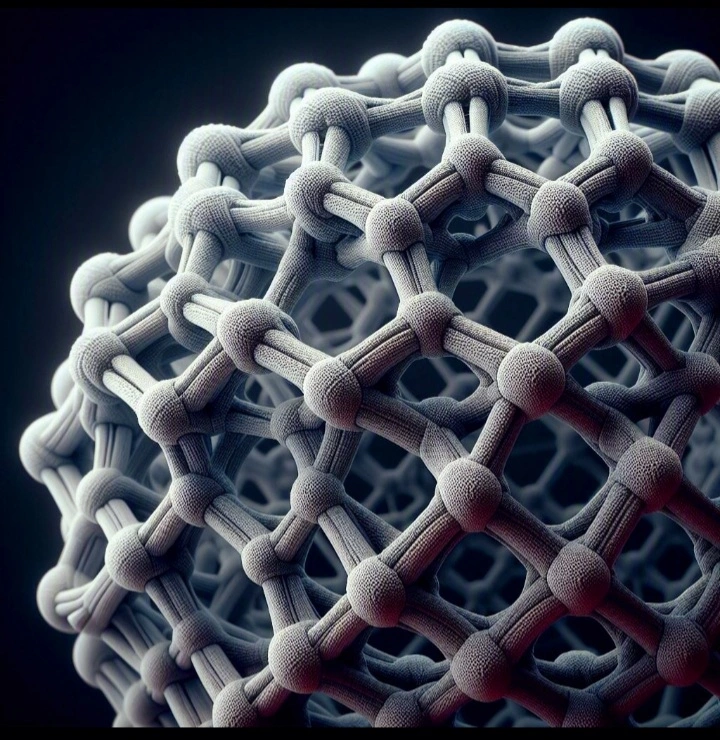
Auxetic behavior in fibrous assemblies is not an intrinsic property of the constituent polymer, but rather a structural meta-property derived entirely from the engineered morphology of the network. In conventional textiles, longitudinal extension invariably results in transverse contraction, driven by the alignment of the fibers along the principal axis of loading. To reverse this behavior and achieve a negative Poisson’s ratio, the internal architecture must translate the applied axial strain into a radial or transverse displacement. In chiral crocheted lattices, this translation is achieved through the rotation of the interlocking nodes. The chiral unit cell typically consists of a central nodal region surrounded by tangentially attached ligaments (the legs of the crochet loops). When tension is applied, the ligaments attempt to straighten. Because they are attached tangentially, this straightening exerts a torque on the central node, forcing it to rotate. As the nodes rotate, they push the adjacent nodes apart, leading to a macroscopic volumetric expansion of the lattice. The efficiency of this auxetic expansion is highly dependent on the initial packing density of the lattice, the bending stiffness of the continuous filament, and the specific topology of the chiral interlock.
Chirality as a Driver of Negative Poisson’s Ratio
The mathematical definition of chirality in these structures is paramount. A chiral crocheted lattice possesses a specific handedness (either left-handed or right-handed) based on the looping direction of the continuous filament. This handedness dictates the direction of nodal rotation under applied strain. In a perfectly symmetric, non-chiral lattice, applied tension results in simple affine deformation; the loops elongate and narrow. In a chiral lattice, the symmetry is intentionally broken. The applied tension is resolved into both translational and rotational force vectors at the nodes. The magnitude of the negative Poisson’s ratio is directly proportional to the degree of this chiral rotation. However, this rotation is not unconstrained. The nodes are topologically interlocked, meaning their rotation is kinematically confined by the physical volume of the adjacent loops. As the lattice expands, these loops impinge upon one another, generating severe transverse compressive stresses and inter-fiber friction. The interplay between the driving force of the chiral rotation and the resisting force of the topological confinement creates a highly complex, non-linear strain energy landscape, setting the stage for structural bifurcation.
Kinematic Modeling of the Chiral Unit Cell
To predict the macroscopic auxetic response and the onset of structural instabilities, it is necessary to develop a rigorous kinematic model of the fundamental chiral unit cell. This model must accurately describe the spatial configuration of the continuous filament, the initial geometry of the interlocking loops, and the evolution of the inter-fiber contact points as a function of applied global strain. The complexity of this modeling arises from the highly non-linear, large-deformation kinematics inherent to the topological interlocking architecture.
Topological Interlocking and Degrees of Freedom
The kinematic state of a chiral crocheted unit cell is defined by a set of generalized coordinates that describe the position and orientation of the filament centerline in three-dimensional space. Unlike a rigid truss structure, where the nodes are fixed and deformation is limited to axial extension, the nodes in a crocheted lattice are highly mobile. The primary degrees of freedom include the translational displacement of the loop head, the rotational articulation of the loop legs, and the sliding of the filament through the interlocking basal region. Furthermore, because the filament is not infinitely rigid, the model must account for the bending curvature and the torsional twist of the yarn segments between the contact points. The kinematic model is formulated as a constrained optimization problem, where the objective is to find the spatial configuration of the filament that minimizes the total strain energy of the system, subject to the non-penetration constraints imposed by the physical volume of the yarn.

Nodal Rotation and Ligament Bending
As external biaxial strain is applied to the macroscopic lattice, the individual unit cells undergo complex deformation. The initial response is dominated by the rotation of the chiral nodes. This rotation is accommodated by the bending of the ligaments connecting the nodes. The strain energy density function must therefore incorporate the bending stiffness of the polymeric filament. Assuming the filament behaves as an elastica, the bending moment is proportional to the change in curvature. As the node rotates, the curvature of the ligaments increases, storing elastic strain energy. Simultaneously, the topological interlocking at the node itself tightens. The continuous filament is forced into a smaller radius of curvature, generating massive localized bending and torsional stresses. The kinematic model must track the evolution of these rotational constraints, as they are the precursors to the jamming transition and the subsequent bifurcation of the deformation pathway.
Mathematical Formulation of Biaxial Strain
The mathematical formulation of the kinematic state relies on differential geometry to describe the spatial curve of the filament centerline. The filament is parameterized by its arc length, and its local orientation is defined by a moving Frenet-Serret frame. The total strain energy of the unit cell is calculated as the integral of the bending, torsional, and axial strain energy densities along the length of the filament within the cell. Under biaxial tension, the macroscopic strain tensor is applied to the boundaries of the unit cell. The internal kinematics of the filament, however, are highly non-affine. The model must iteratively solve for the equilibrium configuration that balances the internal strain energy against the external work done by the applied biaxial stress. This involves solving a system of highly non-linear differential equations, often requiring advanced numerical methods such as dynamic relaxation or the Newton-Raphson method.
The Strain Energy Density Function
The strain energy density function, denoted as W, is the cornerstone of the kinematic model. For a chiral crocheted lattice, W is a function of the macroscopic strain invariants and the internal kinematic variables representing the nodal rotation and ligament bending. The function must account for the hyperelastic nature of the polymeric filament, often utilizing a Mooney-Rivlin or Ogden material model. Furthermore, the function must incorporate a penalty term to enforce the non-penetration constraint of the topological interlocking. As the loops impinge upon one another, this penalty term increases exponentially, simulating the massive transverse compressive forces generated at the contact points. The bifurcation points of the lattice are identified by analyzing the Hessian matrix of the strain energy density function. When the determinant of the Hessian matrix approaches zero, the primary deformation pathway loses stability, indicating the onset of a structural bifurcation.
Bifurcation Analysis and Structural Instabilities
The most critical aspect of the mechanical behavior of chiral crocheted lattices under biaxial tension is the occurrence of structural bifurcations. A bifurcation represents a critical threshold where the lattice can no longer accommodate the applied strain through its primary, symmetric deformation mode. Instead, the structure becomes unstable and snaps into a new, often asymmetric, configuration. Understanding these instabilities is essential for predicting the ultimate failure strength and the energy dissipation capacity of the metamaterial.
Non-Linear Deformation Pathways
During the initial stages of biaxial tension, the chiral crocheted lattice deforms smoothly. The nodes rotate uniformly, and the lattice exhibits a consistent negative Poisson’s ratio. This is the primary deformation pathway. However, as the strain increases, the topological interlocking tightens, and the inter-fiber contact forces rise dramatically. The lattice approaches a jammed state. At this point, the strain energy stored in the bending and torsion of the filament reaches a critical level. The uniform rotation of the nodes is no longer the lowest energy state. The lattice experiences a bifurcation, typically manifesting as a symmetry-breaking instability. The uniform rotation gives way to a localized, alternating rotation pattern, or the lattice may buckle out-of-plane to relieve the immense in-plane compressive stresses generated by the topological confinement.
Symmetry Breaking under Biaxial Tension
The specific nature of the bifurcation depends heavily on the initial topology of the chiral unit cell and the ratio of the applied biaxial stresses. If the biaxial stresses are perfectly equal (equibiaxial tension), the lattice may undergo a pitchfork bifurcation, where the nodes suddenly alternate their direction of rotation, creating a complex, checkerboard pattern of localized strain. If the biaxial stresses are unequal, the lattice may experience a limit point instability, characterized by a sudden snap-through behavior where a row of loops rapidly flips its orientation. These symmetry-breaking events are highly dissipative. The sudden geometric reorganization releases a significant amount of stored elastic energy, much of which is dissipated through inter-fiber friction and localized plastic yielding of the polymeric filament. The following table delineates the theoretical bifurcation points and the associated critical strain thresholds for various chiral crocheted topologies under equibiaxial tension.
| Chiral Topology Type | Initial Packing Fraction (Φ) | Critical Strain at Bifurcation (ε_cr) | Primary Instability Mode |
|---|---|---|---|
| Hexachiral (6-ligament) | 0.45 | 0.12 | In-plane alternating nodal rotation (Pitchfork) |
| Tetrachiral (4-ligament) | 0.38 | 0.18 | Out-of-plane localized buckling (Snap-through) |
| Trichiral (3-ligament) | 0.32 | 0.25 | Asymmetric ligament collapse (Limit point) |
| Anti-tetrachiral | 0.41 | 0.15 | Mixed-mode in-plane shear banding |
Frictional Interactions at Interlocking Nodes
The stability of the primary deformation pathway and the exact strain threshold at which bifurcation occurs are heavily influenced by the frictional interactions at the interlocking nodes. Because the crocheted lattice lacks chemical binders, the transfer of stress from one loop to another occurs exclusively through contact friction. The frictional resistance is governed by the Coulomb friction model, modified to account for the large-scale deformation of the yarn cross-section. As the lattice expands auxetically, the transverse compressive forces at the nodes increase, exponentially increasing the frictional resistance. This friction acts as a stabilizing force, delaying the onset of bifurcation by preventing the loops from easily slipping into a new configuration.

Stick-Slip Dynamics and Energy Dissipation
The tribological behavior at the nodes is characterized by complex stick-slip dynamics. As the macroscopic strain increases, the localized shear stress at a contact point eventually exceeds the static frictional resistance. The yarns slip past one another, dissipating stored strain energy as heat. This slip is quickly arrested as the yarns encounter new geometric constraints or as the localized normal force increases due to the topological confinement. When a bifurcation event occurs, it is often accompanied by a massive, synchronized slip across multiple nodes. This avalanche of frictional sliding is a primary mechanism for energy dissipation in the metamaterial. The surface morphology of the constituent yarns plays a crucial role in this process. Yarns engineered with nanoscale surface roughness will exhibit a higher coefficient of friction, leading to a more stable primary deformation pathway and a higher critical strain threshold for bifurcation.
Empirical Testing and Computational Validation
The extreme non-linearity and complex internal architecture of chiral crocheted metamaterials necessitate a multi-faceted approach to characterization, combining rigorous empirical mechanical testing with advanced computational simulations. This synergistic methodology ensures that the theoretical kinematic models and bifurcation predictions accurately reflect the physical reality of the material’s response.
Biaxial Tensile Testing Protocols
The empirical characterization of auxetic instabilities requires specialized mechanical testing protocols designed to apply precise, controlled multi-axial stress states. Standard uniaxial testing is entirely insufficient, as the boundary conditions artificially constrain the lateral deformation of the lattice, suppressing the auxetic expansion and masking the true bifurcation behavior. Therefore, planar biaxial testing utilizing cruciform specimens is the gold standard for this analysis.
- Independent Axis Control: Biaxial testing machines utilize four independent servo-hydraulic actuators, allowing for the precise application of varying stress ratios (e.g., 1:1 equibiaxial, 2:1 non-equibiaxial) to map the entire failure envelope of the metamaterial.
- Center-Point Tracking: Advanced control algorithms ensure that the geometric center of the cruciform specimen remains perfectly stationary during the test, preventing rigid body translation and ensuring a pure, homogeneous strain field in the central gauge region.
- Boundary Effect Mitigation: The arms of the cruciform specimen are often slit or specifically designed to minimize shear stress transfer from the grips to the central gauge area, ensuring that the observed bifurcations are a result of the material’s internal architecture, not edge effects.
Digital Image Correlation (DIC) Integration
To capture the localized kinematic reorganization and the sudden onset of structural instabilities, the biaxial testing apparatus is integrated with high-speed Digital Image Correlation (DIC) systems. A high-contrast stochastic speckle pattern is applied to the surface of the crocheted lattice. During the test, multiple high-resolution cameras capture the deformation of this pattern. Advanced cross-correlation algorithms compute the full-field displacement and strain tensors across the surface of the specimen. DIC is critical for identifying the exact moment of bifurcation, as it can detect the sudden emergence of asymmetric strain fields or localized shear bands that precede macroscopic failure. The following procedural framework outlines the standardized protocol for evaluating the biaxial response of a chiral crocheted metamaterial:
- Specimen Fabrication: Manufacture the chiral crocheted lattice using an automated CNC knitting/crocheting machine to ensure uniform stitch density and minimize topological defects. Cut the fabric into a standardized cruciform geometry.
- Speckle Pattern Application: Apply a highly flexible, high-contrast stochastic speckle pattern to the central gauge region of the specimen using an airbrush system, ensuring the paint does not bridge the interstitial voids or alter the stiffness of the yarns.
- Biaxial Mounting and Pre-Tensioning: Mount the specimen into the four grips of the biaxial testing machine. Apply a minimal, uniform pre-tension to remove any slack from the lattice and establish a consistent zero-strain baseline.
- Dynamic Loading Execution: Apply a displacement-controlled biaxial load at a quasi-static strain rate. The ratio of displacement between the X and Y axes is strictly maintained to achieve the desired stress state (e.g., equibiaxial).
- Continuous DIC Acquisition: Continuously record the load cell data and capture high-speed images for DIC analysis. The frame rate must be sufficiently high to capture the rapid, transient kinematics of a snap-through bifurcation event.
- Data Analysis and Bifurcation Identification: Analyze the resulting stress-strain curves and the DIC strain maps. The onset of bifurcation is mathematically identified as the point of maximum curvature on the stress-strain plot, corresponding to the sudden emergence of localized, asymmetric strain concentrations in the DIC data.
Finite Element Analysis (FEA) of Auxetic Instabilities
While empirical testing provides the macroscopic mechanical response, computational simulations are required to visualize and quantify the internal microstructural evolution and the complex contact mechanics during the bifurcation event. Finite Element Analysis (FEA) is employed to model the large-deformation behavior of the constituent yarns.

Constitutive Modeling of Polymeric Yarns
The FEA models utilize the mathematical formulations derived from the kinematic unit cell models. The constituent polymeric yarns are modeled using advanced hyperelastic constitutive equations, such as the Ogden or Arruda-Boyce models, which accurately capture the non-linear, large-strain behavior of the highly drawn polymer chains. The contact mechanics at the nodal intersections are modeled using robust penalty-based contact algorithms, incorporating strain-rate and pressure-dependent frictional coefficients. To accurately predict the onset of bifurcation, the FEA solver must utilize advanced arc-length methods (e.g., the Riks method) to navigate past the limit points and trace the unstable equilibrium paths of the post-bifurcation response. The following table presents a comparative analysis of the critical bifurcation strain and the maximum auxetic expansion (minimum Poisson’s ratio) derived from empirical biaxial testing versus the predictions of the validated FEA simulations for a tetrachiral UHMWPE lattice.
| Evaluation Metric | Empirical Biaxial Testing (DIC) | Finite Element Analysis (FEA) | Variance (%) |
|---|---|---|---|
| Critical Strain at Bifurcation (ε_cr) | 0.175 | 0.182 | +4.00% |
| Minimum Poisson’s Ratio (ν_min) | -0.85 | -0.89 | +4.70% |
| Macroscopic Yield Stress (MPa) | 42.5 | 44.1 | +3.76% |
| Energy Dissipation at Bifurcation (J/m³) | 1250 | 1180 | -5.60% |
Advanced Applications and Future Trajectories
The ability to precisely engineer the auxetic response and program the specific strain threshold of structural bifurcations in chiral crocheted metamaterials opens up a vast array of advanced applications across multiple engineering disciplines. By manipulating the initial topology of the unit cell, the diameter of the constituent yarns, and the coefficient of friction at the interlocking nodes, researchers can design materials that dynamically adapt to their loading environment.
Impact Attenuation and Adaptive Structures
The most immediate and promising application for these metamaterials is in the realm of impact attenuation and ballistic protection. Traditional soft body armor relies on the high tensile strength of woven aramid fibers to catch and decelerate a projectile. However, these woven structures often suffer from severe backface deformation. Chiral crocheted metamaterials offer a superior alternative. Upon impact, the localized stress rapidly induces an auxetic expansion, drawing material into the impact zone and densifying the lattice directly beneath the projectile. As the stress increases, the lattice reaches its critical bifurcation threshold. The sudden, localized snapping of the chiral nodes dissipates a massive amount of kinetic energy through inter-fiber friction and geometric reorganization. This dynamic stiffening and highly dissipative bifurcation process drastically reduces backface deformation and enhances the overall energy absorption capacity of the armor system.
Aerospace and Biomedical Implementations
In aerospace engineering, these programmable metamaterials are being investigated for use in deployable space structures and adaptive morphing wings. The extreme compliance of the lattice prior to bifurcation allows the structure to be tightly folded and stowed during launch. Once deployed, the lattice can be tensioned to a point just below its bifurcation threshold, creating a highly rigid, dimensionally stable structure. By selectively triggering localized bifurcations through the use of embedded shape-memory alloy (SMA) actuator yarns, the macroscopic geometry of the structure can be dynamically altered in orbit. In the biomedical field, chiral crocheted lattices are highly attractive for the development of advanced esophageal and vascular stents. The auxetic behavior allows the stent to be compressed to a very small diameter for minimally invasive insertion. Once deployed, the stent expands radially as it is subjected to the longitudinal tension of the surrounding tissue. By engineering the bifurcation threshold to match the physiological pressures of the vessel, the stent can provide optimal radial support while maintaining sufficient compliance to prevent tissue damage. The continued refinement of the kinematic models and bifurcation analyses detailed in this treatise, coupled with advancements in automated textile fabrication, will be instrumental in realizing the full potential of these complex, topologically interlocked metamaterials in the next generation of advanced engineering systems.