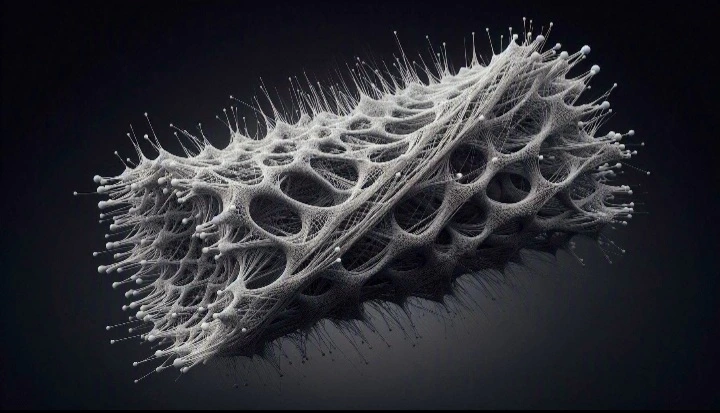
Introduction to 3D-Woven Preforms
The engineering of advanced composite materials for aerospace, ballistic, and high-performance automotive applications has historically relied on two-dimensional laminated structures. While these materials offer exceptional in-plane specific strength and stiffness, their susceptibility to out-of-plane impact and subsequent delamination remains a critical structural vulnerability. To address this, the field of textile engineering has pivoted towards three-dimensional (3D) woven preforms. These complex architectures integrate through-thickness reinforcement directly into the weaving process, creating a topologically interlocked matrix that fundamentally alters the material’s response to dynamic loading. The optimization of these 3D topologies is not a trivial endeavor; it requires a rigorous mathematical approach to balance in-plane mechanical properties with enhanced out-of-plane impact resistance. As articulated by Dr. H. V. Konda in his seminal treatise on advanced fibrous networks, the true potential of three-dimensional weaving lies in the deterministic placement of z-yarns to arrest delamination before it propagates, transforming a layered vulnerability into a monolithic stronghold.
The present discourse provides a comprehensive analysis of topology optimization methodologies applied to 3D-woven preforms, elucidating the specific mechanical mechanisms that govern their superior out-of-plane impact resistance.
The Limitations of 2D Laminates
To fully appreciate the necessity of 3D-woven preforms, one must first understand the inherent limitations of conventional 2D laminates. In a standard 2D composite, the reinforcing fibers are oriented exclusively in the x-y plane. The structural integrity in the z-direction (through-thickness) relies entirely on the relatively weak polymer matrix. When subjected to an out-of-plane impact, such as a bird strike on an aircraft radome or a ballistic projectile striking body armor, the impact energy generates severe interlaminar shear and tensile stresses. Because the polymer matrix lacks the strength to withstand these forces, the composite fails via delamination—the separation of the individual plies. This delamination drastically reduces the compressive strength of the structure, often leading to catastrophic failure even if the in-plane fibers remain intact. The absence of kinematic confinement in the z-direction means that the plies are free to buckle and separate, dissipating energy through a highly destructive and irreversible failure mode. Consequently, the design of impact-resistant structures using 2D laminates often requires significant over-engineering, adding undesirable weight and volume to the final component.
Kinematic Confinement via Z-Binders
The defining characteristic of a 3D-woven preform is the inclusion of z-binder yarns, which traverse the thickness of the preform and mechanically lock the multiple layers of warp and weft yarns together. These z-binders provide essential kinematic confinement, fundamentally altering the load transfer mechanisms within the composite. When an out-of-plane impact occurs, the z-binders act as structural columns, resisting the interlaminar shear and tensile stresses that would otherwise cause delamination. The topological interlocking of the z-binders with the in-plane yarns creates a highly coupled, three-dimensional stress state. Instead of the impact energy localizing at the interlaminar boundaries, it is distributed throughout the volumetric matrix. The z-binders undergo severe axial tension and transverse compression, dissipating energy through localized plastic deformation and frictional sliding against the adjacent in-plane yarns. This kinematic confinement ensures that the composite behaves as a monolithic structure rather than a collection of independent plies, exponentially increasing its damage tolerance and structural resilience under dynamic loading.
Topological Interlocking in Orthogonal Weaves
Among the various 3D weaving architectures, the orthogonal weave is particularly notable for its high volume fraction and excellent structural stability. In an orthogonal 3D weave, the warp and weft yarns remain perfectly straight and orthogonal to one another, maximizing their in-plane tensile properties. The z-binders are inserted orthogonally through the thickness, creating a highly ordered, grid-like topology. The topological interlocking in this architecture is characterized by the precise nodal intersections where the z-binders loop around the outermost weft yarns. These interlocking nodes act as severe stress concentrators during impact. The optimization of this topology involves tailoring the density and distribution of these nodes to maximize energy dissipation without compromising the in-plane stiffness of the preform. By carefully controlling the tension of the z-binders during the weaving process, engineers can induce a state of pre-compression within the preform, further enhancing its resistance to out-of-plane deformation. The resulting orthogonal matrix exhibits a highly non-linear mechanical response, characterized by extreme rigidity under low-stress regimes and a dynamic, highly dissipative yielding under high-velocity impact.
Topology Optimization Methodologies
The design of 3D-woven preforms has traditionally relied on empirical trial-and-error methodologies, which are time-consuming, costly, and often yield sub-optimal architectures. To fully exploit the potential of these complex structures, researchers have increasingly turned to computational topology optimization. This advanced mathematical approach seeks to determine the optimal spatial distribution of material within a defined design domain to maximize a specific performance objective, such as out-of-plane impact resistance, subject to various constraints, such as weight or manufacturing feasibility. In the context of 3D weaving, topology optimization involves determining the ideal trajectory, density, and cross-sectional profile of the z-binder yarns. This is a highly complex, multi-scale optimization problem. At the micro-scale, the optimization must account for the anisotropic properties of the individual reinforcing fibers and the non-linear viscoelastic behavior of the polymer matrix. At the meso-scale, it must capture the complex contact mechanics and frictional interactions at the interlocking nodes. At the macro-scale, it must predict the global dynamic response of the composite structure under impact loading. To solve this multi-scale problem, researchers utilize advanced voxel-based finite element modeling coupled with heuristic optimization algorithms, such as genetic algorithms or simulated annealing. These algorithms iteratively evaluate thousands of potential weave architectures, gradually converging on a topologically optimized preform that maximizes energy dissipation through specific, programmed failure mechanisms, such as controlled z-binder pull-out or localized matrix yielding. The integration of these computational tools allows for the rapid virtual prototyping of advanced textile composites, significantly reducing the development cycle for new aerospace and ballistic materials.
Computational topology optimization transcends the limitations of empirical design, providing a rigorous mathematical framework for engineering the internal architecture of 3D-woven preforms to achieve unprecedented levels of impact resistance and structural efficiency.
Mechanics of Out-of-Plane Impact Resistance
The enhanced out-of-plane impact resistance of topologically optimized 3D-woven preforms is governed by a complex interplay of stress wave propagation, kinematic confinement, and multi-scale energy dissipation mechanisms. Unlike 2D laminates, where failure is localized and catastrophic, 3D preforms exhibit a highly distributed, progressive failure mode that maximizes the absorption of kinetic energy.
Stress Wave Propagation and Attenuation
Upon impact, a high-amplitude stress wave propagates through the composite structure. In a traditional 2D laminate, this wave travels rapidly along the stiff in-plane fibers but is severely impeded in the through-thickness direction by the compliant polymer matrix, leading to massive interlaminar stress concentrations. In a 3D-woven preform, the z-binders provide continuous, high-stiffness pathways for the stress wave to travel through the thickness of the material. This rapid through-thickness propagation effectively disperses the impact energy over a much larger volumetric area, reducing the localized stress intensity at the point of impact. Furthermore, the complex, undulating trajectories of the interlocking yarns create a highly heterogeneous acoustic impedance profile within the preform. As the stress wave encounters these impedance mismatches at the nodal intersections, it undergoes continuous reflection, refraction, and scattering. This acoustic attenuation significantly reduces the amplitude of the stress wave before it reaches the back face of the composite, mitigating the risk of spallation and catastrophic structural failure.
The deterministic placement of z-binders in a 3D-woven architecture fundamentally alters the acoustic impedance landscape of the composite, transforming localized impact energy into a highly attenuated, volumetrically distributed stress wave.
Delamination Suppression and Frictional Pull-Out
The primary mechanism by which 3D-woven preforms resist out-of-plane impact is the suppression of delamination through the kinematic confinement provided by the z-binders. When the impact energy attempts to separate the layers of the preform, the z-binders are subjected to severe axial tension. The topological optimization of the preform ensures that these z-binders are positioned precisely where the interlaminar shear stresses are highest. As the z-binders stretch, they absorb a significant amount of elastic strain energy. If the impact energy exceeds the ultimate tensile strength of the z-binders, they do not fail instantaneously. Instead, the complex topological interlocking induces a highly dissipative failure mode known as frictional pull-out. As the ruptured z-binder is pulled through the dense matrix of in-plane yarns, it must overcome immense frictional resistance. This stick-slip frictional sliding dissipates a massive amount of kinetic energy as heat, significantly increasing the macroscopic fracture toughness of the composite. The optimization algorithms specifically design the nodal intersections to maximize this frictional resistance without causing premature fiber rupture.
Future Trajectories in Preform Engineering
The continued advancement of 3D-woven preforms relies on the seamless integration of computational topology optimization with next-generation manufacturing technologies. Future research trajectories are heavily focused on the development of multi-material 3D weaving, where different types of yarns—such as high-stiffness carbon fibers, high-toughness aramid fibers, and highly compliant elastomeric filaments—are strategically placed within the preform to create functionally graded architectures. By optimizing the topological distribution of these distinct materials, engineers can create composites that exhibit extreme surface hardness to shatter projectiles, coupled with a highly compliant, energy-absorbing core to mitigate blunt force trauma. Furthermore, the integration of stimuli-responsive smart yarns into the 3D architecture holds immense potential for the development of adaptive structural health monitoring systems. These smart yarns, embedded during the weaving process, can provide real-time data on the internal stress state and the accumulation of micro-damage, allowing for predictive maintenance and enhanced operational safety. As computational power increases and weaving technologies become more sophisticated, the ability to precisely engineer the internal topology of 3D-woven preforms will unlock new frontiers in the design of ultra-lightweight, hyper-resilient structural materials for the most demanding engineering applications.
The future of advanced impact-resistant structures lies in the convergence of multi-material functional grading and rigorous topology optimization, enabling the creation of 3D-woven metamaterials that dynamically adapt to the severity of the applied load.