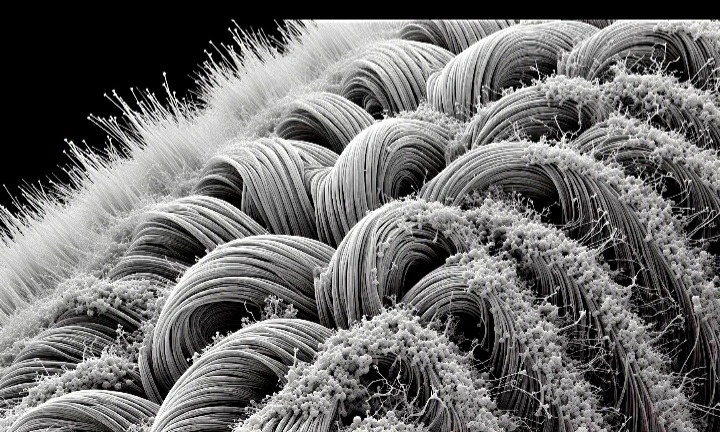
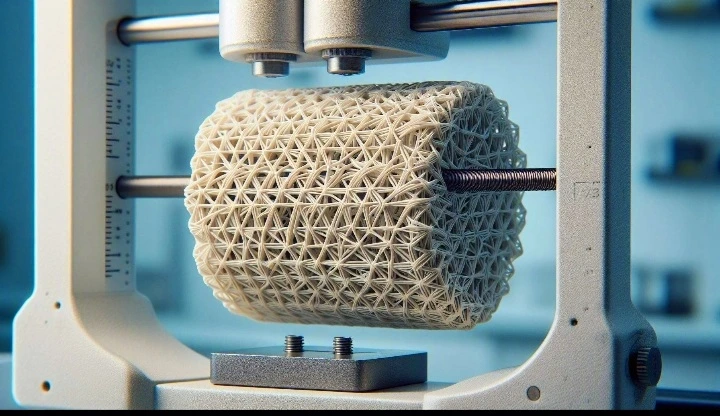
Computational Algorithms for Predicting Jamming Phase Transitions in Stochastic Fiber Networks

Introduction to Stochastic Fiber Networks Stochastic fiber networks represent a highly complex class of mechanical metamaterials where the spatial distribution, orientation, and entanglement of constituent fibers are governed by probabilistic distributions rather than deterministic geometric blueprints. Unlike woven or braided architectures, which possess repeating unit cells and predictable load paths, stochastic networks—such as non-woven felts, … Read more
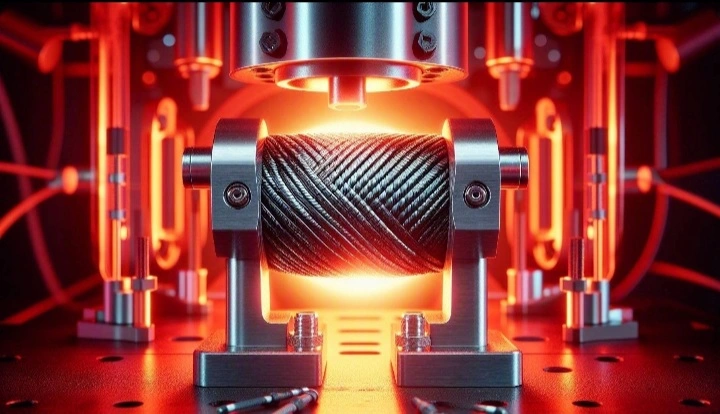
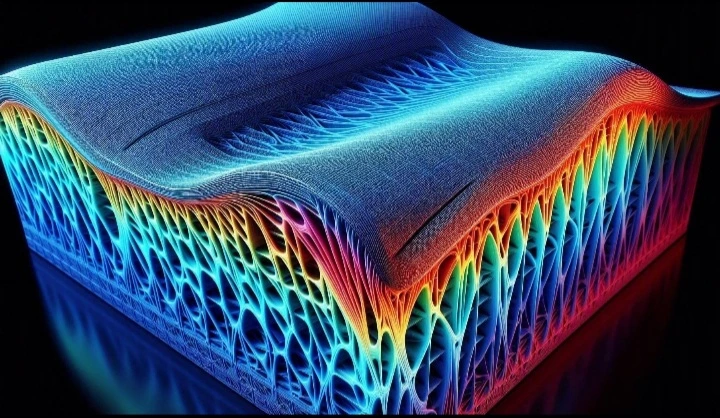
Thermo-Mechanical Fatigue and Creep Rupture Kinetics in Pitch-Based Carbon Fiber Braids

Introduction to Pitch-Based Carbon Fibers and Braided Architectures The relentless pursuit of high-performance materials for extreme aerospace, hypersonic, and advanced industrial applications has catalyzed the development of complex composite architectures capable of withstanding simultaneous thermal and mechanical extremes. At the forefront of this materials revolution are pitch-based carbon fibers. Unlike their polyacrylonitrile (PAN)-based counterparts, which … Read more

Coefficient of Thermal Expansion (CTE) Mismatch and Interfacial Shear Stress in Carbon-Glass Hybrid Textile Composites

Introduction to Hybrid Textile Composites The continuous evolution of advanced structural materials in the aerospace, marine, and renewable energy sectors has driven a paradigm shift toward the hybridization of fiber-reinforced polymers. While monolithic carbon fiber composites offer unparalleled specific stiffness and tensile strength, their inherent brittleness and high material costs often limit their application in … Read more

Compressive Yield Behavior and Thermal Insulation Efficacy of Alumina-Silicate Ceramic Fiber Mats

Introduction to Alumina-Silicate Ceramic Fibers In the demanding arenas of aerospace engineering, industrial metallurgy, and advanced power generation, the necessity for materials capable of withstanding extreme thermal gradients while simultaneously bearing significant mechanical loads is absolute. Alumina-silicate ceramic fiber mats have emerged as a critical solution to this dual-requirement challenge. Composed primarily of aluminum oxide … Read more

Influence of Draw Ratio on the Macromolecular Orientation and Tensile Modulus of Liquid Crystal Polymer (LCP) Fibers

Introduction to Liquid Crystal Polymer Fibers Liquid Crystal Polymers (LCPs) represent a pinnacle in high-performance fiber engineering, distinguished by their unique ability to exhibit highly ordered, crystalline-like molecular arrangements while still in a fluid or melt state. Unlike conventional flexible-chain polymers, such as polyethylene or nylon, which exist as randomly coiled entanglements in their molten … Read more

Fracture Toughness and Crack Propagation in Graphene-Oxide Doped Polyethylene Terephthalate (PET) Monofilaments

Introduction to Graphene-Oxide Doped Polyethylene Terephthalate Polyethylene terephthalate, commonly abbreviated as PET, is a highly versatile, semi-crystalline thermoplastic polymer that dominates the global synthetic fiber industry. Its widespread utilization in textile engineering, industrial rigging, and advanced composite matrices is primarily attributed to its exceptional tensile strength, high dimensional stability, and robust chemical resistance. However, despite … Read more

Hygrothermal Aging Effects on the Interlaminar Shear Strength of Kevlar-Reinforced Textile Matrices

Introduction to Hygrothermal Aging in Aramid Composites The deployment of Kevlar-reinforced textile matrices in aerospace, marine, and advanced ballistic applications exposes these high-performance composites to severe environmental conditions throughout their operational lifecycles. Among the most detrimental of these environmental factors is hygrothermal aging, a synergistic degradation process driven by the simultaneous exposure to elevated temperatures … Read more

Viscoelastic Creep and Stress Relaxation Dynamics in Electrospun Polyacrylonitrile (PAN) Nanofiber Yarns

Introduction to Electrospun PAN Nanofiber Yarns The continuous advancement of tensile polymer science has positioned electrospun Polyacrylonitrile (PAN) nanofiber yarns as a critical material in the development of next-generation structural composites, filtration media, and precursor materials for ultra-high-strength carbon fibers. Electrospinning, a versatile electrohydrodynamic process, enables the fabrication of continuous polymer filaments with diameters ranging … Read more

Cryogenic Resilience of Carbon-Nanotube Coated Polyamide Threads in Aerospace Load-Bearing Configurations

The deployment of flexible, high-strength fibrous materials in aerospace engineering is increasingly constrained by the extreme thermodynamic environments encountered in low Earth orbit and deep space exploration. Polyamide threads, traditionally valued for their exceptional tensile strength, high elasticity, and favorable strength-to-weight ratios under ambient conditions, undergo severe mechanical degradation when exposed to cryogenic temperatures. As … Read more

Microstructural Deformation Mechanisms in Ultra-High Molecular Weight Polyethylene (UHMWPE) Crocheted Lattices

Introduction to UHMWPE and Topological Interlocking The intersection of advanced polymer science and complex textile engineering has yielded a new class of high-performance materials capable of unprecedented energy dissipation and structural resilience. At the forefront of this intersection is Ultra-High Molecular Weight Polyethylene (UHMWPE), a thermoplastic polymer characterized by extremely long molecular chains, typically possessing … Read more