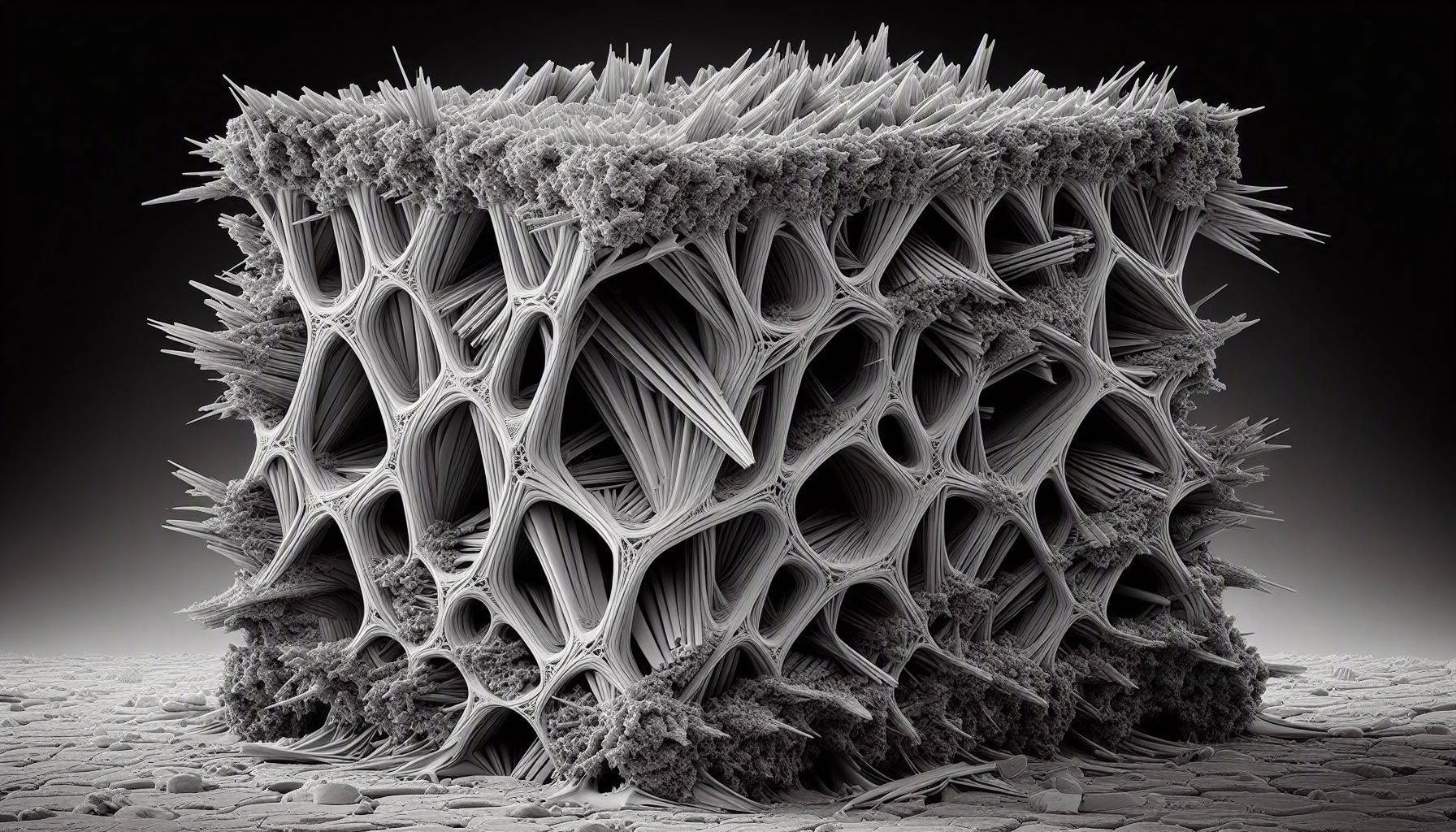
Introduction to Hygrothermal Aging in Aramid Composites
The deployment of Kevlar-reinforced textile matrices in aerospace, marine, and advanced ballistic applications exposes these high-performance composites to severe environmental conditions throughout their operational lifecycles. Among the most detrimental of these environmental factors is hygrothermal aging, a synergistic degradation process driven by the simultaneous exposure to elevated temperatures and high ambient humidity. Kevlar, the commercial designation for poly-paraphenylene terephthalamide, is an aramid fiber celebrated for its exceptional specific strength, high tensile modulus, and remarkable thermal stability. However, unlike carbon or glass fibers, aramid fibers are inherently hydrophilic. When woven into complex three-dimensional textile matrices and infused with polymeric resins, the resulting composite becomes highly susceptible to moisture ingress. The absorbed water molecules interact with both the polymer matrix and the aramid fibers, initiating a cascade of physical and chemical degradation mechanisms that severely compromise the structural integrity of the composite. The most critical mechanical property affected by this degradation is the interlaminar shear strength. This metric defines a composite’s resistance to shear forces acting parallel to the layers of the textile reinforcement. A reduction in interlaminar shear strength leads to premature delamination, catastrophic structural failure, and a drastic reduction in the operational lifespan of the component. This treatise provides a comprehensive analysis of the hygrothermal aging effects on Kevlar-reinforced matrices, elucidating the microstructural degradation pathways and their direct impact on interlaminar shear performance.
The Chemical Vulnerability of Poly-paraphenylene Terephthalamide
The inherent vulnerability of Kevlar to hygrothermal aging is deeply rooted in its macromolecular chemistry. Poly-paraphenylene terephthalamide is a rigid-rod polymer characterized by aromatic rings linked by amide groups. These amide linkages are highly polar and readily form strong hydrogen bonds with adjacent polymer chains, a structural feature that imparts the fiber with its extraordinary axial tensile strength and thermal resistance. However, this same polarity makes the amide groups highly reactive with water molecules. When exposed to a humid environment, water vapor permeates the composite and diffuses into the Kevlar fibers. The water molecules disrupt the inter-chain hydrogen bonding network, inserting themselves between the highly aligned polymer chains. This process, known as moisture-induced plasticization, increases the free volume within the fiber’s amorphous domains, thereby increasing chain mobility and significantly reducing the transverse modulus of the fiber. Furthermore, at elevated temperatures, the presence of water can initiate hydrolytic chain scission. Hydrolysis breaks the covalent bonds of the amide linkages, permanently reducing the molecular weight of the polymer and causing an irreversible loss of tensile strength. The combination of plasticization and hydrolysis fundamentally alters the mechanical properties of the reinforcing fibers, rendering them less capable of bearing the complex multi-axial loads transferred through the textile matrix.
Mechanisms of Moisture Diffusion in Textile Matrices
The ingress of moisture into a Kevlar-reinforced textile composite is not a uniform process; it is a complex, multi-scale phenomenon governed by the hierarchical architecture of the textile preform and the permeability of the polymer matrix. Moisture diffusion typically occurs through three primary mechanisms. The first mechanism is Fickian diffusion through the bulk polymer matrix. Most epoxy and phenolic resins utilized in these composites possess a finite free volume that allows water molecules to slowly permeate the matrix driven by a concentration gradient. The second mechanism involves capillary action along the fiber-matrix interface. If the interfacial adhesion is imperfect, or if micro-cracks are present due to thermal curing stresses, water can rapidly wick along the longitudinal axis of the yarns. This capillary transport is significantly faster than bulk diffusion and quickly delivers moisture deep into the core of the composite. The third mechanism is the direct absorption of water by the exposed Kevlar fibers at the composite edges or at sites of surface damage. Because the textile matrix consists of interlaced warp and weft yarns, the capillary pathways are highly tortuous and interconnected. As moisture diffuses through these pathways, it creates localized swelling gradients. The Kevlar fibers expand radially as they absorb water, while the surrounding matrix may swell at a different rate. This differential swelling generates severe internal stresses that exacerbate interfacial debonding and accelerate the overall degradation of the composite structure.
Microstructural Degradation and Interfacial Debonding
The macroscopic loss of interlaminar shear strength in hygrothermally aged composites is a direct consequence of severe microstructural degradation. The interface between the Kevlar fibers and the polymer matrix is the most critical region for stress transfer. In a pristine composite, applied loads are efficiently transferred from the compliant matrix to the stiff reinforcing fibers across this interface. However, the synergistic effects of moisture and elevated temperature systematically dismantle this interfacial bond. The degradation is not merely a physical separation but involves complex chemical and thermodynamic alterations at the micro-scale. As the composite absorbs moisture, the internal stress state shifts dramatically, leading to the initiation and propagation of micro-defects that ultimately coalesce into macroscopic delamination planes. Understanding the specific mechanisms of this microstructural decay is essential for predicting the long-term durability of the composite and for developing effective mitigation strategies.
Matrix Plasticization and Swelling Stresses
As water molecules diffuse into the polymer matrix, they act as a potent plasticizer. The water disrupts the van der Waals forces and hydrogen bonds between the cross-linked polymer chains, increasing the intermolecular distance and the free volume of the resin. This plasticization significantly lowers the glass transition temperature of the matrix, transitioning it from a rigid, glassy state to a more compliant, rubbery state at lower operating temperatures. Consequently, the shear modulus of the matrix decreases, reducing its ability to transfer shear stresses between the layers of the textile reinforcement. Concurrently, the absorption of water causes the matrix to swell volumetrically. Because the Kevlar fibers constrain this swelling in the longitudinal direction, massive hygroelastic stresses are generated at the fiber-matrix interface. These swelling stresses are highly heterogeneous, concentrating at the interlacing nodes of the textile preform where the fiber volume fraction is highest. When these localized swelling stresses exceed the interfacial shear strength or the yield strength of the plasticized matrix, micro-cracking initiates. These micro-cracks provide new, low-resistance pathways for further moisture ingress, creating a detrimental feedback loop that exponentially accelerates the degradation of the composite’s internal architecture.
Fibrillation and Fiber-Matrix Adhesion Loss
The degradation of the fiber-matrix interface is further compounded by the unique microstructural failure modes of the Kevlar fibers themselves. Kevlar fibers possess a highly anisotropic, fibrillar microstructure. The rigid polymer chains are highly aligned along the fiber axis, providing immense tensile strength, but the transverse interactions between these fibrils are relatively weak, relying primarily on hydrogen bonding. Under the influence of hygrothermal aging, the absorbed moisture disrupts these transverse bonds, making the fibers highly susceptible to axial splitting, a phenomenon known as fibrillation. As the composite undergoes thermal cycling and moisture-induced swelling, the resulting interfacial shear stresses can literally peel the outer fibrillar layers off the core of the Kevlar fiber. This means that even if the chemical bond between the polymer matrix and the outermost surface of the fiber remains intact, the interface fails structurally because the fiber itself delaminates internally. This fibrillation-induced adhesion loss is catastrophic for the interlaminar shear strength of the composite. The load-transfer mechanism is completely severed, and the textile layers can easily slide past one another under shear loading. Post-mortem fractographic analysis of hygrothermally aged specimens consistently reveals extensive fiber fibrillation and bare, resin-free Kevlar filaments, confirming that the loss of interfacial integrity is the primary driver of mechanical failure in these extreme environments.
Empirical Evaluation of Interlaminar Shear Strength
Quantifying the extent of hygrothermal degradation requires rigorous empirical testing methodologies designed to isolate and measure the interlaminar shear strength of the composite. Because textile composites are highly anisotropic and possess complex, three-dimensional architectures, standard tensile or compressive tests do not accurately reflect the material’s resistance to delamination. Specialized testing protocols must be employed to induce a state of pure shear stress along the mid-plane of the composite laminate. By subjecting pristine and hygrothermally aged specimens to these standardized tests, researchers can generate comparative data that reveals the precise kinetics of mechanical degradation. This empirical data is crucial for establishing safety margins, predicting the operational lifespan of aerospace and marine components, and validating computational models of moisture diffusion and microstructural damage accumulation.
Short Beam Shear Testing Methodologies
The most widely adopted empirical method for evaluating the interlaminar shear strength of fiber-reinforced composites is the Short Beam Shear test, standardized under ASTM D2344. This test utilizes a three-point bending configuration with a specifically engineered, very short span-to-thickness ratio. By minimizing the distance between the support spans relative to the thickness of the composite specimen, the bending moment is minimized, and the transverse shear stresses are maximized along the neutral axis of the laminate. When the load is applied via the central loading nose, the specimen is forced to fail in shear parallel to the textile layers, rather than failing in tension or compression on the outer surfaces. To evaluate hygrothermal aging effects, identical batches of Kevlar-reinforced specimens are first conditioned in environmental chambers at specified temperatures and relative humidity levels for varying durations. Following the conditioning phase, the specimens are subjected to the Short Beam Shear test. The apparent interlaminar shear strength is calculated based on the maximum load observed prior to the sudden load drop that indicates interlaminar failure. While the Short Beam Shear test provides an apparent rather than a true shear strength due to localized stress concentrations at the loading points, it remains the most effective and reproducible method for comparative analysis of environmental degradation in textile composites.
Data Analysis and Degradation Kinetics
The empirical data derived from Short Beam Shear testing reveals a distinct, non-linear degradation profile for Kevlar-reinforced textile matrices exposed to hygrothermal aging. The initial phase of exposure is typically characterized by a rapid decline in interlaminar shear strength, driven by the swift plasticization of the polymer matrix and the immediate disruption of the fiber-matrix hydrogen bonds. As the moisture concentration within the composite approaches the saturation point, the rate of degradation slows, eventually plateauing at a significantly reduced residual strength. The kinetics of this degradation are highly dependent on the specific formulation of the polymer matrix and the initial void content of the composite. The following table delineates the comparative interlaminar shear strength degradation of a standard Kevlar-Epoxy biaxial weave composite subjected to accelerated hygrothermal aging at eighty-five degrees Celsius and eighty-five percent relative humidity over a period of sixty days.
| Exposure Time (Days) | Moisture Uptake (%) | Residual ILSS (MPa) | Observed Failure Mechanisms |
|---|---|---|---|
| 0 (Baseline) | 0.00 | 45.2 |
|
| 15 | 1.85 | 36.8 | |
| 30 | 2.90 | 29.4 | |
| 60 | 3.45 | 24.1 |
Mitigation Strategies and Advanced Matrix Formulations
The severe degradation of interlaminar shear strength induced by hygrothermal aging presents a significant barrier to the widespread adoption of Kevlar-reinforced composites in extreme environments. To overcome this limitation, materials scientists and composite engineers are actively developing advanced mitigation strategies. These strategies focus on altering the fundamental chemistry of the composite constituents to reduce moisture affinity, enhance interfacial adhesion, and prevent the catastrophic microstructural failures associated with plasticization and fibrillation. The approaches generally fall into two categories: the surface modification of the reinforcing Kevlar yarns and the chemical enhancement of the surrounding polymer matrix. By synergistically applying these techniques, it is possible to engineer textile composites that retain their structural integrity and load-bearing efficacy even after prolonged exposure to high temperatures and saturating humidity.
Surface Functionalization of Kevlar Yarns
Modifying the surface chemistry of Kevlar yarns is a highly effective strategy for mitigating hygrothermal degradation. Because the pristine aramid surface is chemically inert and highly crystalline, it forms relatively weak bonds with standard epoxy or phenolic resins. To enhance this interfacial adhesion and create a moisture-resistant barrier, researchers employ various surface functionalization techniques. One prominent method involves the use of non-thermal atmospheric plasma treatment. Exposing the Kevlar textile to an oxygen or argon plasma introduces polar functional groups, such as hydroxyl and carboxyl moieties, to the fiber surface without compromising its bulk tensile properties. These functional groups can form strong covalent bonds with the polymer matrix during the curing process, creating a robust interface that resists moisture-induced debonding. Another advanced technique involves grafting hydrophobic silane coupling agents onto the Kevlar surface. The silane molecules act as a chemical bridge; one end covalently bonds to the aramid fiber, while the other end co-cures with the polymer resin. Furthermore, the hydrophobic nature of the silane network actively repels water molecules, significantly reducing the capillary wicking of moisture along the fiber-matrix interface and protecting the underlying fibrillar structure from hydrolytic attack.
Hydrophobic Polymer Matrix Enhancements
In conjunction with fiber surface treatments, enhancing the hydrophobicity and the cross-link density of the polymer matrix is critical for preserving interlaminar shear strength. Standard bisphenol-A based epoxies, while possessing excellent mechanical properties, contain numerous hydroxyl groups that attract and bind water molecules. To reduce the bulk moisture absorption of the composite, these standard resins can be blended with highly hydrophobic polymers, such as fluorinated epoxies or cyanate esters. Cyanate ester resins, in particular, exhibit exceptionally low moisture absorption and high glass transition temperatures, making them ideal candidates for aerospace matrices. Upon curing, cyanate esters form a dense triazine ring network that is highly resistant to hydrolytic degradation and plasticization. Additionally, the incorporation of nanoscale fillers, such as functionalized graphene oxide or hydrophobic silica nanoparticles, into the resin system can create a tortuous pathway for moisture diffusion. These nanoparticles act as physical barriers, forcing the water molecules to navigate a highly complex route through the matrix, thereby drastically reducing the overall diffusion coefficient. By combining these advanced, moisture-resistant matrix formulations with surface-functionalized Kevlar textiles, engineers can produce next-generation composites that exhibit unprecedented resilience to hygrothermal aging, ensuring long-term structural reliability in the most demanding operational environments.