Introduction to UHMWPE and Topological Interlocking
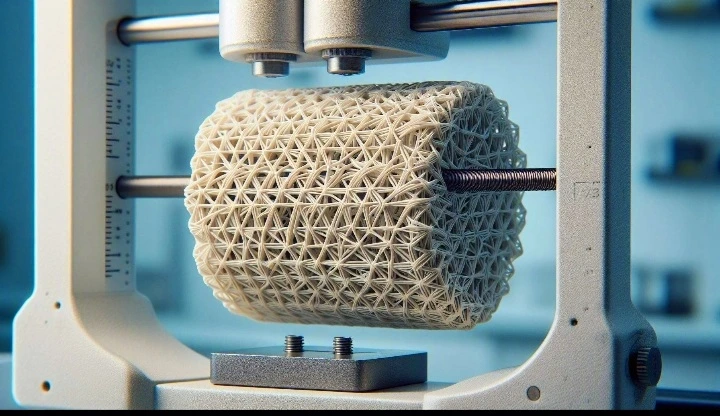
The intersection of advanced polymer science and complex textile engineering has yielded a new class of high-performance materials capable of unprecedented energy dissipation and structural resilience. At the forefront of this intersection is Ultra-High Molecular Weight Polyethylene (UHMWPE), a thermoplastic polymer characterized by extremely long molecular chains, typically possessing a molecular mass between 3.5 and 7.5 million atomic mass units. When processed via gel-spinning, these highly entangled chains are drawn and aligned to create fibers with exceptional tensile strength, high modulus, and low density. However, the translation of these one-dimensional fiber properties into two- and three-dimensional macroscopic structures requires sophisticated topological arrangements. Crocheted lattices, characterized by their continuous, interlooped unit cells, offer a unique structural paradigm. Unlike woven or braided fabrics, which rely on the interlacing of multiple distinct yarns, crocheted structures are formed from a single continuous filament that is iteratively looped through itself. This topological interlocking creates a highly deformable, compliant matrix that exhibits non-linear mechanical responses under multi-axial loading. The present discourse provides a comprehensive morphological and microstructural analysis of the deformation mechanisms inherent to UHMWPE crocheted lattices, bridging the gap between molecular chain dynamics and macroscopic structural failure.
Polymer Chain Morphology and Gel-Spinning
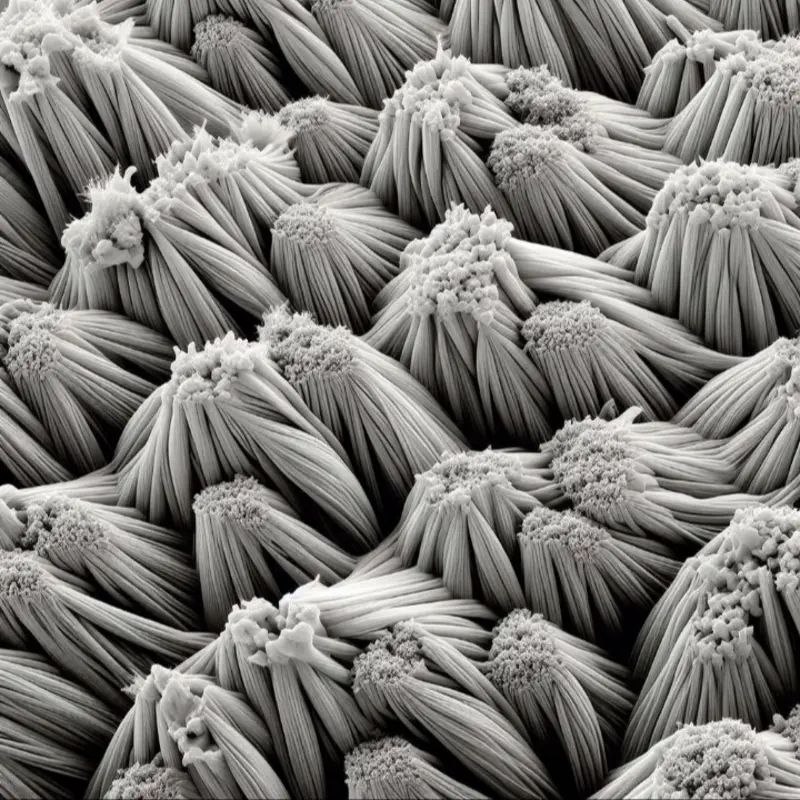
The extraordinary mechanical properties of UHMWPE fibers are fundamentally derived from their highly oriented, extended-chain crystalline morphology. In its isotropic state, UHMWPE consists of a complex network of folded-chain lamellar crystals embedded within an amorphous matrix, heavily constrained by molecular entanglements due to the extreme length of the polymer chains. The gel-spinning process is engineered to disentangle these chains and align them parallel to the fiber axis. The polymer is first dissolved in a heated solvent, such as decalin or paraffin oil, to form a semi-dilute solution. This solvation process increases the distance between polymer chains, significantly reducing the density of topological entanglements. The solution is then extruded through a spinneret to form a gel filament, which is subsequently quenched and subjected to ultra-drawing at elevated temperatures. During this ultra-drawing phase, the folded-chain lamellae are mechanically unfolded, transitioning into highly oriented, extended-chain fibrillar structures. The degree of molecular orientation and the final crystallinity of the fiber are directly proportional to the applied draw ratio. The resulting microstructure is a highly anisotropic composite consisting of highly crystalline microfibrils interspersed with highly oriented amorphous domains and tie molecules that bridge adjacent crystalline regions.
Crystalline vs. Amorphous Domains
The microstructural integrity of the UHMWPE fiber under tensile load is governed by the complex interplay between the crystalline and amorphous domains. The crystalline regions, predominantly exhibiting an orthorhombic unit cell structure, provide the fiber with its high tensile modulus and ultimate tensile strength. The extended carbon-carbon backbone within these crystals is exceptionally stiff, resisting axial deformation. Conversely, the amorphous domains, comprising chain folds, chain ends, and tie molecules, dictate the fiber’s transverse properties, shear modulus, and energy absorption capabilities. Tie molecules are particularly critical; they act as the primary load-transfer mechanisms between adjacent crystalline blocks. The density and tautness of these tie molecules determine the fiber’s resistance to creep and its ultimate failure strain. In the context of a crocheted lattice, where the fibers are subjected to severe bending and transverse compression at the interlocking nodes, the amorphous domains play a crucial role in accommodating these complex stress states without initiating premature brittle fracture.
Microstructural Deformation Mechanisms
When a UHMWPE crocheted lattice is subjected to macroscopic tensile deformation, the constituent fibers experience a highly heterogeneous stress field. The continuous nature of the crocheted loops dictates that the primary mode of load transfer is not direct axial tension, but rather a combination of frictional sliding, transverse compression, torsion, and localized bending at the nodal intersections. Understanding the microstructural response of the UHMWPE fibers to these complex stress states is essential for predicting the macroscopic behavior of the lattice.
Fibrillar Slip and Chain Unfolding
At the microstructural level, the initial stages of deformation in a highly drawn UHMWPE fiber involve the elastic stretching of the carbon-carbon bonds within the crystalline domains and the extension of the oriented amorphous tie molecules. As the localized stress exceeds the yield point of the material, plastic deformation initiates via fibrillar slip. The highly oriented microfibrils, which are held together primarily by weak van der Waals forces in the transverse direction, begin to slide past one another. This inter-fibrillar shear is facilitated by the amorphous domains acting as a compliant interfacial layer. Simultaneously, any remaining folded-chain lamellae within the microstructure may undergo stress-induced unfolding, further contributing to the plastic strain. This chain unfolding process is highly endothermic and contributes significantly to the energy dissipation capabilities of the fiber. However, as the tie molecules become fully extended and the microfibrils are highly constrained, the capacity for further plastic deformation diminishes, leading to strain hardening and eventual localized failure.
Inter-fibrillar Shear Dynamics
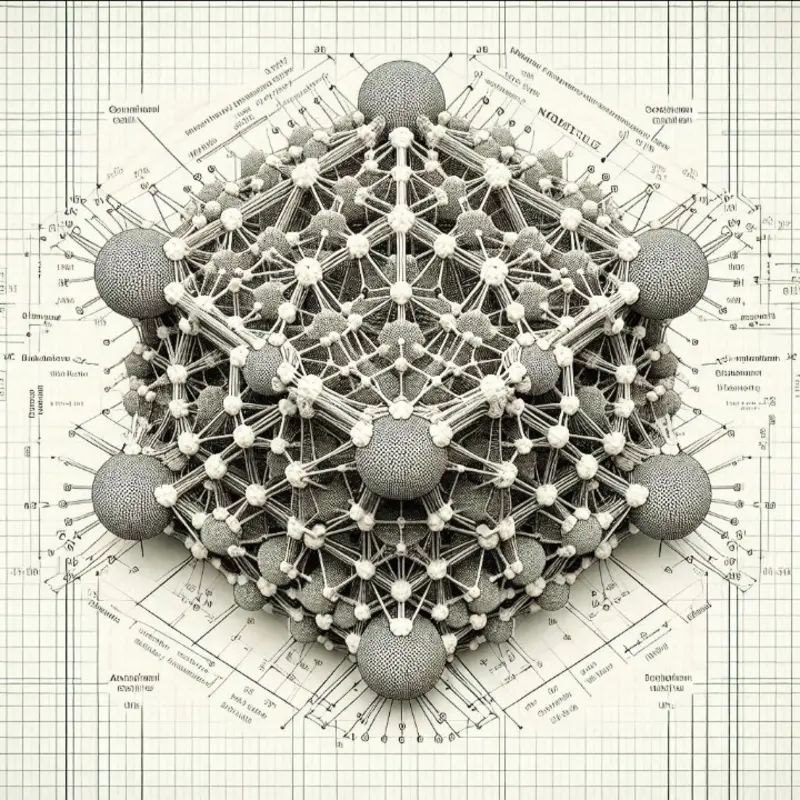
The dynamics of inter-fibrillar shear are heavily influenced by the transverse compressive forces exerted at the interlocking nodes of the crocheted lattice. In a standard tensile test of a single fiber, inter-fibrillar slip occurs relatively unhindered until the tie molecules are exhausted. However, at a crocheted node, the overlapping loops compress against each other, generating significant transverse stress. This compression increases the frictional resistance between adjacent microfibrils, effectively suppressing fibrillar slip and increasing the localized apparent modulus of the fiber. This phenomenon, known as transverse constraint-induced stiffening, is a critical mechanism by which the crocheted lattice distributes stress and prevents localized catastrophic failure. The magnitude of this stiffening effect is dependent on the local curvature of the loop, the applied macroscopic tension, and the inherent transverse compressive modulus of the UHMWPE fiber.
Nodal Stress Concentrations in Crocheted Topologies
The topological architecture of a crocheted lattice is defined by its repetitive unit cells, typically consisting of a head, two legs, and a foot, which interlock with adjacent cells to form a continuous two-dimensional manifold. Under macroscopic loading, the lattice undergoes significant geometric reorganization before the constituent fibers experience substantial axial strain. The loops elongate, rotate, and align themselves with the principal axis of loading. Once this geometric compliance is exhausted, the load is transferred directly to the nodal intersections. These nodes act as severe stress concentrators. The fiber at the node is subjected to a complex multi-axial stress state comprising axial tension, severe bending, and high transverse compression from the interlocking loop. The bending strain is inversely proportional to the radius of curvature at the node; as the lattice is loaded and the loops tighten, the radius of curvature decreases, exponentially increasing the bending stresses on the outer surface of the fiber.
Loop-to-Loop Frictional Interactions
Friction is the primary mechanism of load transfer and energy dissipation in a topological interlocking structure. As the crocheted lattice deforms, the interlocking loops slide against one another. The frictional resistance at these interfaces is governed by the Coulomb friction model, modified to account for the viscoelastic nature of the UHMWPE polymer. The coefficient of friction is not constant but varies as a function of the contact pressure, sliding velocity, and localized temperature. UHMWPE is renowned for its exceptionally low coefficient of friction, which allows the crocheted loops to slide and reorganize easily under low loads, providing the lattice with its characteristic high compliance. However, as the macroscopic tension increases, the contact pressure at the nodes rises dramatically, leading to an increase in the apparent frictional resistance due to localized plastic deformation and plowing at the fiber-fiber interface. This dynamic frictional behavior is critical for the energy absorption capabilities of the lattice during impact events.
Empirical Testing and Finite Element Analysis
To accurately characterize the complex deformation mechanisms of UHMWPE crocheted lattices, a multi-scale analytical approach combining rigorous empirical testing with advanced computational modeling is required. Empirical testing provides the fundamental material properties and validates the macroscopic behavior of the lattice, while Finite Element Analysis (FEA) allows for the detailed investigation of the localized stress states and microstructural phenomena that are inaccessible to direct observation.
Tensile Testing Protocols
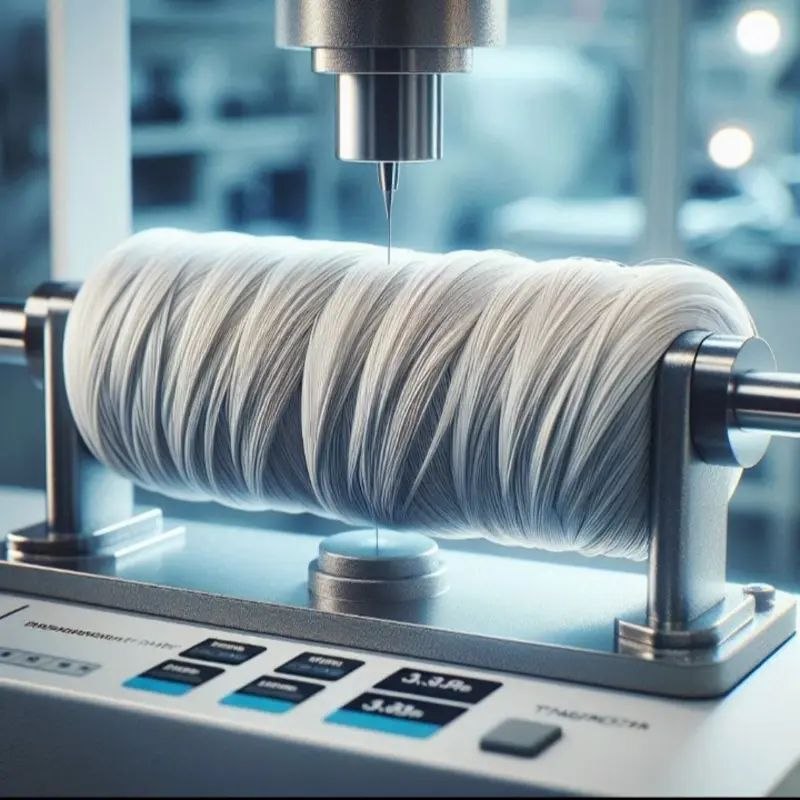
The mechanical characterization of crocheted lattices necessitates specialized testing protocols that account for their high compliance and large deformation capabilities. Standard uniaxial tensile testing, utilizing an Instron universal testing machine equipped with pneumatic grips, is employed to determine the macroscopic load-displacement response. To prevent slippage and localized stress concentrations at the grips, the ends of the lattice specimens are typically embedded in a compliant resin matrix. During the test, the lattice exhibits a highly non-linear response characterized by three distinct regions: an initial low-modulus region corresponding to the geometric reorganization and tightening of the loops; a transitional region where frictional sliding and localized fiber deformation begin to dominate; and a final high-modulus region where the fibers are fully aligned and subjected to direct axial tension, culminating in structural failure. Digital Image Correlation (DIC) is frequently employed in conjunction with tensile testing to map the full-field strain distribution across the lattice, allowing researchers to visualize the localization of strain at the nodal intersections and the propagation of deformation bands.
Strain Rate Sensitivity
The mechanical response of UHMWPE fibers and, consequently, the crocheted lattices, is highly sensitive to the applied strain rate due to the viscoelastic nature of the polymer. At low strain rates, the polymer chains have sufficient time to undergo conformational changes, inter-fibrillar slip, and chain unfolding, resulting in high ductility and energy absorption. However, at high strain rates, such as those experienced during ballistic impact, the polymer chains are unable to relax, and the material exhibits a more brittle response. The yield strength and initial modulus increase significantly, while the ultimate failure strain decreases. This strain rate sensitivity must be carefully considered when designing crocheted lattices for specific applications. The following table delineates the morphological and mechanical parameters of a standard gel-spun UHMWPE fiber utilized in these structural analyses.
| Parameter | Symbol | Value Range | Unit |
|---|---|---|---|
| Molecular Weight | Mw | 3.5 – 7.5 x 10^6 | g/mol |
| Degree of Crystallinity | Xc | 75 – 85 | % |
| Axial Tensile Modulus | E11 | 110 – 140 | GPa |
| Transverse Compressive Modulus | E22 | 1.5 – 3.0 | GPa |
| Ultimate Tensile Strength | UTS | 3.0 – 4.0 | GPa |
| Elongation at Break | εb | 3.0 – 4.5 | % |
FEA Modeling of Unit Cells
Finite Element Analysis provides a powerful computational framework for simulating the complex mechanical interactions within the crocheted lattice. Due to the computational expense of modeling an entire macroscopic lattice at the microstructural level, FEA is typically applied to representative volume elements (RVEs) or individual unit cells. The geometric model of the unit cell must accurately capture the precise topology of the crocheted loop, including the initial curvature and the contact interfaces between overlapping fiber segments. The constituent UHMWPE fibers are modeled using advanced anisotropic, hyperelastic, or viscoplastic constitutive equations that account for the distinct axial and transverse properties of the highly drawn polymer. The contact mechanics at the nodal intersections are modeled using penalty-based or augmented Lagrangian algorithms, incorporating strain-rate and pressure-dependent frictional coefficients.
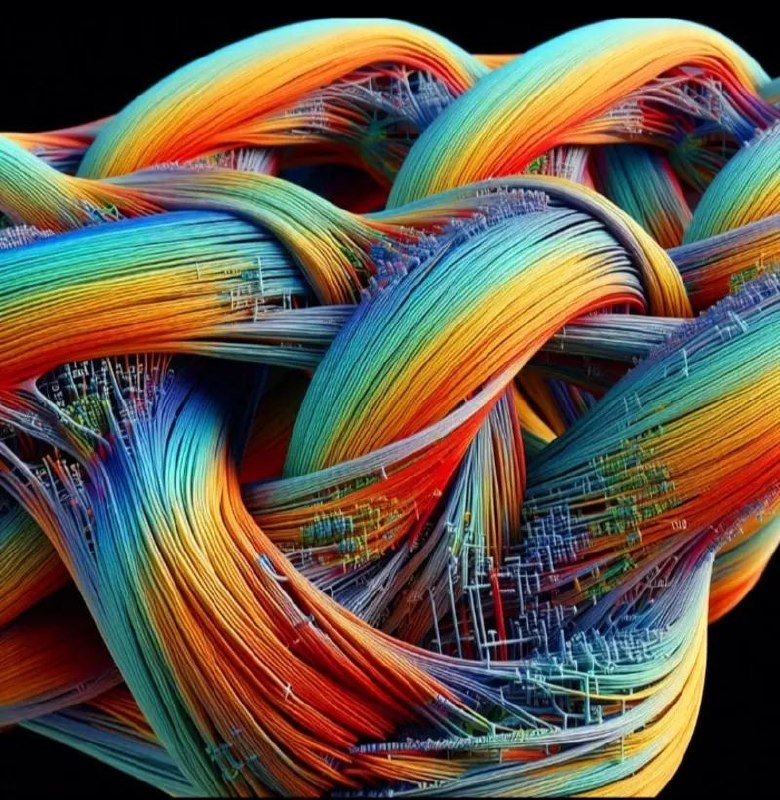
The FEA simulations reveal that the stress distribution within the crocheted node is highly heterogeneous. As macroscopic tension is applied, the inner radius of the loop experiences severe compressive stresses, while the outer radius is subjected to high tensile stresses due to bending. Simultaneously, the transverse compression from the interlocking loop creates a complex triaxial stress state that can initiate localized yielding and micro-void formation long before the ultimate axial tensile strength of the fiber is reached. The following table illustrates the frictional and nodal displacement metrics derived from FEA simulations across varying strain rates.
| Strain Rate (s^-1) | Dynamic Friction Coefficient (μ) | Max Nodal Transverse Stress (MPa) | Energy Dissipation per Unit Cell (mJ) |
|---|---|---|---|
| 0.001 (Quasi-static) | 0.04 | 125 | 4.2 |
| 0.1 (Intermediate) | 0.06 | 180 | 5.8 |
| 10.0 (Dynamic) | 0.09 | 290 | 8.1 |
| 1000.0 (Ballistic) | 0.14 | 450 | 12.5 |
Advanced Applications and Future Trajectories
The unique combination of high strength, low density, and exceptional energy dissipation capabilities makes UHMWPE crocheted lattices highly attractive for a wide range of advanced engineering applications. The ability to tailor the macroscopic mechanical properties of the lattice by altering the topological parameters (e.g., loop length, stitch density) and the microstructural properties of the constituent fibers provides engineers with unprecedented design flexibility. Current research is focused on optimizing these structures for extreme environments where conventional materials fail to provide adequate performance.
Ballistic and Impact Resistance
One of the most promising applications for UHMWPE crocheted lattices is in the field of soft body armor and ballistic impact mitigation. Traditional woven aramid or UHMWPE fabrics dissipate kinetic energy primarily through the axial extension of the primary yarns engaged by the projectile and the transfer of stress to secondary yarns via cross-over point friction. However, the rigid interlacing of woven fabrics limits their geometric compliance. Crocheted lattices, conversely, offer a highly compliant, three-dimensional energy dissipation network. The structural advantages of utilizing crocheted topologies in ballistic applications include:
- Enhanced Geometric Compliance: The ability of the loops to deform and reorganize allows the lattice to conform to the shape of the projectile, increasing the contact area and reducing localized stress concentrations.
- Multi-axial Load Distribution: The continuous, interlooped nature of the lattice ensures that impact energy is distributed radially outward from the point of impact, engaging a larger volume of material than traditional woven structures.
- High Frictional Energy Dissipation: The dynamic tightening of the nodes under impact loading exponentially increases the inter-fiber frictional resistance, converting a significant portion of the projectile’s kinetic energy into thermal energy.
- Damage Tolerance: The topological interlocking prevents the catastrophic propagation of tears; if a single loop is severed, the surrounding loops redistribute the load, maintaining the structural integrity of the matrix.
Energy Dissipation Pathways
The dissipation of kinetic energy during a high-velocity impact event on a UHMWPE crocheted lattice occurs through a complex sequence of microstructural and macroscopic mechanisms. Understanding these sequential stages is critical for optimizing the lattice design for maximum energy absorption. The deformation process can be categorized into the following sequential stages:
- Acoustic Wave Propagation: Upon initial impact, longitudinal and transverse stress waves propagate outward from the impact zone at the speed of sound within the UHMWPE fiber (approximately 10,000 m/s). These waves initiate the localized deformation of the lattice.
- Geometric Reorganization and Loop Tightening: The lattice undergoes rapid macroscopic deformation as the loops elongate and align with the trajectory of the projectile. This stage is characterized by low resistance and high displacement.
- Frictional Sliding and Nodal Compression: As the loops tighten, the transverse compressive forces at the nodes increase dramatically. The fibers slide against each other, dissipating energy through Coulomb friction and localized plastic plowing at the interfaces.
- Microstructural Yielding and Fibrillar Slip: The localized stresses at the nodes exceed the yield point of the UHMWPE fibers. The amorphous domains undergo severe shear deformation, and the highly oriented microfibrils begin to slip past one another, absorbing significant strain energy.
- Chain Unfolding and Scission: In the final stages before failure, the remaining folded-chain lamellae unfold, and the taut tie molecules connecting the crystalline domains undergo homolytic scission, leading to the ultimate rupture of the fiber and the localized failure of the lattice.
The future trajectory of research in this domain involves the integration of multi-material crocheted lattices, where UHMWPE fibers are hybridized with other high-performance filaments, such as carbon nanotubes or shear-thickening fluids, to create smart, adaptive structures capable of dynamically altering their mechanical response based on the severity of the applied load. Furthermore, the development of advanced additive manufacturing techniques capable of precisely controlling the topological interlocking at the micro-scale will enable the fabrication of highly optimized, patient-specific biomedical implants and ultra-lightweight aerospace composites. The morphological analysis of these complex structures remains a fertile ground for scientific inquiry, requiring the continuous refinement of both empirical characterization techniques and computational modeling methodologies to fully unlock the potential of topological interlocking in advanced polymer science.