Introduction to Crocheted Metamaterials and Topological Interlocking
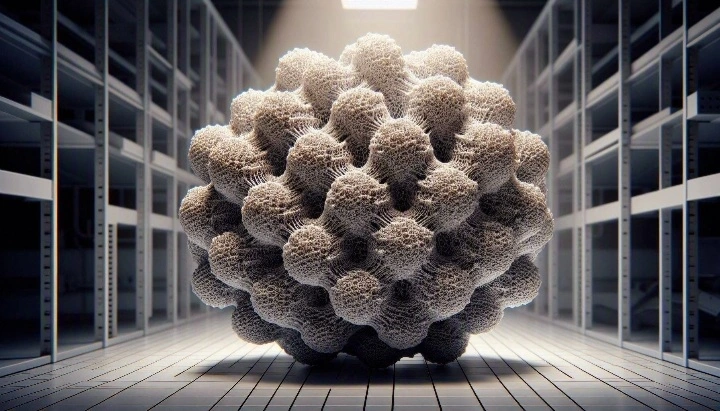
The field of mechanical metamaterials has witnessed a paradigm shift with the introduction of topologically interlocked fibrous networks. Unlike conventional composite materials, where macroscopic mechanical properties are dictated by the intrinsic chemical composition and the adhesive bonding of the constituent phases, mechanical metamaterials derive their anomalous behaviors from their engineered internal geometry. Among these, densely packed crocheted metamaterials represent a highly specialized subclass. These structures are fabricated from a single, continuous filament that is iteratively looped and drawn through previously established loops, creating a complex, two- or three-dimensional manifold of inter-dependent nodes. This architectural strategy relies entirely on topological interlocking—a structural principle where the constituent elements (in this case, the segmented loops of the continuous yarn) are held in spatial equilibrium exclusively by kinematic constraints and mutual geometric confinement, rather than by chemical adhesion or rigid mechanical fasteners. The resulting matrix exhibits a highly non-linear mechanical response, characterized by extreme compliance under low-stress regimes and a dramatic, reversible stiffening under high-stress or impact loading. This sudden transition from a compliant, fluid-like state to a rigid, solid-like state is fundamentally governed by a phenomenon known as the jamming phase transition. Understanding and predicting this transition is paramount for the deployment of these metamaterials in advanced engineering applications, necessitating the development of rigorous kinematic models that can accurately capture the complex microstructural evolution of the crocheted lattice under applied loads.
The Nature of Topological Interlocking
Topological interlocking in fibrous assemblies is a macroscopic manifestation of geometric frustration. In a standard woven fabric, the orthogonal interlacing of warp and weft yarns provides structural stability, but the yarns remain relatively independent; a tensile load applied to a warp yarn is primarily resisted by the axial stiffness of that specific yarn, with minimal load transfer to the orthogonal weft yarns until significant deformation occurs. In stark contrast, a crocheted lattice is inherently highly coupled. The fundamental unit cell of a crochet stitch—comprising a head, two legs, and a basal interlooping region—is geometrically constrained by the adjacent unit cells in all planar directions. When a localized load is applied, the continuous nature of the filament dictates that the stress cannot be isolated to a single yarn path. Instead, the load forces the interlocking loops to translate and rotate within their confined spaces. As the loops displace, they impinge upon their neighbors, rapidly exhausting the available free volume within the matrix. This mutual impingement creates a cascading network of contact forces, effectively distributing the localized stress across a vast area of the metamaterial. The efficacy of this load distribution is entirely dependent on the precise topological arrangement of the interlocking nodes, making the geometric design of the unit cell the primary determinant of the material’s macroscopic performance.
Defining the Jamming Phase Transition
The jamming phase transition is a critical threshold in the mechanical behavior of disordered or highly constrained systems. Originally conceptualized in the context of granular media, such as sand or colloidal suspensions, jamming describes the point at which a system of discrete particles loses its ability to flow and suddenly develops a finite yield stress, behaving as an amorphous solid. In the context of densely packed crocheted metamaterials, the “particles” are the interlocking nodal regions of the continuous filament. Under ambient conditions, the crocheted lattice possesses a specific initial packing fraction, defined as the ratio of the volume occupied by the solid fibers to the total volume of the lattice. At this initial state, the lattice is unjammed; the loops have sufficient free volume to slide and rotate past one another, resulting in a low macroscopic modulus and high geometric compliance. However, as an external compressive or tensile load is applied, the lattice undergoes large-scale geometric reorganization. The loops tighten, the interstitial voids collapse, and the packing fraction increases. As the packing fraction approaches a critical threshold, the number of inter-fiber contact points rises exponentially. The system transitions from a state of low coordination to a state of high coordination, eventually reaching isostaticity—the point at which the number of mechanical constraints exactly equals the number of degrees of freedom in the system. At this precise moment, the lattice jams. The kinematic mobility of the individual loops is entirely arrested by the mutual confinement of their neighbors, and the macroscopic stiffness of the metamaterial increases by several orders of magnitude.

Granular vs. Fibrous Jamming
While the fundamental thermodynamic principles of the jamming transition are shared between granular media and fibrous networks, the kinematic mechanisms and the resulting mechanical behaviors exhibit profound differences. These distinctions are critical for the accurate mathematical modeling of crocheted metamaterials.
- Dimensionality and Aspect Ratio: Granular jamming typically involves discrete, roughly spherical particles with an aspect ratio close to one. Fibrous jamming involves continuous, highly anisotropic filaments with aspect ratios often exceeding 10,000:1. This extreme anisotropy introduces complex bending and torsional degrees of freedom that are absent in granular systems.
- Tensile Constraints: In a granular system, particles interact exclusively through repulsive compressive contact forces and friction. They cannot support tension. In a crocheted metamaterial, the continuous nature of the filament means that the nodes are connected by tensile load paths. A displacing node not only pushes against its neighbors but also pulls on the adjacent segments of the continuous yarn, creating a highly coupled, tension-compression network.
- Deformation Modes: Granular jamming is dominated by rigid body translation and rotation. Fibrous jamming involves significant localized deformation of the constituent elements. As the lattice jams, the fibers undergo severe transverse compression, localized bending, and cross-sectional flattening, which dynamically alters the contact area and the frictional resistance at the interlocking nodes.
- Reversibility and Hysteresis: Granular jamming is often highly path-dependent and irreversible without the input of external vibrational energy to break the force chains. Fibrous jamming in elastomeric or high-recovery polymeric yarns is largely reversible, although it exhibits significant viscoelastic hysteresis due to the internal friction of the polymer chains and the macroscopic friction at the inter-fiber contact points.
Kinematic Modeling of the Crocheted Unit Cell
To predict the macroscopic jamming transition of the crocheted metamaterial, it is necessary to develop a rigorous kinematic model of the fundamental unit cell. This model must accurately describe the spatial configuration of the continuous filament, the initial geometry of the interlocking loops, and the evolution of the inter-fiber contact points as a function of applied global strain. The complexity of this modeling arises from the highly non-linear, large-deformation kinematics inherent to the topological interlocking architecture.
Degrees of Freedom in Continuous Filament Networks
The kinematic state of a crocheted unit cell is defined by a set of generalized coordinates that describe the position and orientation of the filament centerline in three-dimensional space. Unlike a rigid truss structure, where the nodes are fixed and deformation is limited to axial extension, the nodes in a crocheted lattice are highly mobile. The primary degrees of freedom include the translational displacement of the loop head, the rotational articulation of the loop legs, and the sliding of the filament through the interlocking basal region. Furthermore, because the filament is not infinitely rigid, the model must account for the bending curvature and the torsional twist of the yarn segments between the contact points. The kinematic model is therefore formulated as a constrained optimization problem, where the objective is to find the spatial configuration of the filament that minimizes the total strain energy of the system, subject to the non-penetration constraints imposed by the physical volume of the yarn.

Nodal Displacement and Rotational Constraints
As external strain is applied to the macroscopic lattice, the individual unit cells undergo affine deformation, meaning the macroscopic strain tensor is mapped directly onto the local coordinates of the unit cell boundaries. However, the internal kinematics of the filament within the unit cell are highly non-affine. The loops will initially rotate and translate to align with the principal axis of loading, minimizing the bending strain energy in favor of rigid body displacement. This non-affine reorganization is the primary mechanism responsible for the high initial compliance of the metamaterial. As the loops displace, the distance between adjacent nodes decreases, and the rotational degrees of freedom become increasingly constrained by the physical interference of the neighboring yarns. The kinematic model must track the evolution of these rotational constraints, as they are the precursors to the jamming transition. When the rotational degrees of freedom are fully exhausted, the lattice can no longer accommodate the applied strain through geometric reorganization, forcing the load to be transferred directly into the axial and transverse deformation of the constituent fibers.
Mathematical Formulation of the Kinematic State
The mathematical formulation of the kinematic state relies on differential geometry to describe the spatial curve of the filament centerline. The filament is typically parameterized by its arc length, and its local orientation is defined by a moving Frenet-Serret frame or a rotation-minimizing Bishop frame. The total strain energy of the unit cell is calculated as the integral of the bending, torsional, and axial strain energy densities along the length of the filament within the cell. The non-penetration constraints are enforced using a penalty method or a barrier function, which applies a rapidly increasing repulsive force when the distance between two non-adjacent filament segments approaches the sum of their radii. The following table delineates the primary kinematic parameters and variables utilized in the formulation of the unit cell model.
| Kinematic Parameter | Symbol | Description | Unit / Dimension |
|---|---|---|---|
| Arc Length Parameter | s | The curvilinear distance along the filament centerline from a defined origin. | Millimeters (mm) |
| Centerline Position Vector | r(s) | The 3D spatial coordinates of the filament centerline at arc length s. | Vector [x, y, z] |
| Local Curvature | κ(s) | The rate of change of the tangent vector, dictating the bending strain. | Inverse Millimeters (mm⁻¹) |
| Local Torsion | τ(s) | The rate of change of the binormal vector, dictating the twisting strain. | Inverse Millimeters (mm⁻¹) |
| Inter-fiber Contact Force | Fc | The normal force exerted between two impinging filament segments. | Newtons (N) |
| Critical Packing Fraction | Φc | The volumetric density threshold at which the jamming transition occurs. | Dimensionless Ratio |
| Coordination Number | Z | The average number of mechanical contact points per unit cell node. | Integer |
Mechanics of the Jamming Phase Transition
The transition from a kinematically mobile, unjammed state to a rigid, jammed state is accompanied by profound changes in the internal mechanics of the crocheted metamaterial. This phase transition is not instantaneous but occurs over a narrow band of applied strain, characterized by rapid void reduction, strain-induced densification, and the sudden emergence of system-wide force percolation networks.
Void Reduction and Strain-Induced Densification
In its initial, unjammed state, the densely packed crocheted lattice contains a significant volume of interstitial void space. These voids are essential for the geometric compliance of the material, providing the necessary free volume for the loops to translate and rotate under low-stress conditions. As the applied load increases, the kinematic reorganization of the unit cells forces the loops into tighter configurations, systematically collapsing the interstitial voids. This process, termed strain-induced densification, results in a highly non-linear increase in the volumetric packing fraction of the lattice. The rate of void reduction is heavily dependent on the initial topology of the crochet stitch and the transverse compressive modulus of the constituent yarns. If the yarns are highly compliant in the transverse direction, they will flatten against one another at the contact points, further reducing the void fraction and delaying the onset of absolute jamming. Conversely, if the yarns possess a high transverse modulus, they will maintain their circular cross-section, leading to an earlier exhaustion of the free volume and a more abrupt jamming transition.

Micro-CT Validation of Internal Architecture
The theoretical predictions of void reduction and strain-induced densification must be validated through advanced empirical characterization techniques. High-resolution X-ray micro-computed tomography (Micro-CT) is the premier analytical tool for this purpose. By capturing a series of two-dimensional X-ray projections at varying rotational angles, Micro-CT allows for the reconstruction of a highly detailed, three-dimensional volumetric representation of the internal lattice architecture. To analyze the jamming transition, in-situ mechanical testing stages are integrated into the Micro-CT apparatus, enabling the capture of tomographic scans at discrete strain intervals. The resulting volumetric datasets are subjected to rigorous image processing and segmentation algorithms to differentiate between the solid polymer fibers and the interstitial void space. This analysis provides direct, empirical quantification of the evolving packing fraction, the changing coordination number, and the localized deformation of the yarn cross-sections as the lattice approaches the critical jamming threshold.
Force Percolation and Stress Distribution
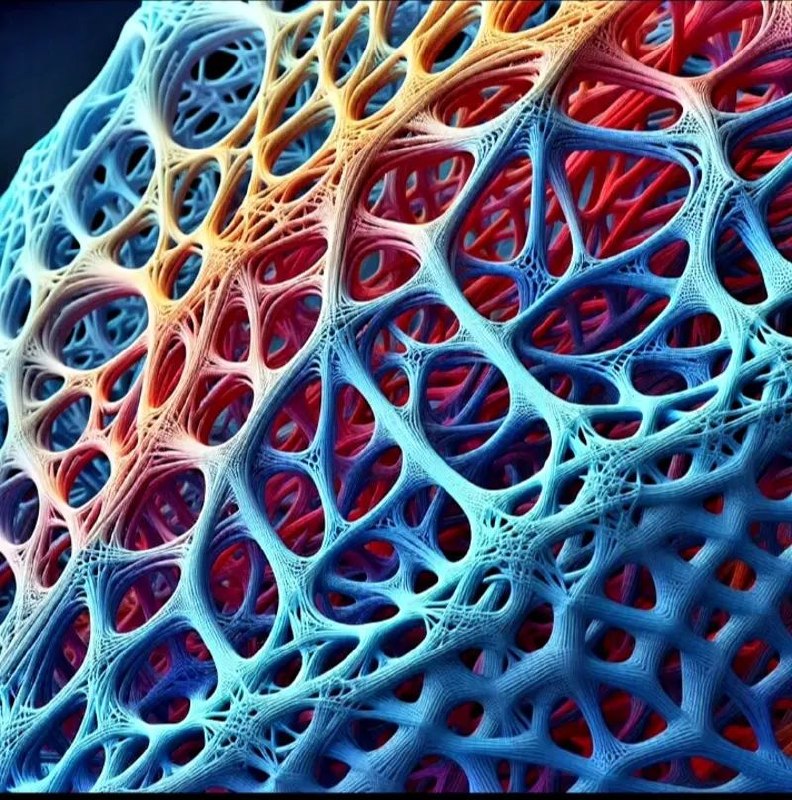
As the crocheted metamaterial approaches the critical packing fraction, the nature of load transfer within the lattice undergoes a fundamental transformation. In the unjammed state, the applied stress is primarily accommodated by the bending and torsional deformation of isolated yarn segments, with minimal load transfer between adjacent unit cells. However, as the interstitial voids collapse and the inter-fiber contact points multiply, the lattice begins to form continuous, stress-bearing pathways known as force chains. The emergence of these force chains marks the onset of force percolation. When the coordination number reaches a critical value, these localized force chains suddenly connect, spanning the entire macroscopic dimensions of the metamaterial. This system-wide percolation network is the defining mechanical signature of the jammed state. Once percolation occurs, any further increase in the applied load is transferred directly through this rigid, highly interconnected network of frictional contacts, resulting in a dramatic, exponential increase in the macroscopic stiffness of the lattice.
Frictional Load Transfer at Interlocking Nodes
The stability and load-bearing capacity of the percolated force network are entirely dependent on the frictional interactions at the interlocking nodes. Because the crocheted lattice lacks chemical binders, the transfer of stress from one loop to another occurs exclusively through contact friction. The frictional resistance is governed by the Coulomb friction model, where the maximum shear force that can be transferred across a node is directly proportional to the normal compressive force acting at that interface. During the jamming transition, the strain-induced densification generates immense transverse compressive forces at the nodes. This exponentially increases the frictional resistance, effectively locking the loops in place and preventing further kinematic slip. The surface morphology of the constituent yarns plays a crucial role in this process. Yarns with a high coefficient of friction, or those engineered with nanoscale surface roughness, will exhibit a more stable jammed state and a higher ultimate yield strength, as they can sustain greater shear stresses before localized frictional slip initiates structural failure.
Empirical Testing and Computational Validation
The complex, non-linear behavior of densely packed crocheted metamaterials necessitates a multi-faceted approach to characterization, combining rigorous empirical mechanical testing with advanced computational simulations. This synergistic methodology ensures that the theoretical kinematic models accurately reflect the physical reality of the jamming phase transition.
Mechanical Testing Protocols
The empirical characterization of the jamming transition requires specialized mechanical testing protocols designed to capture the extreme non-linearity of the material response. Standard uniaxial tensile or compressive testing is often insufficient, as the boundary conditions can artificially constrain the lateral deformation of the lattice, skewing the measurement of the critical packing fraction. Therefore, multi-axial testing, such as biaxial tension or confined compression, is frequently employed. The following procedural framework outlines a standardized protocol for evaluating the compressive jamming transition in a crocheted metamaterial:
- Specimen Preparation: Fabricate the crocheted lattice using a highly controlled, automated CNC knitting/crocheting machine to ensure uniform stitch density and minimize topological defects. The specimen should be cut to a standard geometry, typically a cylinder or a cube, ensuring that the boundaries do not unravel.
- Confined Compression Setup: Place the specimen within a rigid, low-friction cylindrical confinement die. This die prevents lateral expansion (Poisson’s effect) during compression, forcing the lattice to densify internally and accelerating the onset of the jamming transition.
- Dynamic Loading Execution: Mount the confinement die in a servo-hydraulic universal testing machine. Apply a displacement-controlled compressive load at a quasi-static strain rate to prevent dynamic inertial effects from masking the true mechanical response of the lattice.
- Continuous Data Acquisition: Continuously record the applied load and the crosshead displacement. Simultaneously, utilize Digital Image Correlation (DIC) on the exposed upper surface of the specimen to monitor the localized strain distribution and detect the onset of non-affine geometric reorganization.
- Hysteresis and Cyclic Loading: Upon reaching a predefined maximum stress threshold (post-jamming), reverse the crosshead direction to unload the specimen. Repeat this loading-unloading cycle multiple times to quantify the viscoelastic hysteresis, the frictional energy dissipation, and the reversibility of the jamming transition.
- Data Analysis and Threshold Identification: Analyze the resulting stress-strain curve. The onset of the jamming transition is mathematically identified as the point of maximum curvature on the stress-strain plot, where the tangent modulus transitions from a low, relatively constant value to an exponentially increasing value.
Finite Element and Kinematic Simulations
While empirical testing provides the macroscopic mechanical response, computational simulations are required to visualize and quantify the internal microstructural evolution during the jamming transition. Finite Element Analysis (FEA) is employed to model the complex contact mechanics and the large-deformation behavior of the constituent yarns. The FEA models utilize the mathematical formulations derived from the kinematic unit cell models, incorporating advanced hyperelastic or viscoplastic constitutive equations for the polymer fibers and robust penalty-based contact algorithms to handle the massive number of inter-fiber interactions. These simulations provide critical insights into the localized stress concentrations, the evolution of the coordination number, and the precise topology of the force percolation networks. The following table presents a comparative analysis of the mechanical properties of a specific UHMWPE crocheted lattice in its pre-jammed and post-jammed states, derived from a combination of empirical testing and validated FEA simulations.
| Mechanical Property | Pre-Jammed State (Φ < Φc) | Post-Jammed State (Φ > Φc) | Magnitude of Change |
|---|---|---|---|
| Macroscopic Tangent Modulus (MPa) | 1.2 – 3.5 | 450 – 850 | ~250x Increase |
| Effective Poisson’s Ratio (ν) | 0.65 – 0.85 (Highly Auxetic/Compliant) | 0.15 – 0.25 (Rigid Solid) | Significant Reduction |
| Average Coordination Number (Z) | 2.1 – 2.8 | 5.5 – 7.2 | ~2.5x Increase |
| Specific Energy Dissipation (J/g) | Low (Primarily Viscoelastic) | High (Frictional & Plastic Yielding) | Exponential Increase |
| Acoustic Wave Velocity (m/s) | < 100 (Highly Attenuated) | > 2500 (Rapid Propagation) | ~25x Increase |
Advanced Applications and Future Directions
The ability to precisely engineer the jamming phase transition in densely packed crocheted metamaterials opens up a vast array of advanced applications across multiple engineering disciplines. By manipulating the initial topology of the unit cell, the diameter of the constituent yarns, and the coefficient of friction at the interlocking nodes, researchers can program the specific strain threshold at which the material transitions from a compliant fabric to a rigid structural element.
Impact Attenuation and Energy Dissipation
The most immediate and promising application for these metamaterials is in the realm of impact attenuation and ballistic protection. Traditional soft body armor relies on the high tensile strength of woven aramid or UHMWPE fibers to catch and decelerate a projectile. However, these woven structures often suffer from severe backface deformation, transmitting blunt force trauma to the wearer. Crocheted metamaterials offer a superior alternative. Upon impact, the localized stress rapidly induces a jamming phase transition directly beneath the projectile. The lattice instantly rigidifies, forming a dense, highly frictional percolation network that distributes the kinetic energy radially outward over a much larger surface area. This dynamic stiffening drastically reduces backface deformation and enhances the overall energy dissipation capacity of the armor system.
Aerospace and Ballistic Implementations
In aerospace engineering, these jamming metamaterials are being investigated for use in micrometeoroid and orbital debris (MMOD) shielding for spacecraft and inflatable habitats. The extreme compliance of the unjammed lattice allows the shielding to be tightly folded and stowed during launch, minimizing payload volume. Once deployed in orbit, the lattice remains flexible, accommodating the thermal expansion and contraction of the underlying structure. However, upon hypervelocity impact by a micrometeoroid, the localized shockwave triggers an instantaneous jamming transition. The metamaterial rigidifies, shattering the projectile and absorbing the kinetic energy through massive inter-fiber frictional sliding and localized plastic deformation, thereby protecting the critical pressure vessels of the spacecraft.
Adaptive Architectural and Soft Robotic Structures
Beyond high-velocity impact mitigation, the programmable nature of the jamming transition is highly attractive for the development of adaptive architectural membranes and soft robotic actuators. In soft robotics, the ability to dynamically alter the stiffness of a component is crucial for achieving complex, multi-modal locomotion and grasping capabilities. By integrating pneumatic or hydraulic bladders within a crocheted metamaterial sleeve, engineers can actively control the packing fraction of the lattice. Inflating the bladder expands the lattice, reducing the packing fraction and maintaining a highly compliant, unjammed state. Deflating the bladder, or applying an external vacuum, forces the lattice to contract, rapidly increasing the packing fraction and triggering the jamming transition. This allows the soft robotic appendage to transition from a flexible tentacle capable of navigating tortuous environments to a rigid manipulator capable of bearing significant structural loads.
Programmable Stiffness and Shape Morphing
Future research trajectories in this domain are focused on the integration of active, stimuli-responsive yarns into the crocheted topology. By utilizing shape-memory alloys (SMAs) or liquid crystal elastomers (LCEs) as the continuous filament, the jamming transition can be triggered not only by mechanical strain but also by thermal or electrical stimuli. This would enable the creation of true shape-morphing metamaterials capable of autonomously altering their macroscopic geometry and structural stiffness in response to changing environmental conditions. The continued refinement of the kinematic models detailed in this treatise, coupled with advancements in multi-material additive manufacturing and automated textile fabrication, will be instrumental in realizing the full potential of topologically interlocked crocheted metamaterials in the next generation of advanced engineering systems.