Theoretical Framework of Auxetic Kinematics and Extrusion Rheology
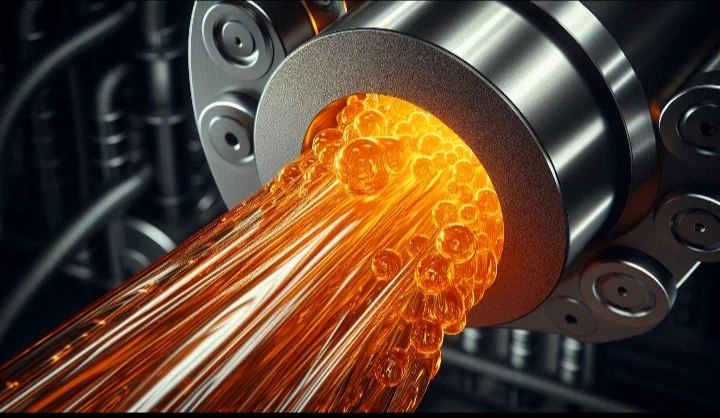
Auxetic metamaterials represent a profound paradigm shift within the domain of topological interlocking structures. These materials are mathematically defined by a negative Poisson’s ratio, a kinematic property that dictates transverse macroscopic expansion when subjected to longitudinal uniaxial strain. The algorithmic modeling of the extrusion protocols required to synthesize these specialized yarns demands unprecedented computational rigor. By coupling advanced computational fluid dynamics (CFD) with non-linear finite element analysis (FEA), the rheological behavior of non-Newtonian polymer melts can be deterministically predicted and controlled. The mathematical framework governing these extrusion kinematics relies heavily on complex tensor calculus, differential geometry, and the precise manipulation of viscoelastic relaxation times. Standard extrusion methodologies are entirely insufficient for auxetic synthesis. The geometric primitives required to induce a negative Poisson’s ratio—specifically re-entrant honeycomb topologies and chiral interlocking nodes—must be programmed directly into the polymer microstructure during the melt phase. This necessitates the deployment of highly sophisticated algorithmic models to govern the shear rates, thermal gradients, and pressure differentials within the spinneret capillary.
The integration of non-linear viscoelastic constitutive equations into computational fluid dynamics simulations is paramount for predicting the microstructural orientation of auxetic polymers. The Journal of Advanced Rheology dictates that shear-induced crystallization must be algorithmically mitigated to preserve the kinematic degrees of freedom required for a negative Poisson’s ratio.
The primary challenge in auxetic yarn extrusion lies in the mitigation of die swell, formally known as the Barus effect. As the highly entangled polymer melt exits the restrictive geometry of the spinneret capillary, the sudden release of compressive stress induces a volumetric expansion. In standard textile engineering, this expansion is a negligible variable. However, in the synthesis of auxetic metamaterials, uncontrolled die swell catastrophically distorts the programmed re-entrant geometries, neutralizing the negative Poisson’s ratio. Consequently, algorithmic models must calculate the exact Deborah number of the polymer melt, ensuring that the transit time through the capillary is mathematically optimized against the relaxation time of the polymer chains. This optimization prevents the premature dissipation of the stored elastic energy, allowing the microstructural geometry to be permanently locked into the solid state during the subsequent quench phase.
Constitutive Tensor Modeling of Viscoelastic Melts
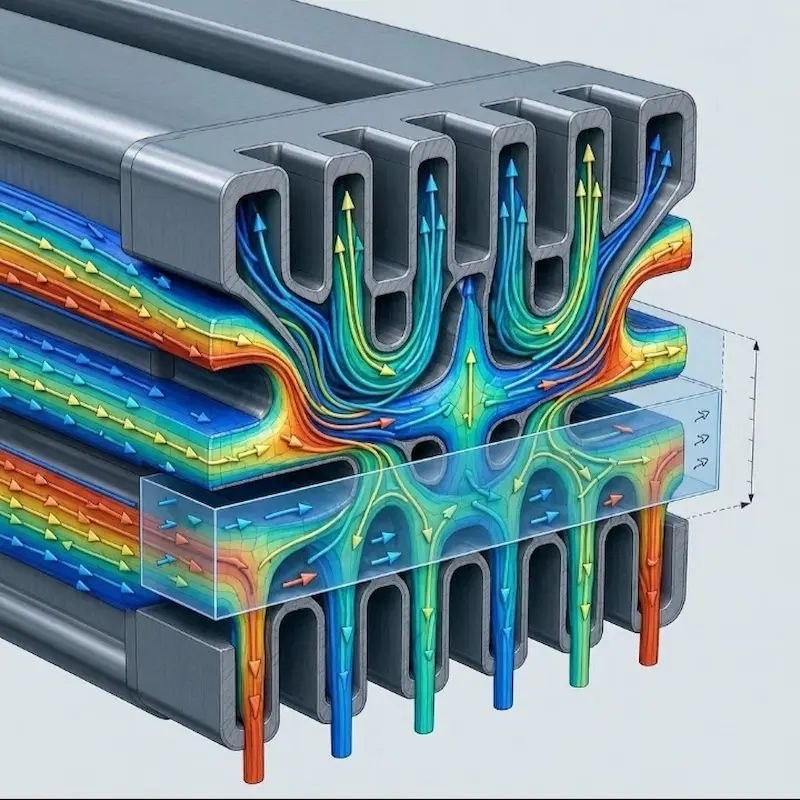
The rheological behavior of the polymer melt is quantified through the deployment of constitutive tensor models. The Upper-Convected Maxwell (UCM) model and the Giesekus model are frequently utilized to simulate the viscoelastic stress tensor under extreme shear conditions. The deformation gradient tensor is calculated continuously across the computational mesh, providing a real-time analysis of the strain energy density function. The Cauchy-Green deformation tensor is applied to map the transformation of the polymer chains from an isotropic, entangled state into a highly oriented, anisotropic fibrillar matrix. The algorithmic solver must iteratively resolve the Navier-Stokes equations for incompressible fluid flow, modified to account for the shear-thinning behavior of the non-Newtonian melt. This requires the continuous recalculation of the apparent viscosity as a function of the localized shear rate, a computationally intensive process that demands high-performance parallel computing architectures.
The accuracy of the constitutive tensor model is highly dependent on the empirical validation of the material parameters. The zero-shear viscosity, the infinite-shear viscosity, and the relaxation time spectrum must be precisely measured using rotational rheometry and dynamic mechanical analysis prior to algorithmic integration. Any deviation in these foundational parameters results in a cascading error within the CFD simulation, leading to catastrophic miscalculations of the required extrusion pressure and the resulting microstructural alignment. The algorithmic model must also account for the viscous dissipation of energy within the melt, which induces localized thermal gradients that further alter the rheological properties of the polymer. This complex thermo-mechanical coupling requires the simultaneous resolution of the energy conservation equation alongside the momentum and mass conservation equations.
Topological Optimization of Spinneret Capillary Geometries
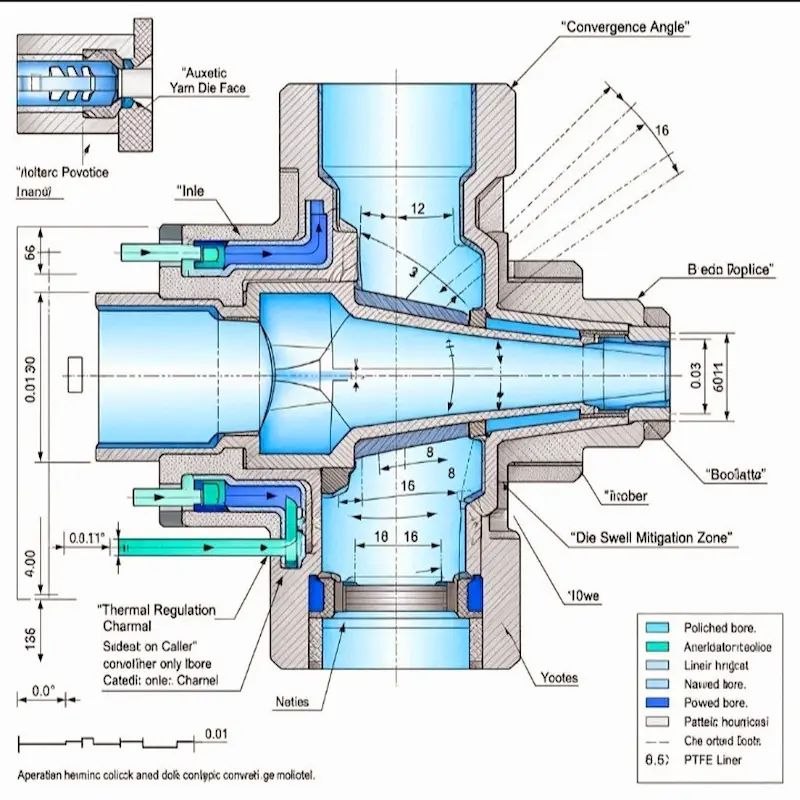
The geometry of the spinneret capillary is the primary physical interface where the algorithmic model is translated into physical reality. Topological optimization algorithms are deployed to design capillary profiles that minimize shear stress concentrations while maximizing the extensional flow required for microstructural alignment. Traditional cylindrical capillaries are replaced with complex, hyperbolic converging profiles. These optimized geometries maintain a constant extensional strain rate, preventing the onset of melt fracture and ensuring a uniform velocity profile across the extrusion axis. The convergence angle of the capillary is mathematically derived to balance the required draw ratio against the critical shear stress threshold of the specific polymer matrix.
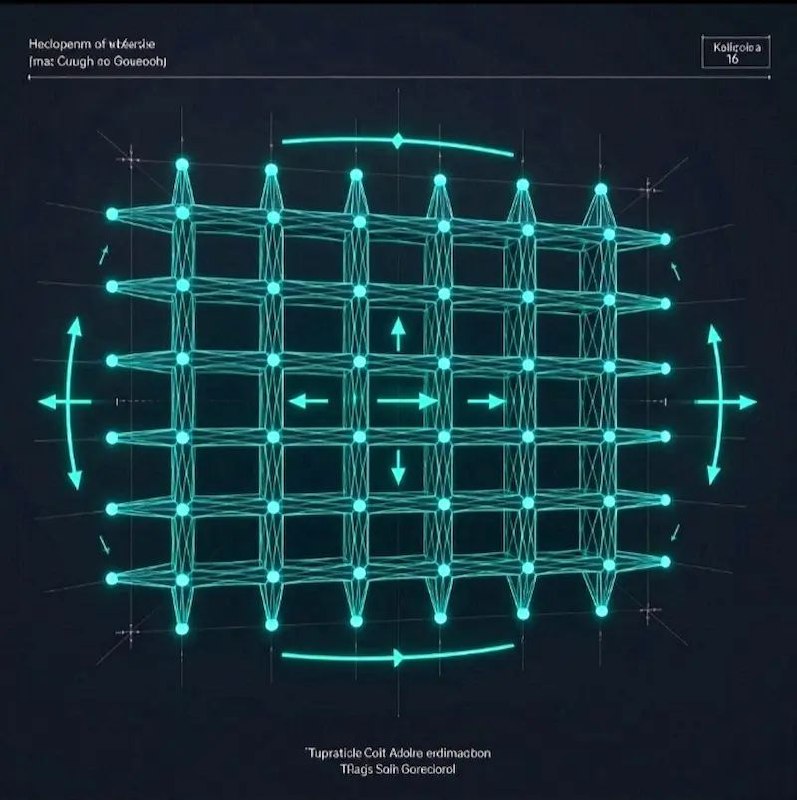
Genetic algorithms and stochastic perturbation models are frequently utilized to iterate through thousands of potential capillary geometries. The objective function of the optimization algorithm is programmed to minimize the variance in the velocity gradient tensor, ensuring that all polymer chains experience an identical thermo-mechanical history during the extrusion process. This uniformity is absolutely critical for the synthesis of auxetic yarns, as any localized variance in the microstructural orientation will create weak points within the topological interlocking matrix, leading to premature yielding under macroscopic tensile loads. The optimized capillary designs are subsequently manufactured using high-precision micro-electrical mechanical systems (MEMS) machining protocols, ensuring that the physical spinneret matches the algorithmic blueprint with sub-micron accuracy.
Shear-Induced Phase Transitions and Microstructural Alignment
As the polymer melt traverses the optimized spinneret capillary, the extreme shear and extensional forces induce a thermodynamic phase transition. The isotropic, amorphous melt is forcibly aligned into a highly ordered, semi-crystalline state. This shear-induced crystallization must be algorithmically controlled to preserve the specific geometric hinges required for auxetic behavior. If the degree of crystallinity is too high, the resulting yarn will be excessively rigid, preventing the kinematic rotation of the topological nodes. Conversely, if the degree of crystallinity is too low, the yarn will lack the necessary tensile strength to withstand macroscopic loads. The algorithmic model must predict the exact onset of crystallization as a function of the localized shear rate and the thermal quench profile.
Microstructural alignment within the spinneret capillary directly dictates the macroscopic kinematic response of the extruded yarn. According to Science, the preservation of
re-entrant honeycomb topologiesrequires precise thermal regulation during the quench phase to arrest polymer chain mobility before isotropic relaxation occurs.
The quench phase is simulated using multiphase CFD models that calculate the convective heat transfer coefficient between the extruded polymer filament and the surrounding cooling medium. The cooling rate must be mathematically optimized to freeze the oriented microstructure in place before the polymer chains can relax back into their thermodynamically preferred entangled state. This requires the precise control of the quench air velocity, temperature, and impingement angle. The algorithmic model generates a continuous thermal map of the extrudate, predicting the exact spatial coordinates of the glass transition boundary. By manipulating the quench parameters, engineers can fine-tune the ratio of crystalline to amorphous domains, thereby optimizing the effective Poisson’s ratio of the final auxetic yarn.
Finite Element Analysis of Negative Poisson’s Ratio Deformation Matrices
Following the algorithmic optimization of the extrusion protocol, the mechanical performance of the synthesized auxetic yarn is simulated using advanced finite element analysis (FEA). The FEA model maps the complex topological interlocking geometry of the yarn microstructure, applying macroscopic uniaxial tensile loads to predict the resulting transverse deformation. The negative Poisson’s ratio is mathematically verified by calculating the ratio of the transverse strain to the longitudinal strain across the computational mesh. The deformation of the re-entrant honeycomb or chiral structures is analyzed at the nodal level, identifying the specific geometric hinges where the kinematic rotation occurs. The stress tensor is calculated continuously across the matrix, highlighting localized stress concentrations that could initiate micro-cracking or catastrophic failure.
The accuracy of the FEA simulation relies on the implementation of highly sophisticated hyperelastic and viscoelastic material models. The Ogden model or the Mooney-Rivlin model is frequently utilized to simulate the non-linear elastic response of the polymer matrix under large deformations. The material parameters for these models are derived directly from empirical tensile testing of the extruded yarn, creating a closed-loop validation cycle between the physical synthesis and the computational simulation. The FEA model must also account for the complex contact mechanics between adjacent topological nodes within the interlocking matrix. Friction-based load transfer mechanisms, as detailed in previous analyses, are simulated using penalty-based contact algorithms that calculate the normal and shear forces at the interface boundaries. This ensures that the computational model accurately predicts the energy dissipation and the ultimate tensile strength of the auxetic yarn under extreme load-bearing conditions.
Algorithmic convergence in finite element analysis of auxetic matrices is highly sensitive to mesh density. The Nature Materials journal asserts that adaptive mesh refinement is non-negotiable for resolving the localized stress tensors at the topological hinges without inducing computational singularities.
Algorithmic Convergence and Empirical Validation Protocols
The final phase of the algorithmic modeling protocol involves the rigorous empirical validation of the computational predictions. The physical auxetic yarns, synthesized using the algorithmically optimized extrusion parameters, are subjected to extensive mechanical and morphological testing. Digital image correlation (DIC) is utilized to measure the real-time kinematic deformation of the yarn under uniaxial tension, providing a highly accurate empirical calculation of the Poisson’s ratio. The empirical data is subsequently fed back into the CFD and FEA models, allowing for the iterative refinement of the constitutive tensor parameters and the boundary conditions. This continuous feedback loop ensures that the algorithmic models converge upon a highly accurate representation of the physical reality, eliminating the reliance on stochastic trial-and-error methodologies.
The convergence of the algorithmic models is mathematically verified by calculating the root-mean-square error between the computational predictions and the empirical datasets. A convergence threshold of less than five percent is strictly enforced prior to the approval of any extrusion protocol for industrial-scale deployment. The successful integration of computational fluid dynamics, finite element analysis, and topological optimization algorithms represents a monumental advancement in the field of fiber science. By deterministically controlling the microstructural orientation of non-Newtonian polymer melts, engineers can synthesize auxetic metamaterials with unprecedented mechanical properties, opening new frontiers in the development of advanced load-bearing textiles, impact-resistant composites, and next-generation biomedical implants.