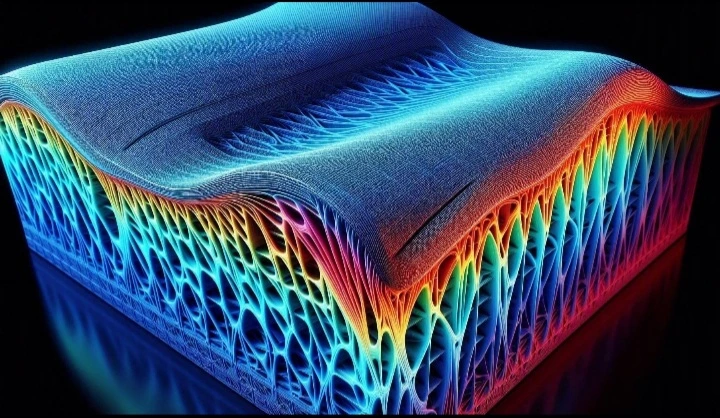
Introduction to Hybrid Textile Composites
The continuous evolution of advanced structural materials in the aerospace, marine, and renewable energy sectors has driven a paradigm shift toward the hybridization of fiber-reinforced polymers. While monolithic carbon fiber composites offer unparalleled specific stiffness and tensile strength, their inherent brittleness and high material costs often limit their application in structures requiring high damage tolerance and economic scalability. Conversely, glass fiber composites provide excellent impact resistance and cost-efficiency but lack the requisite elastic modulus for high-performance aerodynamic or hydrodynamic load-bearing components. The strategic integration of both carbon and glass fibers into a single, co-woven textile preform—creating a carbon-glass hybrid composite—presents a highly optimized engineering solution. By tailoring the intra-tow and inter-tow architectures of these distinct fibers within a unified polymeric matrix, materials scientists can engineer composites that exhibit a synergistic balance of stiffness, strength, and fracture toughness. However, this multi-phase integration introduces profound thermomechanical complexities. The fundamental disparity in the physical properties of the constituent materials, most notably their respective coefficients of thermal expansion, generates a highly heterogeneous internal stress state. Understanding the intricate dynamics of this thermal mismatch is paramount for predicting the long-term structural integrity and fatigue life of hybrid textile composites operating in environments characterized by severe thermal cycling and dynamic mechanical loads.
The Rationale for Carbon-Glass Hybridization
The primary mechanical rationale for hybridizing carbon and glass fibers is the achievement of pseudo-ductility and the exploitation of the “hybrid effect.” In a monolithic carbon composite, tensile failure is typically catastrophic and highly localized, occurring with minimal plastic deformation once the ultimate strain of the carbon fibers is reached. In a well-designed carbon-glass hybrid textile, the failure mechanism is fundamentally altered. Because the carbon fibers possess a lower strain-to-failure than the glass fibers, they rupture first under applied tensile loads. However, the surrounding glass fibers, which possess a higher elongation capacity, remain intact and bridge the resulting micro-cracks. This crack-bridging mechanism prevents the immediate catastrophic propagation of the failure, allowing the composite to sustain increasing loads and exhibit a pseudo-ductile, non-linear stress-strain response. The hybrid effect refers to the phenomenon where the apparent failure strain of the carbon fibers in the hybrid composite is actually higher than it would be in a monolithic carbon composite. This positive deviation from the classical rule of mixtures is attributed to the kinematic confinement provided by the adjacent glass tows, which restrict the dynamic stress concentrations that typically follow individual fiber breaks. Consequently, the hybrid textile architecture maximizes energy dissipation and provides a critical margin of safety in load-bearing applications.
Thermomechanical Fundamentals of Hybrid Matrices
While the mechanical synergy of carbon-glass hybridization is highly advantageous, the thermomechanical reality of combining three distinct material phases—carbon fibers, glass fibers, and a thermosetting polymer matrix—creates a highly volatile internal environment. A composite material is fundamentally a system in thermodynamic equilibrium, but this equilibrium is easily disturbed by fluctuations in ambient temperature. Each constituent phase responds to thermal energy differently, governed by its unique molecular structure and inter-atomic bonding. When a hybrid composite is subjected to a uniform temperature change, the individual phases attempt to expand or contract at different rates. Because these phases are chemically or mechanically bonded together at their interfaces, their free thermal deformation is constrained. This mutual constraint generates internal stresses that are entirely independent of any externally applied mechanical load. In a hybrid textile composite, these thermomechanical stresses are not uniformly distributed; they are highly localized at the boundaries between the dissimilar fiber tows and the surrounding polymer matrix. The magnitude and distribution of these internal stresses dictate the onset of microstructural degradation, making the thermomechanical fundamentals a critical area of study for the optimization of hybrid composite architectures.
Coefficient of Thermal Expansion (CTE) Mismatch Dynamics
The coefficient of thermal expansion (CTE) is a fundamental thermodynamic property that quantifies the fractional change in the physical dimensions of a material per degree of temperature change. In the context of fiber-reinforced polymers, the CTE is the primary driver of internal residual stresses. The dynamics of CTE mismatch in carbon-glass hybrid textiles are exceptionally complex due to the severe disparity in the thermal expansion behaviors of the constituent fibers and the highly anisotropic nature of the carbon reinforcement.
Anisotropic Thermal Expansion in Carbon and Glass Fibers
The thermal expansion characteristics of the reinforcing fibers are dictated by their atomic microstructures. E-glass fibers, the most common variant utilized in hybrid composites, are composed of an amorphous silica network. This non-crystalline, isotropic structure results in a uniform, positive coefficient of thermal expansion in all spatial directions, typically ranging from 5.0 to 5.4 x 10^-6 /°C. When heated, glass fibers expand uniformly; when cooled, they contract uniformly. Carbon fibers, conversely, exhibit extreme thermal anisotropy. Manufactured from polyacrylonitrile (PAN) precursors, carbon fibers consist of highly oriented, turbostratic graphitic basal planes aligned parallel to the longitudinal axis of the fiber. The strong covalent carbon-carbon bonds within these basal planes result in a slightly negative axial CTE, typically between -0.5 and -1.2 x 10^-6 /°C. This means that carbon fibers actually contract slightly along their length when heated. However, in the transverse (radial) direction, the interactions between the graphitic planes are governed by weak van der Waals forces, resulting in a highly positive transverse CTE, often exceeding 10.0 x 10^-6 /°C. This profound anisotropy means that a single carbon fiber responds to thermal changes differently depending on the axis of measurement, creating a highly complex stress state when embedded in an isotropic polymer matrix.
Generation of Residual Thermal Stresses During Curing
The most significant manifestation of CTE mismatch occurs long before the hybrid composite is ever placed into service; it is generated during the manufacturing process itself. High-performance textile composites are typically infused with thermosetting epoxy resins and cured in an autoclave at elevated temperatures, often exceeding 180°C. At this curing temperature, the polymer matrix cross-links and solidifies, establishing a stress-free state at the elevated thermal baseline. However, as the composite is subsequently cooled from the curing temperature down to ambient room temperature, the CTE mismatch dynamics are violently activated. The epoxy matrix, possessing a very high positive CTE (typically 45.0 to 65.0 x 10^-6 /°C), attempts to undergo massive volumetric shrinkage. The glass fibers also attempt to shrink, but at a much lower rate than the matrix. The carbon fibers, due to their negative axial CTE, actually attempt to expand slightly along their longitudinal axis as they are cooled. Because the matrix is bonded to the fibers, it restricts the expansion of the carbon and the contraction of the glass. This mutual constraint locks massive residual thermal stresses into the composite microstructure. The matrix is left in a state of severe triaxial tension, while the carbon fibers are subjected to axial compression, and the glass fibers experience a complex mixed stress state. These residual stresses consume a significant portion of the material’s ultimate strength, lowering the threshold for mechanical failure during operational loading.
Interfacial Shear Stress (IFSS) and Microstructural Degradation
The residual thermal stresses generated by the CTE mismatch do not exist in a vacuum; they must be transferred and balanced across the microstructural boundaries of the composite. The primary mechanism for this stress transfer is the interfacial shear stress (IFSS) acting at the boundary between the reinforcing fibers and the polymer matrix. In a hybrid textile composite, the IFSS is the critical parameter that dictates the structural integrity and the fatigue life of the material.
Mechanisms of Interfacial Shear Stress Concentration
In a monolithic composite, the IFSS is relatively uniform, driven primarily by the mismatch between the single fiber type and the matrix. In a carbon-glass hybrid textile, the IFSS landscape is highly heterogeneous and severely concentrated. The most critical zones of stress concentration occur at the inter-tow boundaries—the regions where a tow of carbon fibers lies directly adjacent to a tow of glass fibers. During thermal cycling or mechanical loading, the carbon tow and the glass tow exhibit vastly different dimensional responses. The polymer matrix situated between these dissimilar tows is subjected to extreme shear deformation, as it is simultaneously pulled by the contracting glass tow and pushed by the expanding carbon tow (or vice versa, depending on the thermal gradient). This localized shear strain generates massive interfacial shear stresses that far exceed the average stress state of the bulk composite. Furthermore, the transverse thermal expansion of the carbon fibers during cooling creates radial tensile stresses at the fiber-matrix interface, actively attempting to pull the matrix away from the fiber surface. The combination of high axial shear stress and high radial tensile stress creates a highly destructive multi-axial stress state at the hybrid interphase, rendering it the most vulnerable region of the composite architecture.
Micro-Cracking and Delamination Propagation
When the localized interfacial shear stress exceeds the shear yield strength of the polymer matrix or the adhesive strength of the fiber-matrix bond, microstructural degradation initiates. The primary failure mode driven by CTE mismatch is the nucleation of transverse micro-cracks. These micro-cracks typically originate at the fiber-matrix interface within the highly stressed inter-tow boundaries. Once nucleated, these cracks propagate rapidly through the brittle epoxy matrix, traveling parallel to the fiber direction. In a woven hybrid textile, these transverse cracks eventually intersect with the orthogonal fiber tows, where they can deflect and initiate interlaminar delamination—the separation of the woven fabric layers. This degradation process is exponentially accelerated by thermal fatigue. In aerospace applications, for example, a composite structure may experience temperature fluctuations ranging from -50°C to +120°C during a single flight cycle. This continuous thermal cycling repeatedly drives the IFSS up and down, causing the micro-cracks to open, propagate, and coalesce through a process of fatigue crack growth. As the micro-crack density increases, the macroscopic stiffness of the composite degrades, and the pathways for moisture ingress are multiplied, leading to further hydrolytic degradation of the glass fibers and the ultimate catastrophic failure of the load-bearing structure.
Empirical Characterization and Mitigation Strategies
To ensure the reliability of carbon-glass hybrid textile composites in critical applications, materials scientists must employ advanced empirical techniques to quantify the internal residual stresses and develop robust mitigation strategies to suppress CTE-driven microstructural degradation.
Advanced Thermo-Mechanical Testing Methodologies
The empirical characterization of residual thermal stresses and IFSS requires highly specialized, non-destructive testing methodologies. Raman spectroscopy has emerged as a premier analytical tool for this purpose. By focusing a laser on the carbon fibers embedded within the transparent or translucent polymer matrix, researchers can measure the shift in the Raman G-band frequency. This frequency shift is directly proportional to the axial strain experienced by the carbon fiber, allowing for the precise quantification of the residual compressive stress locked into the fiber during the curing process. Additionally, Dynamic Mechanical Analysis (DMA) is utilized to characterize the viscoelastic response of the polymer matrix across a wide range of temperatures and frequencies. By analyzing the storage modulus and the loss tangent (tan delta), engineers can determine the glass transition temperature and the specific temperature regimes where the matrix is most susceptible to thermal creep and stress relaxation. Furthermore, in-situ acoustic emission monitoring during thermal cycling tests provides real-time data on the nucleation and propagation of micro-cracks. The acoustic signatures generated by fiber-matrix debonding and matrix cracking can be isolated and analyzed to determine the exact thermal thresholds at which structural degradation initiates within the hybrid architecture.
Interphase Engineering and Matrix Toughening
Mitigating the detrimental effects of CTE mismatch requires a multi-faceted approach focused on interphase engineering and matrix toughening. The interphase—the nanoscale region where the fiber sizing interacts with the bulk polymer matrix—can be chemically tailored to act as a compliant buffer zone. By applying specialized elastomeric or thermoplastic sizing agents to the carbon and glass fibers, engineers can create an interphase that possesses a lower shear modulus than the bulk epoxy. This compliant layer can absorb and dissipate the localized shear strains generated by the CTE mismatch, significantly reducing the peak IFSS and preventing the initiation of micro-cracks. Another highly effective strategy involves the toughening of the bulk thermosetting matrix. The incorporation of liquid rubber modifiers, core-shell nanoparticles, or thermoplastic interleaves into the epoxy resin significantly increases the fracture toughness of the matrix. When a thermally induced micro-crack attempts to propagate through a toughened matrix, the rubber particles or thermoplastic domains induce localized plastic yielding and cavitation, absorbing a massive amount of strain energy and effectively blunting the crack tip. The following table delineates the specific thermomechanical properties and the primary failure modes associated with the constituent phases of a carbon-glass hybrid textile composite, highlighting the critical disparities that drive interfacial degradation.
| Constituent Phase | Material Type | Axial CTE (10^-6 /°C) | Transverse CTE (10^-6 /°C) | Primary Thermomechanical Failure Modes |
|---|---|---|---|---|
| Reinforcing Fibers | Carbon (PAN-based) | -0.5 to -1.2 | 7.0 to 12.0 |
|
| E-Glass | 5.0 to 5.4 | 5.0 to 5.4 |
|
|
| Polymer Matrix | Thermosetting Epoxy | 45.0 to 65.0 (Isotropic) |
|
|
The successful deployment of carbon-glass hybrid textile composites hinges on the mastery of these thermomechanical dynamics. By acknowledging the inherent CTE mismatch and proactively engineering the interphase and the matrix to accommodate the resulting interfacial shear stresses, materials scientists can unlock the full synergistic potential of hybrid composites. The continuous refinement of these mitigation strategies, guided by advanced empirical characterization and multi-scale computational modeling, will ensure that the next generation of hybrid textiles can deliver unprecedented structural efficiency, damage tolerance, and long-term reliability in the most demanding thermal and mechanical environments.