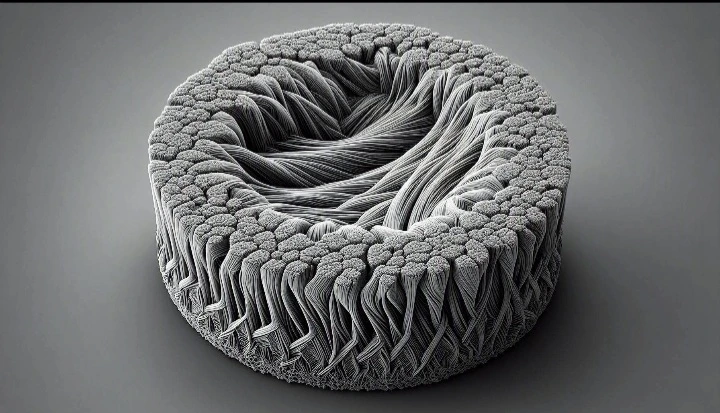
Introduction to Shape-Memory Polyurethanes (SMPUs)
The advent of smart materials has fundamentally transformed the landscape of advanced textile engineering, shifting the paradigm from passive structural reinforcement to active, stimuli-responsive fibrous networks. At the vanguard of this technological evolution are Shape-Memory Polyurethanes (SMPUs). These advanced elastomeric polymers possess the extraordinary ability to be deformed into a temporary, dormant configuration and subsequently recover their original, permanent macroscopic geometry upon exposure to a specific external stimulus, most commonly a thermal gradient. When synthesized and extruded into continuous multifilament yarns, SMPUs offer unprecedented opportunities for the development of adaptive aerospace composites, dynamic compression garments, and minimally invasive biomedical devices. However, the deployment of these smart yarns in load-bearing applications necessitates a rigorous understanding of their micro-mechanical behavior, particularly when subjected to cyclic tensile loading. Unlike static deployment scenarios, cyclic loading introduces complex, time-dependent viscoelastic phenomena, including stress softening, hysteresis, and the accumulation of residual plastic strain. The micro-mechanical characterization of SMPU yarns under these dynamic conditions requires a deep investigation into the hierarchical architecture of the polymer, bridging the gap between nanoscale phase separation and macroscopic structural fatigue. This treatise provides a comprehensive analysis of the morphological evolution and degradation kinetics of SMPU yarns subjected to cyclic tensile stress, elucidating the fundamental polymer physics that govern their long-term shape-memory efficacy.
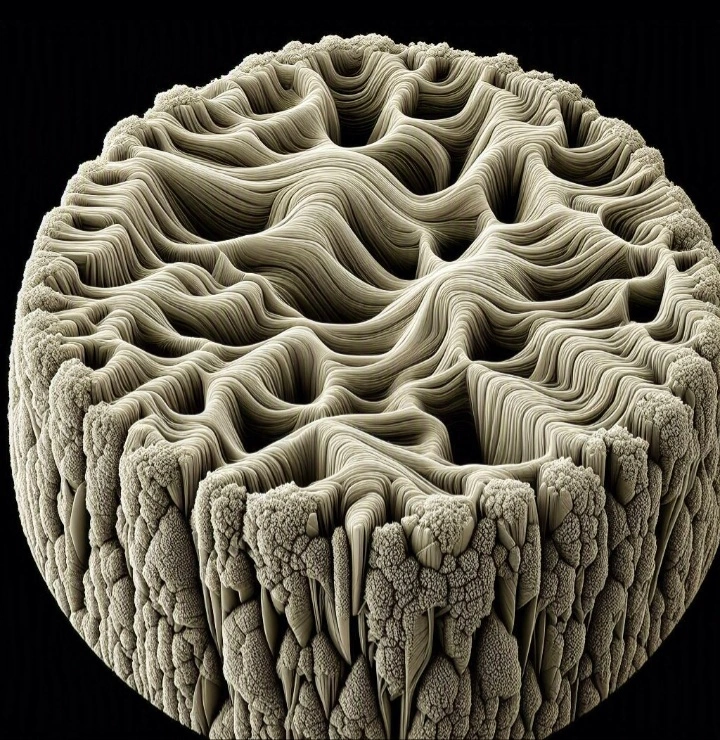
Macromolecular Architecture and Phase Separation
The unique thermomechanical properties of SMPU yarns are intrinsically derived from their segmented block copolymer architecture. At the macromolecular level, SMPUs are synthesized via the step-growth polymerization of three primary constituents: a macroscopic polymeric diol (polyol), a diisocyanate, and a low-molecular-weight chain extender. This specific chemical formulation results in a linear polymer chain composed of alternating, thermodynamically incompatible segments. The thermodynamic incompatibility, driven by differences in polarity and the Flory-Huggins interaction parameter, forces the polymer to undergo micro-phase separation during the solidification and fiber-spinning process. This phase separation creates a highly complex, heterogeneous microstructure that dictates the mechanical and shape-memory performance of the resulting yarn.
Hard and Soft Segment Dynamics
The micro-phase separated architecture consists of two distinct domains: the hard segments and the soft segments. The hard segments, formed by the reaction of the diisocyanate and the chain extender, are highly polar and possess a strong propensity to form extensive intermolecular hydrogen bonding networks. These segments aggregate into rigid, semi-crystalline or glassy micro-domains that act as physical cross-links within the polymer matrix. These physical cross-links are responsible for defining the permanent shape of the SMPU yarn and providing its baseline tensile modulus and ultimate mechanical strength. Conversely, the soft segments, derived from the polyol (typically a polyether or polyester), form an amorphous or semi-crystalline continuous phase that surrounds the hard domains. The soft segment phase is highly flexible and dictates the transient, temporary shape of the polymer. The transition temperature (T_trans)—which can be either the glass transition temperature (T_g) or the melting temperature (T_m) of the soft segment—serves as the critical thermal switch for the shape-memory effect. The precise ratio of hard to soft segments, known as the hard segment content (HSC), is a critical design parameter that allows polymer chemists to tailor the switching temperature, the recovery force, and the cyclic fatigue resistance of the extruded yarn.
The Shape-Memory Effect (SME) in Fibrous Networks
The Shape-Memory Effect (SME) in SMPU yarns is not an inherent, static material property, but rather a dynamic, entropically driven phenomenon that must be actively programmed through a specific thermomechanical cycle. Understanding the thermodynamics and the microstructural kinematics of this cycle is essential for characterizing the material’s response to subsequent cyclic loading. The SME relies on the dual-domain architecture of the polymer, where the hard segments maintain the global structural integrity (the permanent shape) while the soft segments act as a reversible switching mechanism that can lock in and release stored elastic strain energy.
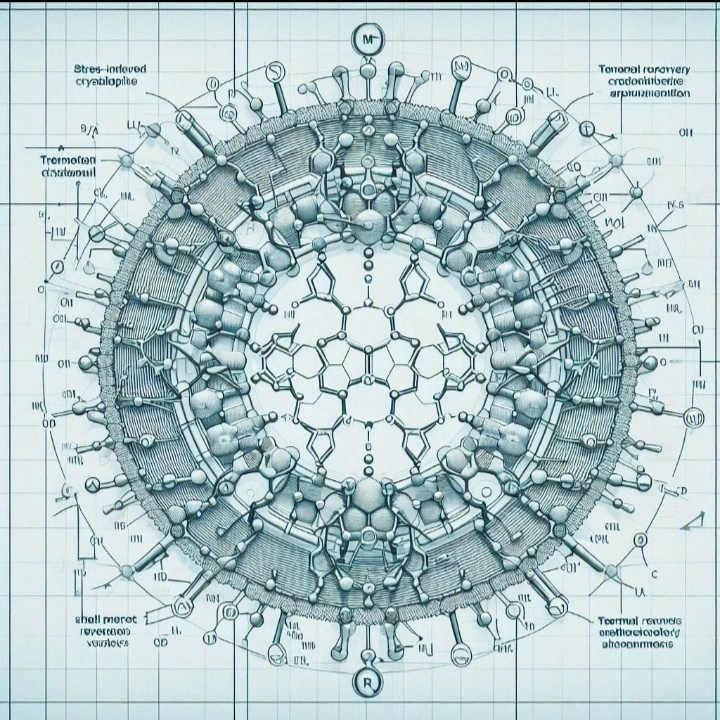
Thermomechanical Programming Cycle
The standard thermomechanical programming cycle for an SMPU yarn consists of four distinct sequential phases: deformation, fixation, unloading, and recovery. Initially, the yarn is heated to a temperature above the transition temperature of the soft segment (T > T_trans) but strictly below the melting temperature of the hard segment domains. In this elevated thermal state, the soft segments become highly mobile and rubbery, while the hard segments remain rigid and intact. The yarn is then subjected to a macroscopic tensile strain, deforming it into its temporary shape. While maintaining this applied strain, the yarn is rapidly quenched to a temperature below the transition temperature (T < T_trans). This cooling process kinetically freezes the soft segments, drastically reducing their chain mobility and effectively locking the polymer network into the strained configuration. Once the temperature is stabilized, the external mechanical load is removed. The yarn remains in its temporary, elongated shape, storing the applied mechanical work as internal entropic strain energy. To initiate the recovery phase, the yarn is reheated above T_trans in a stress-free state. The thermal energy remobilizes the soft segments, allowing the polymer chains to maximize their conformational entropy by returning to their original, random-coil state. This entropic recoil, guided by the physical cross-links of the hard segments, drives the macroscopic recovery of the yarn to its permanent shape.
Stress-Induced Crystallization
During the deformation phase of the programming cycle, particularly when the soft segment is composed of a crystallizable polyol (such as polycaprolactone), a critical microstructural phenomenon known as stress-induced crystallization (SIC) frequently occurs. As the macroscopic tensile strain is applied, the randomly coiled soft segment chains are forced to uncoil and align parallel to the axis of loading. This high degree of macromolecular orientation significantly reduces the configurational entropy of the chains, thermodynamically favoring the formation of highly ordered crystalline lamellae even at temperatures slightly above the quiescent melting point. These stress-induced crystals act as temporary, secondary physical cross-links that dramatically increase the apparent modulus of the yarn and enhance the shape fixity ratio. However, the formation and subsequent melting of these stress-induced crystals introduce significant non-linearities into the thermomechanical response of the yarn, complicating the micro-mechanical characterization and contributing to the hysteresis observed during cyclic loading.
Micro-Mechanical Characterization Methodologies
When SMPU yarns are deployed in active, dynamic environments—such as in robotic actuators or adaptive compression textiles—they are rarely subjected to a single shape-memory cycle. Instead, they must endure thousands of continuous mechanical loading and unloading cycles. The micro-mechanical characterization of the yarn under these cyclic conditions is paramount for predicting its operational lifespan and structural reliability. Cyclic tensile loading exposes the inherent viscoelasticity and the microstructural vulnerabilities of the phase-separated polymer architecture.
Cyclic Tensile Loading Protocols
The empirical evaluation of cyclic fatigue in SMPU yarns requires highly precise, displacement-controlled testing protocols. These tests are designed to isolate the mechanical degradation of the polymer network independent of the thermal shape-memory recovery phase. The yarn is subjected to repeated loading and unloading cycles at a constant ambient temperature, typically below T_trans to evaluate the glassy/semi-crystalline state, or above T_trans to evaluate the rubbery state. During these cycles, several critical mechanical metrics are continuously monitored, including the peak stress at maximum strain, the residual plastic strain upon unloading, and the total energy dissipated during the cycle.
Hysteresis and Energy Dissipation
The most prominent feature of the cyclic tensile response of an SMPU yarn is the presence of a pronounced hysteresis loop in the stress-strain curve. Hysteresis represents the thermodynamic irreversibility of the deformation process; the mechanical work done on the yarn during the loading phase is strictly greater than the elastic energy recovered during the unloading phase. The area enclosed within the hysteresis loop quantifies the specific energy dissipated per unit volume during a single cycle. In SMPU yarns, this energy dissipation is driven by multiple micro-mechanical mechanisms, including the viscoelastic friction between sliding polymer chains, the rupture of intermolecular hydrogen bonds within the hard segments, and the fragmentation of stress-induced crystalline domains. During the initial loading cycles, the hysteresis energy is typically very high, indicating massive microstructural reorganization. However, as the cycling progresses, the hysteresis loop gradually narrows and stabilizes, a phenomenon closely related to the Mullins effect observed in filled elastomers.
Morphological Evolution During Cycling
The macroscopic mechanical degradation observed during cyclic loading—manifesting as stress softening and the accumulation of residual strain—is a direct consequence of profound morphological changes at the micro-domain level. The hierarchical architecture of the SMPU is systematically dismantled and reorganized by the continuous application of cyclic stress.
Micro-Domain Reorganization
During the first few tensile cycles, the rigid hard segment domains, which initially form a percolated, load-bearing network throughout the polymer matrix, are subjected to severe shear and tensile forces. These forces cause the hard domains to fragment and orient themselves along the principal axis of loading. Simultaneously, the hydrogen bonds that hold these domains together are forcibly ruptured and subsequently reform in new, stress-relieved configurations. This irreversible breakdown of the initial hard segment morphology is the primary driver of the Mullins effect, resulting in a significant drop in the peak stress required to reach the target strain in subsequent cycles. Furthermore, the continuous cycling induces permanent plastic deformation within the soft segment matrix. The polymer chains undergo irreversible slippage and disentanglement, leading to a progressive accumulation of residual strain (unrecoverable elongation) at the end of each unloading phase. The following list delineates the primary microstructural phenomena that occur during the cyclic tensile loading of SMPU yarns:
- Hard Segment Fragmentation: The brittle fracture and spatial redistribution of the rigid diisocyanate micro-domains under high localized stress concentrations.
- Hydrogen Bond Reorganization: The dynamic rupture and reformation of intermolecular physical cross-links, leading to stress relaxation and cyclic softening.
- Soft Segment Disentanglement: The irreversible slippage of the amorphous polyol chains, resulting in the macroscopic accumulation of residual plastic strain.
- Fibrillar Orientation: The progressive alignment of both hard and soft segments parallel to the loading axis, increasing the axial anisotropy of the yarn.
- Interfacial Debonding: The microscopic separation at the boundary between the hard and soft phases due to severe mismatches in their respective elastic moduli.
Empirical Testing and Computational Validation
To accurately quantify the complex, non-linear degradation kinetics of SMPU yarns, researchers must employ a synergistic approach that combines rigorous empirical mechanical testing with advanced computational modeling. This dual methodology ensures that the theoretical constitutive models accurately reflect the physical reality of the micro-mechanical phase separation and cyclic fatigue.
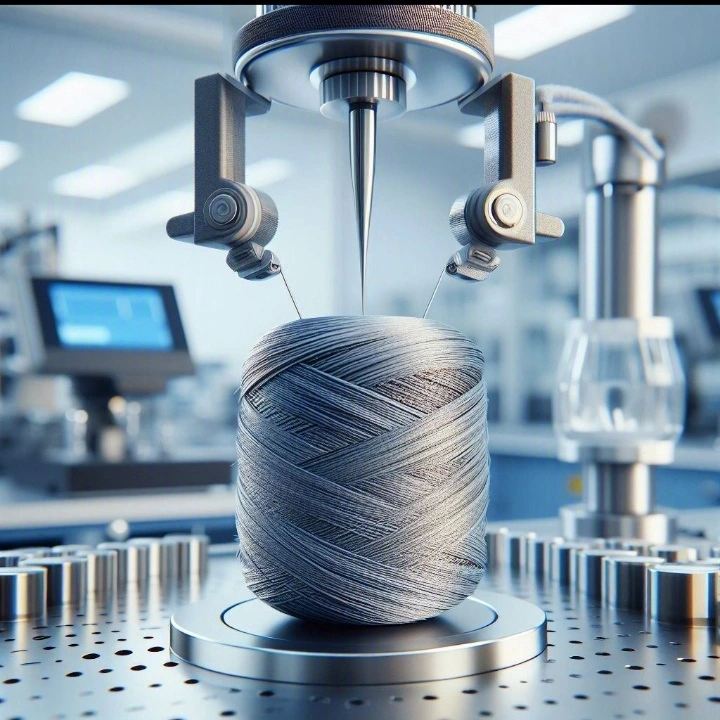
Tensile Testing and Data Acquisition
The empirical characterization of SMPU yarns is conducted utilizing high-precision servo-hydraulic or electromechanical universal testing machines equipped with specialized pneumatic yarn grips to prevent localized stress concentrations and premature jaw breaks. The testing environment must be strictly controlled, utilizing environmental chambers to maintain precise isothermal conditions, as the viscoelastic response of the polyurethane is exquisitely sensitive to minor temperature fluctuations. The following procedural list outlines the standardized protocol for evaluating the cyclic tensile fatigue of SMPU yarns:
- Specimen Preparation and Conditioning: Extract single multifilament yarns from the bulk spool and condition them in a standard atmosphere (20°C, 65% Relative Humidity) for 48 hours to ensure uniform moisture equilibrium and thermal history.
- Gauge Length and Pre-Tensioning: Mount the yarn in the pneumatic grips with a precise gauge length (e.g., 50 mm) and apply a minimal pre-tension load (e.g., 0.05 cN/dtex) to remove any slack without inducing primary creep.
- Isothermal Stabilization: Enclose the specimen in the environmental chamber and allow the temperature to stabilize at the target testing temperature (either above or below T_trans) for a minimum of 15 minutes.
- Cyclic Loading Execution: Execute a displacement-controlled cyclic loading protocol, stretching the yarn to a predefined maximum strain (e.g., 50%) and returning it to zero stress at a constant strain rate. Repeat this for a specified number of cycles (e.g., 100 cycles).
- Continuous Data Logging: Continuously record the load cell and crosshead displacement data at a high sampling frequency (>= 100 Hz) to accurately capture the transient dynamics of the hysteresis loops and the stress relaxation curves.
- Post-Test Thermal Recovery: Upon completion of the cyclic loading, heat the specimen above T_trans in a stress-free state to measure the final shape-memory recovery ratio and quantify the true, unrecoverable plastic deformation.
Strain Rate Sensitivity
The mechanical response of the SMPU yarn during these cyclic tests is highly dependent on the applied strain rate. Because polyurethanes are inherently viscoelastic, their apparent modulus and yield strength increase logarithmically with higher strain rates. At high strain rates, the polymer chains do not have sufficient time to undergo conformational relaxation or disentanglement. Consequently, the material behaves in a more rigid, glassy manner, resulting in higher peak stresses and a narrower hysteresis loop. Conversely, at low strain rates, the chains have ample time to flow and reorganize, leading to lower peak stresses, wider hysteresis loops, and a higher accumulation of residual plastic strain per cycle. The following tables provide a quantitative overview of the thermomechanical properties of different SMPU variants and the evolution of their mechanical metrics over extended cyclic loading.
| SMPU Polymer Variant | Hard Segment Content (%) | Transition Temp (T_trans) (°C) | Shape Fixity Ratio (R_f) (%) | Shape Recovery Ratio (R_r) (%) |
|---|---|---|---|---|
| T_g-based Polyether Urethane | 30.5 | 45.0 (Glass Transition) | 98.2 | 95.4 |
| T_g-based Polyether Urethane | 40.0 | 55.5 (Glass Transition) | 99.1 | 92.8 |
| T_m-based Polyester Urethane | 25.0 | 60.0 (Melting Point) | 99.8 | 97.5 |
| T_m-based Polyester Urethane | 35.0 | 68.5 (Melting Point) | 99.9 | 94.2 |
| Cycle Number (N) | Peak Stress at 50% Strain (MPa) | Hysteresis Energy Dissipated (MJ/m³) | Accumulated Residual Strain (%) |
|---|---|---|---|
| 1 (Initial Loading) | 18.45 | 3.12 | 8.50 |
| 10 (Transition Phase) | 14.20 | 1.45 | 12.25 |
| 50 (Stabilization Phase) | 13.15 | 0.98 | 14.10 |
| 100 (Steady State) | 12.90 | 0.92 | 14.65 |
Finite Element Analysis (FEA) of SMPU Yarns
While empirical testing provides the macroscopic mechanical response, Finite Element Analysis (FEA) is required to visualize and quantify the internal stress distributions and the micro-mechanical phase transitions that occur during cyclic loading. Modeling the shape-memory effect and the cyclic fatigue of SMPUs is a highly complex computational challenge that requires the implementation of advanced phenomenological constitutive models.
Constitutive Modeling of Viscoelasticity
The FEA models must account for the large-strain hyperelasticity, the time-dependent viscoelasticity, and the temperature-dependent phase transitions of the polymer. Researchers frequently utilize multi-branch rheological models, such as the generalized Maxwell-Weichert model, coupled with a phase-transition framework (e.g., the Reese-Arnold model). In these models, the total deformation gradient is multiplicatively decomposed into elastic, viscoelastic, and thermal expansion components. The phase transition is governed by an internal state variable representing the volume fraction of the frozen (glassy/crystalline) phase versus the active (rubbery) phase. As the simulated temperature crosses T_trans, the solver dynamically updates the material stiffness matrix based on the rule of mixtures. To accurately simulate cyclic loading and the Mullins effect, a damage variable is introduced into the hyperelastic strain energy density function. This damage variable evolves as a function of the maximum historical strain experienced by the element, effectively degrading the stiffness of the hard segment network and accurately reproducing the stress softening and hysteresis observed in the empirical data. These high-fidelity FEA simulations allow engineers to optimize the yarn geometry, the twist multiplier, and the weave architecture of SMPU textiles prior to physical prototyping.
Advanced Applications and Future Trajectories
The rigorous micro-mechanical characterization of SMPU yarns under cyclic loading is the foundational step toward their integration into next-generation, high-performance engineering systems. By understanding the degradation kinetics and the stabilization of the hysteresis loop, engineers can design smart textiles that maintain their shape-memory efficacy over thousands of operational cycles.
Smart Textiles and Wearable Actuators
One of the most promising applications for cyclically stable SMPU yarns is in the realm of adaptive smart textiles and wearable robotics. By integrating SMPU yarns into a knitted or woven matrix, engineers can create dynamic compression garments for medical or athletic applications. These garments can be programmed to apply a specific baseline pressure at room temperature. As the wearer’s body temperature rises during physical exertion, the SMPU yarns cross their transition temperature, triggering the shape-memory recovery phase. The yarns contract, dynamically increasing the compression level to enhance blood flow and stabilize musculature. Because these garments are subjected to continuous stretching and relaxation during human movement, the cyclic fatigue resistance of the SMPU yarn is paramount. The micro-mechanical stabilization of the hard segment domains ensures that the garment maintains a consistent compression profile without suffering from excessive residual strain or loss of recovery force over its operational lifespan.
Biomedical Scaffolding and Sutures
In the biomedical sector, the unique thermomechanical properties of SMPU yarns are being leveraged to develop advanced, minimally invasive surgical tools and tissue engineering scaffolds. Shape-memory sutures represent a significant advancement in wound closure technology. These sutures can be loosely tied by the surgeon, minimizing tissue trauma during the procedure. Upon exposure to the patient’s body heat (engineered to be the T_trans of the polymer), the suture autonomously contracts, applying a precise, pre-programmed tension to the wound edges. This self-tightening mechanism ensures optimal wound approximation and reduces the risk of post-operative complications. Furthermore, electrospun SMPU nanofiber yarns are being investigated as dynamic scaffolds for vascular and tendon tissue engineering. The scaffold can be programmed to expand or contract in response to external thermal or magnetic stimuli, providing active mechanical stimulation to the seeded cells, which has been shown to significantly enhance cellular proliferation and extracellular matrix deposition. The continued advancement of these technologies relies heavily on the continuous refinement of the micro-mechanical models detailed in this treatise, ensuring that the next generation of shape-memory polymers can reliably perform in the most demanding dynamic environments.