Introduction to Hypersonic Thermal Protection Systems
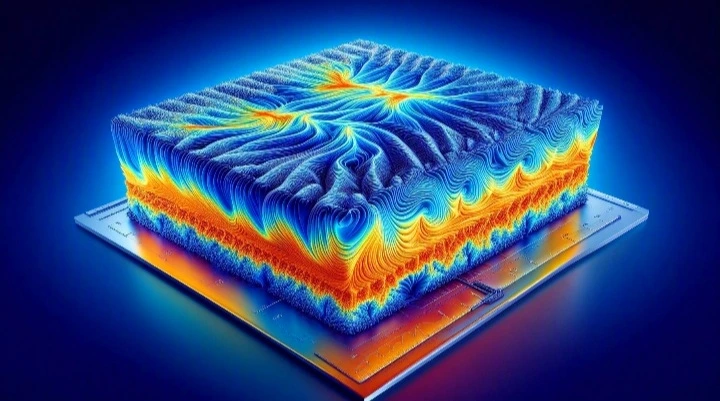
The advent of hypersonic flight vehicles, operating at velocities exceeding Mach 5, has precipitated a critical demand for advanced Thermal Protection Systems (TPS). During atmospheric reentry or sustained hypersonic cruise, vehicles are subjected to extreme aerodynamic heating generated by shock wave compression and intense boundary layer skin friction. To safeguard the underlying structural integrity, ablative composites are universally employed. Among the most effective of these materials are phenolic-impregnated silica textiles. This composite architecture leverages the exceptional high-temperature stability and low thermal conductivity of woven silica fibers, synergistically combined with the highly endothermic pyrolytic properties of a phenolic resin matrix. The heat shielding efficacy of this system is not static; it relies on a dynamic, sacrificial degradation process that actively consumes thermal energy, thereby preventing catastrophic heat transfer to the vehicle’s interior. Understanding the precise thermodynamic mechanisms and the mass loss kinetics of this ablative process is paramount for the design of optimized, weight-efficient aerospace structures.
Ablative Mechanisms of Phenolic-Impregnated Silica
The ablative performance of phenolic-impregnated silica textiles is governed by a complex sequence of thermodynamic and physicochemical transformations. Upon exposure to hypersonic heat fluxes, the composite undergoes distinct phases of degradation. Initially, the material absorbs heat through sensible heating, dictated by its specific heat capacity and thermal conductivity. As the surface temperature surpasses the degradation threshold of the polymer matrix (typically around 300 to 400 degrees Celsius), the phenolic resin undergoes pyrolysis. This endothermic chemical decomposition absorbs a massive quantum of thermal energy, breaking the polymer chains into a porous, carbonaceous char and a mixture of low-molecular-weight pyrolysis gases. The generation of this char layer is critical; it possesses a high surface emissivity, radiating a significant portion of the incident convective heat back into the environment.
Simultaneously, the outgassing of the pyrolysis products induces a phenomenon known as transpiration cooling. As these gases percolate through the porous char and inject into the hypersonic boundary layer, they thicken the boundary layer and physically block the incoming convective heat flux. At even higher temperatures, exceeding 1600 degrees Celsius, the silica textile reinforcement begins to melt. The molten silica forms a highly viscous liquid layer over the carbonaceous char. This liquid layer provides an additional barrier to oxidative degradation and further absorbs heat through the latent heat of fusion. However, under the extreme aerodynamic shear forces characteristic of hypersonic flight, this molten layer can be mechanically stripped away, exposing fresh composite material to the plasma flow.
Computational Modeling of Ablative Mass Loss
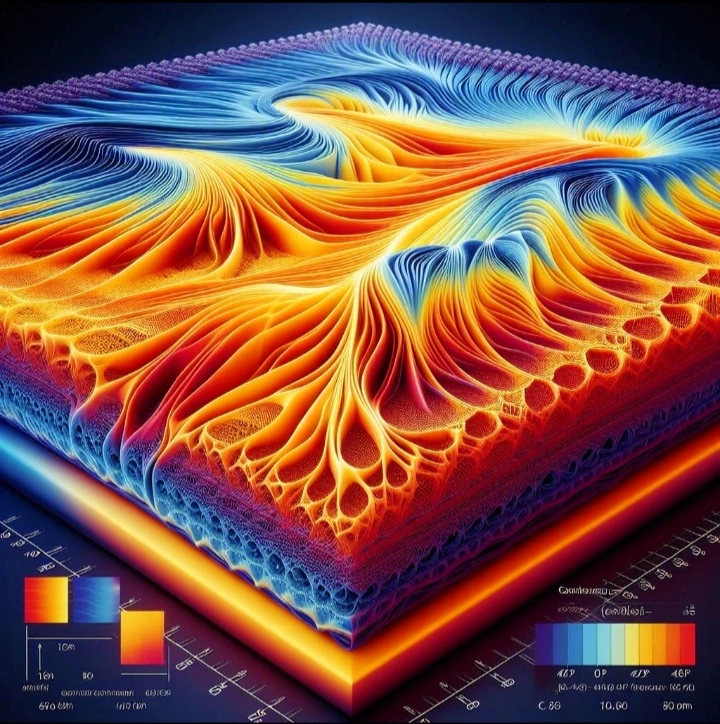
Computational modeling of this ablative mass loss is essential for predicting the recession rate and sizing the thickness of the thermal shield. The degradation kinetics are mathematically modeled using coupled heat and mass transfer equations, accounting for the moving boundary of the receding surface. The following Python snippet illustrates a simplified numerical algorithm utilized to calculate the instantaneous ablative mass loss and the corresponding surface recession depth, assuming a quasi-steady-state ablation regime governed by the effective heat of ablation.
def calculate_ablative_mass_loss(q_dot, H_v, rho_p, A, t):
    """
    Calculates the ablative mass loss and surface recession depth.

    Parameters:
    q_dot : float : Incident convective heat flux (W/m^2)
    H_v   : float : Effective heat of ablation of the composite (J/kg)
    rho_p : float : Density of the phenolic-silica composite (kg/m^3)
    A     : float : Exposed surface area (m^2)
    t     : float : Exposure time (s)

    Returns:
    tuple : (total_mass_loss in kg, recession_depth in meters)
    """
    # Calculate the mass loss rate (kg/s) based on steady-state ablation
    mass_loss_rate = q_dot / H_v

    # Calculate total mass lost over the exposure duration
    total_mass_loss = mass_loss_rate * A * t

    # Calculate the linear recession depth of the thermal shield
    recession_depth = total_mass_loss / (rho_p * A)

    return total_mass_loss, recession_depth

# Example execution for a hypersonic reentry profile
heat_flux = 5.5e6  # 5.5 MW/m^2
heat_of_ablation = 1.2e7  # 12 MJ/kg
density = 1650.0  # 1650 kg/m^3
area = 0.05  # 0.05 m^2
time = 120.0  # 120 seconds

mass_lost, depth = calculate_ablative_mass_loss(heat_flux, heat_of_ablation, density, area, time)
Empirical Testing and Validation Protocols
To empirically validate these computational models and certify the heat shielding efficacy of the composite, rigorous testing in simulated hypersonic environments is mandatory. Arc-jet plasma facilities are the standard for this evaluation, as they can generate the extreme enthalpies and heat fluxes representative of atmospheric reentry. The following procedural list outlines the strict protocol for evaluating thermal shield performance:
- Specimen Preparation: Fabricate the phenolic-impregnated silica composite to the exact fiber volume fraction and porosity specifications, followed by precision machining into standardized stagnation-point test pucks.
- Sensor Integration: Embed ultra-fine, high-temperature tungsten-rhenium thermocouples at precise, staggered depths within the composite substrate to monitor the internal thermal wave propagation during testing.
- Facility Calibration: Ignite the arc-jet facility and insert a water-cooled copper calorimeter to calibrate the stagnation heat flux and bulk enthalpy of the supersonic plasma flow to match the target flight trajectory.
- Plasma Exposure: Inject the instrumented composite specimen into the calibrated plasma stream for a predetermined duration, utilizing two-color pyrometry to continuously monitor the surface temperature and recession rate.
- Post-Test Characterization: Upon cooling, section the ablated specimen to measure the final char depth, the pyrolysis zone thickness, and the total mass loss, subsequently utilizing scanning electron microscopy to analyze the melt-layer morphology.
Implications for Next-Generation Aerospace Engineering
The continuous optimization of phenolic-impregnated silica textiles remains a focal point in aerospace materials engineering. Future advancements rely on tailoring the three-dimensional woven architecture of the silica preform to enhance the mechanical retention of the carbonaceous char layer, thereby preventing premature spallation under high aerodynamic shear. By mastering the complex interplay between endothermic pyrolysis, transpiration cooling, and melt-layer dynamics, engineers can develop lighter, more efficient ablative heat shields. These optimized composites are critical for ensuring the survivability of next-generation hypersonic cruise vehicles, intercontinental ballistic systems, and planetary entry probes operating in the most extreme thermodynamic environments known to modern engineering.